
Vandaag of morgen in huis

Kwaliteit gegarandeerd

Welkomstaanbiedingen ontgrendelen: GRATIS bezorging | Tot 80% korting | Gratis 30 dagen JoyPlus-proefperiode
Download de app
Open-ear clip-on Bluetooth earbuds sit on the outside of your ear rather than deep inside the ear canal. This lets you enjoy music, podcasts or phone calls while staying more aware of traffic, colleagues and people at home. That makes them an appealing choice for runners, cyclists, commuters and people working from home.
Yet many models look alike in online shops. Marketing terms such as “spatial audio”, “AI noise cancellation” and “long battery life” only tell you so much unless you check the specifications behind them. Watch out for these three common pitfalls.
An open-ear headset lets in ambient sound, but that doesn’t automatically mean that music and voices will remain clear on a busy street or at a station. Wind can also affect the microphones and sound quality.
Check whether the model lists a microphone function and a specific type of noise reduction. “ENC” or “AI noise cancellation” refers to technology mentioned in the product description, but it doesn’t guarantee that every caller will hear your voice perfectly in every situation. Some product descriptions say that background noise is reduced; treat this as a product specification, not a guaranteed result.
A figure such as 25, 28 or 37 hours often refers to the earbuds plus several charges from the charging case. So check both figures:
For example, the Sony LinkBuds Clip is listed as offering 9 hours from the earbuds and 37 hours in total with the case. The TALIX G1 lists 7 hours per charge and 28 hours with the case. These are different measurements, so compare them only after checking what they refer to.
An IPX4 rating is designed to protect against splashes and sweat. This may be suitable for walking, working out or light rain, but not for submersion, swimming or prolonged heavy rain. You should take extra care to protect a model without a water-resistance rating from moisture.
Fit matters too. An ear clip may stay secure while walking, but a hook, silicone component or adjustable fit can be important for sprinting or moving your head a lot.
With wireless clip-on earbuds, the weight rests on or around your outer ear. This reduces the pressure you might feel from in-ear earbuds, but the shape of your ear still makes a difference. Check the weight, the material used and whether the clip is flexible or covered in silicone.
A lightweight design is particularly useful for long meetings, travelling and working at a desk. Try the model for a short time first and check for pressure points along the top and back of your ear.
Bluetooth 5.3 and 5.4 are modern standards for wireless connections. Your experience will also depend on your phone, laptop, codec and distance from the device. If you switch between devices, check that Android, iOS and Windows are supported.
For gaming and videos, synchronisation and latency matter. According to the product description, the Lenovo LE302 features Wireless 6.0 and a low-latency experience. When buying, check that the terminology and features used match the manual.
If you’re looking for earbuds for clear phone calls, it’s worth checking how many microphones there are and where they’re positioned. The TALIX G1 and Soundcore AeroClip list a four-microphone setup. According to their product descriptions, these are designed to distinguish voices from ambient noise.
Open-ear models generally provide less isolation than traditional in-ear earbuds. That’s useful for staying aware of your surroundings, but music may sound less full on a noisy train. For podcasts and calls, this can be an advantage.
An IPX4-rated model may be suitable as water-resistant wireless earbuds for sweat and light splashes. Dry the earbuds after use and only charge them once the contact points are dry. Models without a water-resistance rating, such as the Baseus Bowie MC1 according to the safety information provided, should not be exposed to rain or high humidity.
Don’t use open-ear earbuds while driving, cycling or doing work that requires your full attention. Being able to hear ambient noise is no substitute for staying alert. Keep the volume at a comfortable level too, to help prevent hearing damage from listening at high volumes for long periods.
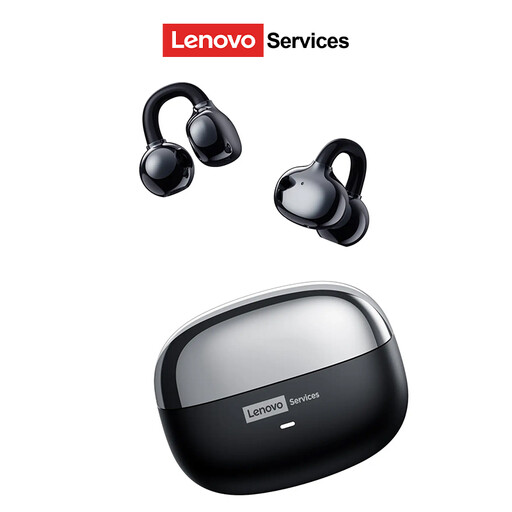
Why it suits this user profile: The open-ear fit is designed for music, video, office work and movement. According to the product description, the model works with Android, iOS and Windows.
The product information lists battery life of up to 25 hours and ENC technology, so you don’t have to rely on vague comfort claims alone.
Open-ear design, support for multiple operating systems and stated Wireless 6.0 low latency.

Why it suits this user profile: This model combines a 10-band equaliser, three listening modes, a microphone and an open clip-on design for everyday use.
Total battery life is broken down into 9 hours from the earbuds and 37 hours with the case. IPX4 is listed as splash resistance, not waterproofing.
Bluetooth 5.3, USB-C, IPX4, 9 hours per charge and a quick-charge function which, according to the description, provides 1 hour of playback from a 3-minute charge.
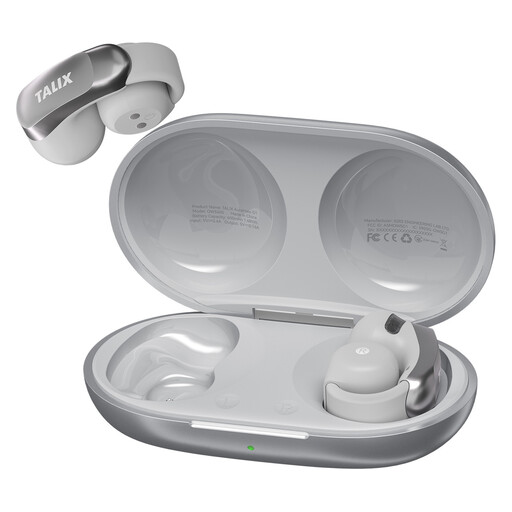
Why it suits this user profile: The silicone ear hook, weight of 5.2 grams per earbud and IPX4 rating make it a good match for workouts, commuting and online meetings.
The specifications list individual and total battery life, quick charging, Bluetooth 5.3 and IPX4. This makes the main usage limits clearer.
Four microphones, up to 7 hours of playback per charge, 28 hours with the case, quick charging and splash resistance according to the product description.
We’ve put together a complete, up-to-date list of products that meet these strict selection criteria and the applicable European safety regulations.
They can be, especially if the clip stays secure and the model can withstand sweat or splashes. An IPX4 rating is suitable for light splashes, but not for submersion. Also check that the earbuds don’t shift during fast movements. Don’t use them in situations where you need to give traffic your full attention.
For this type of product, battery life per charge is often around 5 to 9 hours, while a charging case can provide several extra charges. Actual battery life decreases over time due to charging cycles, temperature and listening volume. Keep the case dry, use a suitable cable for charging and avoid exposing it to heat for long periods.
They can be comfortable because you can still hear your surroundings. However, call quality depends on the microphones, wind filtering, Bluetooth connection and environment. Look for specific details such as the number of microphones and ENC or noise-reduction features. This helps you choose based on verifiable features rather than just the phrase “clear calls”.
