
Vandaag of morgen in huis

Kwaliteit gegarandeerd

Welkomstaanbiedingen ontgrendelen: GRATIS bezorging | Tot 80% korting | Gratis 30 dagen JoyPlus-proefperiode
Download de app
An open-ear Bluetooth headset leaves your ears uncovered, allowing you to combine music, podcasts or calls with greater awareness of your surroundings. That is useful when running, cycling, walking or working. However, not every open design is the same. Choosing the wrong model can result in a loose fit, inadequate protection against rain or a battery that runs out during a long workout.
Product information on sales pages also contains terms such as “noise cancelling”, “AI” and “professional water resistance”. These words only mean something when you check the underlying specifications. Below, you can find out what to look for and which models suit different situations.
An open-ear model can be worn on the ear, behind the ear or using bone conduction. According to the product description, a bone conduction headset transmits sound through vibrations near the cheekbone, while a clip or earhook model places a small speaker next to the ear. This means the fit can vary considerably.
Pay attention to the weight, the shape of the ear hook and the frame material. A secure fit is important for a headset for running, but a band that is too tight can become uncomfortable during longer use. Also check whether the manufacturer states the weight. The Soundcore Aeroclip, for example, is listed as weighing 60 grams, while the AeroFit Pro weighs 88.74 grams according to its specifications.
The IP code consists of two digits. The first digit refers to dust, while the second relates to water. IP55 is intended to provide limited protection against dust and water jets; IP67 offers a higher level of protection and temporary immersion under specified conditions. IP68 or IPX8 indicates an even higher level of water resistance, but the exact conditions are set out in the manual.
A wireless sports headset with IP55 may be suitable for sweat and light rain, but not for swimming. For a waterproof swimming headset, check whether swimming is explicitly mentioned, whether Bluetooth works underwater and whether the model has MP3 storage. Bluetooth signals only travel through water to a limited extent. According to the product description, the Mojawa Run Plus comes with 32 GB of internal storage and an IP68 rating. This makes locally stored music more practical while swimming than streaming directly from a smartphone via Bluetooth.
With open-ear earbuds, the ear canal remains unobstructed. This usually means you can continue to hear surrounding sounds more clearly than with closed Bluetooth earbuds. A feature described as noise cancelling may refer to microphone noise reduction for phone calls, sound isolation or a specific listening mode. According to the Soundcore Aeroclip product description, the system has four microphones for calls; this is not the same as full active noise cancellation for music.
Awareness of your surroundings is important when cycling or running in busy traffic. An open design does not replace paying attention. Always follow the rules of the road and check the safety warnings for your chosen model.
Choose bone conduction if you do not want a speaker positioned directly by the ear canal. Choose a clip or earhook model if you prefer a more traditional stereo sound next to the ear. With both types, sound may leak into the surrounding area, particularly at higher volumes.
For a comfortable wireless headset for everyday use, controls and stability are at least as important as maximum volume. Physical buttons can be easier to operate while exercising than touch controls, especially with wet hands.
Bluetooth 5.3 and 5.4 are modern standards, but the actual connection also depends on your smartphone, obstacles and software. A stated range of around 10 metres generally applies in an open environment. Check whether multipoint, app support or specific audio codecs are relevant to you.
Compare the stated playback time with your typical usage. Models offering around 7 to 8 hours of battery life are suitable for commuting or a daily workout. For long bike rides, several training sessions or swimming, built-in storage may be more convenient than having to take your phone with you.
Pay attention to the difference between the earbuds’ playback time and the total usage time with a charging case. Also check the charging method. Some models use USB-C, while others use a magnetic charging cable or charging station. With magnetic contacts, the earbuds must be completely dry before charging.
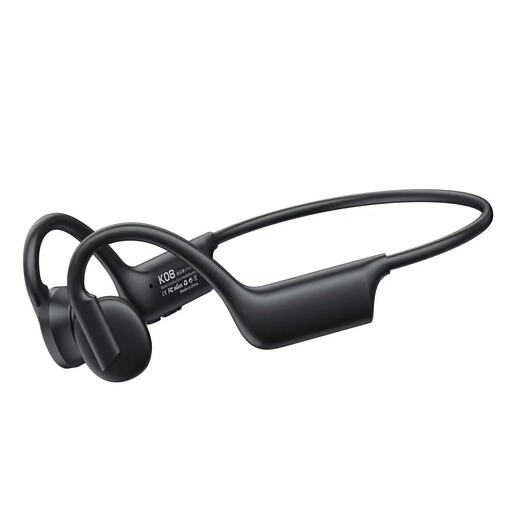
Why it suits this profile: This model is designed for users looking for an open design for cycling, running and listening to music without in-ear earbuds.
The product description mentions an earhook design, Bluetooth and a usage range of 10 metres or more. However, check the exact battery and water-resistance details before buying.
Bone conduction, Bluetooth, call functionality, voice control and multipoint connectivity are listed in the product information.
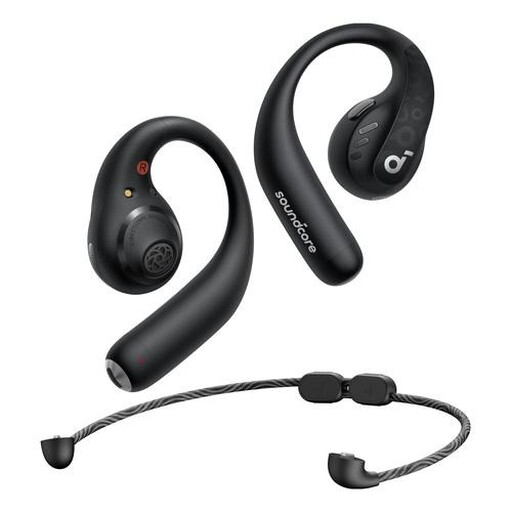
Why it suits this profile: An earhook, buttons and a stated playback time of 14 hours make this model suitable for intensive workouts and everyday calls.
The specifications list IPX5 and a secure earhook. This helps with sweat and light rain, but does not make it a swimming headset.
Bluetooth 5.3, AAC/LDAC/SBC, 14 hours of battery life, microphone functionality and physical control buttons.
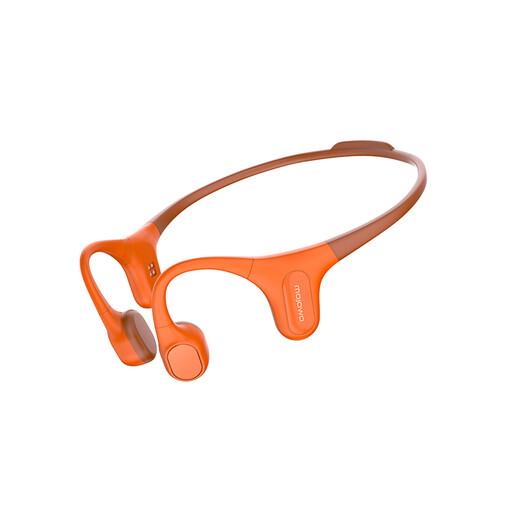
Why it suits this profile: According to the product description, this model is intended for swimming, running, cycling and fitness, with local music storage.
The stated IP68 rating and 32 GB of storage address two common problems: use in water and reliance on Bluetooth while swimming.
Bone conduction, Bluetooth, 32 GB of MP3 storage and IP68 according to the supplied product specifications.
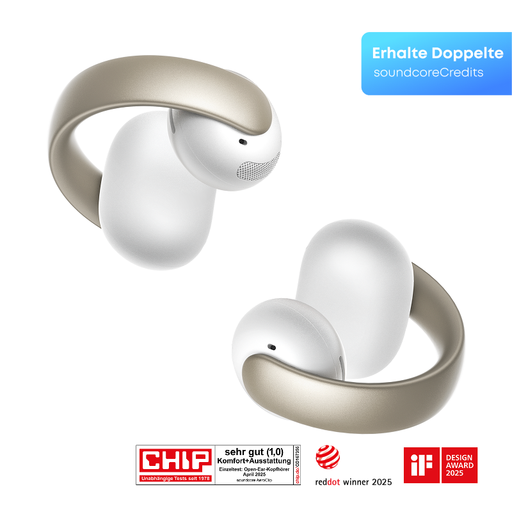
Why it suits this profile: The open-ear TWS design, Bluetooth 5.4 and four microphones are well suited to calls, music and light exercise.
The on-ear positioning does not block the ear canal. Check the IP rating before buying if you plan to use the model outdoors in the rain.
Bluetooth 5.4, touch controls, around 8 hours of playback and four microphones according to the product details.
We have put together a complete, up-to-date list of products that fully meet these strict selection criteria and the applicable European safety regulations.
Most models work with devices that support Bluetooth audio. Turn on the headset, open your smartphone’s Bluetooth settings and select the product name. A fully charged battery may be required when pairing for the first time. Also check whether your phone supports the desired codec or app.
Usage time per charge varies depending on the model, volume, connection and microphone use. In the supplied specifications, examples range from around 7 to 14 hours. Battery capacity decreases over time. Store the headset in a dry place, avoid extreme heat and only charge magnetic contacts once they are free from moisture.
Only if the manufacturer explicitly mentions swimming and the water resistance is suitable for it. A high IP rating is not automatically sufficient without reading the conditions of use. Bluetooth works only to a limited extent underwater, so a model with MP3 storage is more practical for swimming lengths. Rinse a swimming headset with fresh water after exposure to salt or chlorinated water, and allow it to dry completely before charging.
