
Vandaag of morgen in huis

Kwaliteit gegarandeerd

Welkomstaanbiedingen ontgrendelen: GRATIS bezorging | Tot 80% korting | Gratis 30 dagen JoyPlus-proefperiode
Download de app
Open-ear Bluetooth headphones let you listen to music, podcasts or phone calls without completely blocking your ear canal. That’s useful when walking, running, cycling or commuting. Yet many models look similar, despite significant differences in fit, water resistance and storage.
Look out for these three common pitfalls:
With open-ear earbuds, the speakers sit beside or above your ear. Your ear canal stays clear, so you can still hear your surroundings. This type is suitable for everyday use, walking and light exercise.
Bone-conduction headphones use transducers that usually rest against the area near your cheekbones. There are no earbuds in your ear canal. The listening experience differs from that of traditional earbuds: in particular, bass response and maximum sound isolation may be different.
Clip-on earbuds clip around or onto your outer ear. They’re compact and often lightweight, but the fit depends greatly on the shape and size of your ear. If you’re looking for headphones for running or cycling, consider not just the weight but also how securely they stay in place when you move your head.
The IP code tells you about protection against water and dust. According to the product specifications, a product with IPX4 is resistant to splashes. That’s suitable for sweating or light rain, but not for swimming.
For waterproof swimming headphones, you’ll often see a higher rating, such as IP68 or IPX8. Always check the instructions for use: some models are designed for pool water and fresh water, but not seawater. It’s a good idea to rinse them with clean water after swimming. Never charge wet headphones.
Check the charging case, too. The headphones may be water-resistant even if the case isn’t.
A battery life of around eight to nine hours may be enough for commuting. For long training sessions or several days without charging, a charging case or built-in storage is more practical.
Headphones with MP3 storage don’t always use Bluetooth when playing stored files. This can be especially useful when swimming, as Bluetooth signals have limited range in water. Check how much storage is available and which file formats are supported.
With models featuring Bluetooth 5.3 or Bluetooth 5.4, the main considerations are compatibility and a modern connection. The version number alone doesn’t tell you how many hours the battery will last or how good the sound quality is.
For headphones for cycling or running, a secure fit and easy-to-use controls matter more than a long list of extra features. Look for:
Open-ear headphones don’t mean you’re completely safe in traffic. Keep the volume low enough to hear traffic, cyclists, sirens and warnings. Also check your local traffic laws and the manufacturer’s instructions.
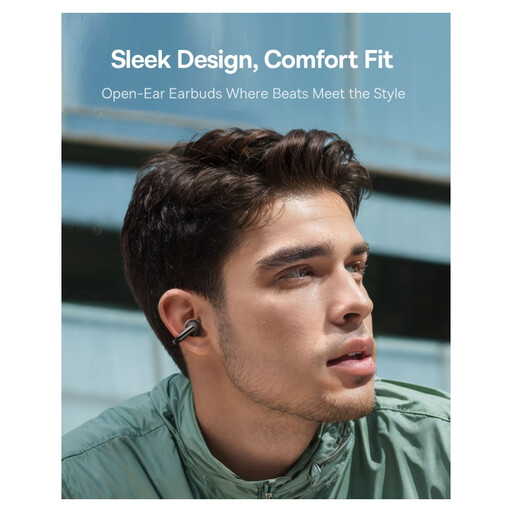
Why it suits this user: This open-ear TWS model is designed for everyday listening and light exercise. The product specifications list Bluetooth 5.4, a range of up to 10 metres in an open space and a USB-C charging port.
The main limitation is clear: according to the product specifications, this model isn’t waterproof. That makes it less suitable for swimming or very wet training sessions.
Open-ear design, Bluetooth 5.4, a frequency range of 20 Hz to 20 kHz and a 600 mAh charging case.
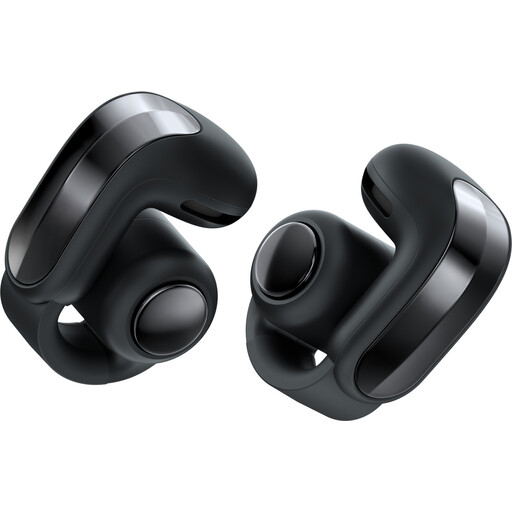
Why it suits this user: Designed for everyday use, calls and cycling, this model has an open fit, an integrated microphone, app controls and a stated listening time of up to nine hours.
The IPX4 rating makes it clear that these headphones are splash-resistant, not suitable for swimming. That helps you avoid buying an everyday model for swimming sessions.
Bluetooth 5.4, up to nine hours of battery life, wireless charging for the case and control via the Bose app, according to the product information.
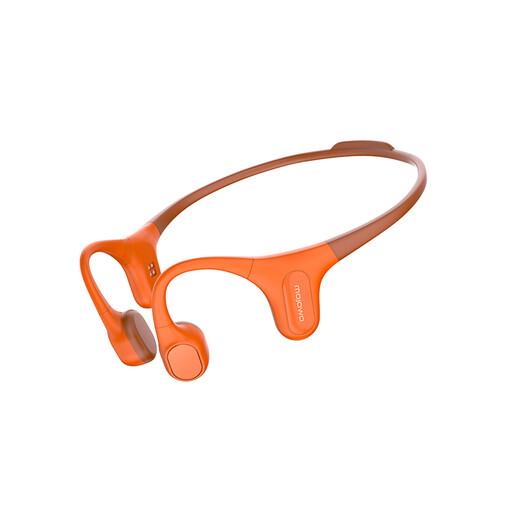
Why it suits this user: This model is designed for people who combine running, cycling, swimming and training. The product listing specifies IP68 water resistance and 32 GB of built-in MP3 storage.
Built-in storage means you don’t have to rely on a Bluetooth connection when swimming. Rinse the model after use and only charge it once it’s completely dry.
Bone-conduction design, 32 GB of storage and an IP68 rating, as listed for the product.
We’ve put together a complete, up-to-date list of products that meet these strict selection criteria and the current European safety regulations.
That depends on local traffic laws, your surroundings and the volume. An open design lets you hear ambient sounds, but it’s no substitute for staying alert. Don’t use a model if you can’t adequately hear the controls or traffic around you.
Only if the product specifications explicitly say it’s designed for swimming and its water-resistance rating supports this. A Bluetooth sports headset with an IPX4 rating only isn’t suitable for swimming. Also check whether MP3 storage is available, as Bluetooth has limited use underwater.
Lifespan depends on charging cycles, moisture, temperature and care. Clean off sweat and chlorine residue, only charge with dry connections, and don’t leave the device in a hot car for long periods. Avoid listening at maximum volume for extended periods, too.
