
Vandaag of morgen in huis

Kwaliteit gegarandeerd

Welkomstaanbiedingen ontgrendelen: GRATIS bezorging | Tot 80% korting | Gratis 30 dagen JoyPlus-proefperiode
Download de app
Would you like to listen to music while running, cycling or training without completely shutting yourself off from traffic and other people? An open-ear Bluetooth headset could be a practical choice. The speakers do not sit deep inside your ears, so you can usually still hear your surroundings.
However, many models look similar while differing considerably in comfort, water resistance, battery life and controls. Pay particular attention to these three common pitfalls:
With open-ear earbuds, the speaker generally rests next to or above the ear. Your ear canal remains open. This can be comfortable when walking, working out and using them day to day, but music may sound less clear in a busy environment.
A bone conduction headset uses a frame positioned by the temple or cheekbone. Manufacturers position this type as a way of transmitting sound through vibrations. The experience varies from person to person, and the bass response may differ from that of in-ear earbuds. A good fit is important: the device should not pinch when you move your head.
Conventional wireless earbuds more often seal the ear canal. They can therefore offer more detail and bass, but allow less ambient sound through. For Bluetooth earbuds for running, it is therefore sensible to consider not only audio quality, but also road safety, stability and local regulations. Do not use headphones while cycling or driving if they make you less alert.
The IP classification consists of numbers and sometimes an X. The first digit relates to dust, while the second refers to water. IP55, for example, offers protection against dust and water jets, whereas IPX4 mainly indicates protection against splashes. This does not automatically make a product suitable for heavy rain, showering or swimming.
For waterproof swimming headphones, check:
The Verbex X7S is listed in the product information as IPX8 and intended for fresh water and pool water. According to the safety information, the device must be rinsed with clean water after contact with salt water and dried completely before being charged. So regard an IP code as a technical indication, not unlimited permission to use the product however you wish.
A headset with long battery life is useful for commuting, lengthy workouts and travel. Always compare playback time on a single charge with the total capacity including the charging case. The Soundcore Aeroclip and AeroFit 2 state up to 8 hours of use, while the Baseus Eli Sport 1 states approximately 7 to 8 hours per charge and around 30 hours with the charging case. According to Baseus, these figures were measured in the laboratory at approximately 70 per cent volume; actual results may vary.
For swimming or exercising without your phone, local storage is more useful than Bluetooth alone. The Mojawa RunPlus and Verbex X7S are offered with 32 GB MP3 storage. Before buying, check which file formats are supported and how music is transferred. A storage function is not the same as streaming without a phone.
Sports headphones should stay in place while you move without creating constant pressure. Ear hooks, ear clips and a neckband each distribute weight differently. According to the product details, the Verbex X7S weighs 140 grams; the Soundcore Aeroclip is listed at 60 grams and the AeroFit 2 at 85 grams. The number alone does not tell you everything: the shape and pressure on the ear also determine whether a model feels like a comfortable headset.
Also consider whether the controls can be used with wet hands, as well as the number of microphones and the Bluetooth version. The Aeroclip and AeroFit 2 use Bluetooth 5.4. This tells you something about the connection standard, but does not by itself guarantee a greater range in every home or sporting environment.
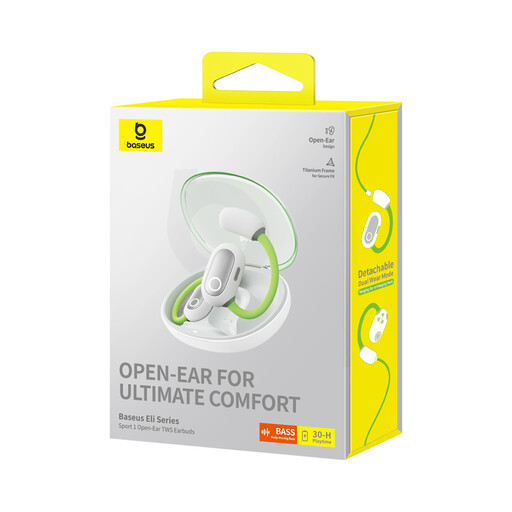
Why it suits this profile: This open-ear model is suitable for anyone looking for a straightforward wireless solution for walking, fitness and everyday listening.
The product information provides specific usage figures: approximately 7 to 8 hours of playback and around 30 hours with the charging case. According to the safety information, this model is not waterproof.
16.2mm driver, USB-C charging and a stated range of 10 metres in open conditions.
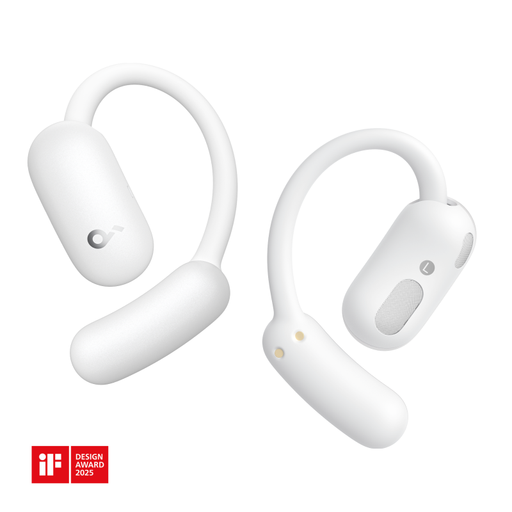
Why it suits this profile: The combination of an open-ear design, button controls and call support is well suited to intensive everyday use.
The IP55 classification is clearly described as protection against water and dust. This helps ensure that the model is not confused with swimming headphones.
Bluetooth 5.4, two microphones, a 750mAh battery and up to 8 hours of playback according to the product details.
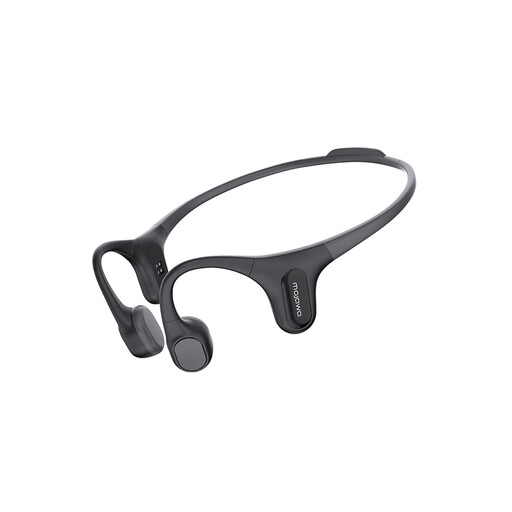
Why it suits this profile: This model is aimed at running, swimming, cycling and gym workouts where local music and an open design are preferred.
The product title mentions IP68, 32GB storage and an MP3 player. Before swimming, however, check the manual and dry the device completely before charging.
Bone conduction design, 32GB of built-in storage and support for use without direct Bluetooth streaming.
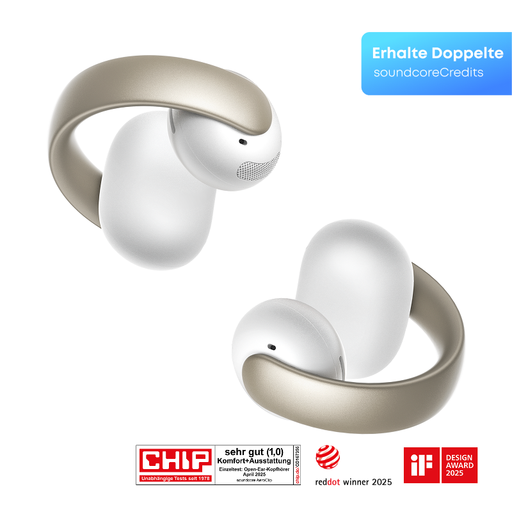
Why it suits this profile: The ear clip design and touch controls are practical for calls, music and light exercise without an in-ear fit.
The specifications mention four microphones for calls and 8 hours of playback. Check the manual to see which noise cancellation features apply to calls.
Bluetooth 5.4, TWS technology, touch controls and a stated weight of 60 grams.
We have put together a complete, up-to-date list of products that fully meet these strict selection criteria and the applicable European safety regulations.
They can be, particularly if you want to remain aware of your surroundings. Choose a model that stays securely in place and does not press against your glasses or sunglasses. Keep the volume low enough to hear traffic and other runners. Open-ear does not automatically mean you are safe in every situation.
Only if the product information explicitly supports swimming and the water-resistance rating is suitable for it. Bluetooth often works only to a limited extent underwater. A model with local storage, such as some bone conduction headphones with MP3 memory, may be more practical for this purpose. Always follow the instructions regarding fresh water, salt water, rinsing and charging.
The battery life per charge is around 7 to 8 hours for several models, but batteries age through charge cycles and heat. Do not leave the device in a hot car, charge magnetic contacts only when they are dry and do not use a damaged battery. When buying, also check the warranty, returns policy and whether a manual is available.
