
Vandaag of morgen in huis

Kwaliteit gegarandeerd

Welkomstaanbiedingen ontgrendelen: GRATIS bezorging | Tot 80% korting | Gratis 30 dagen JoyPlus-proefperiode
Download de app
Would you like to listen to music while running, cycling or walking, while still being able to hear your surroundings? Then open-ear Bluetooth headphones may seem like the obvious choice. However, not all models are the same. The wearing style, water resistance and battery specifications determine whether headphones remain comfortable for everyday use.
Many buying problems arise from three recurring pitfalls:
A model with earbuds featuring an ear hook rests around the outer ear. This can provide extra stability while running or cycling. For example, according to its product specifications, the SHOKZ OpenFit Air uses an ear hook and weighs 8.7 grams per earbud.
Clip-on earbuds clip around or onto the outer ear. They do not block the ear canal and may suit users who do not find an in-ear fit comfortable. However, check that the clip does not put too much pressure on your ear shape.
Bone-conduction headphones transmit sound through vibrations, without the transducer sitting in the ear canal. This is a different technology from conventional open speakers. According to the product information, the Sanag S7S is an open-ear bone-conduction model. With this wearing style too, it is important to keep the volume at a moderate level.
For outdoor sport, the IP code is a useful point to check:
According to its product specifications, the Sony LinkBuds Clip has IPX4. The SHOKZ OpenFit Air has IP54. With both models, the same rules apply: do not submerge them, do not charge them when wet and follow the instructions for use. A water-resistant Bluetooth earbud is therefore not automatically suitable for swimming or heavy rain.
Pay attention to the combination of:
The Sony LinkBuds Clip specifies 9 hours of playback for the headphones and up to 37 hours including the charging case. It also mentions a fast-charging function where 3 minutes of charging provides approximately 1 hour of playback. The Bose Ultra Open Earbuds Black specifies up to 7 hours of playback and Bluetooth 5.3. These figures come from the product information and may vary depending on volume, connection and features.
A feature such as AI headphones or AI translation may sound appealing, but first check what is actually supported: voice assistant, translation, controls or call functions. “AI” is no substitute for clear information about battery life, fit and water resistance.
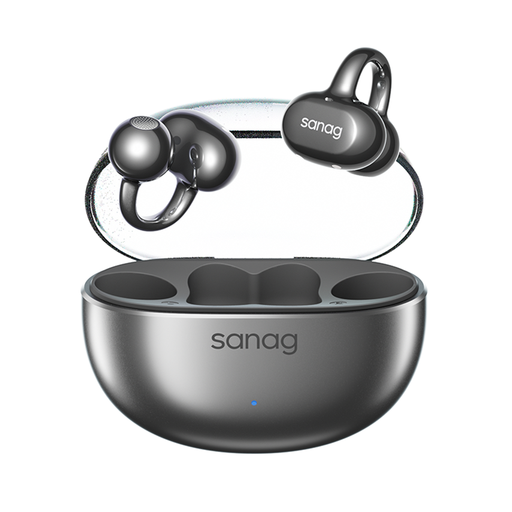
Why it suits this profile: The clip-on design and Bluetooth controls suit users trying an open design for the first time while walking, commuting or doing light exercise.
This model is not an in-ear earbud and, according to the product information, does not seal the ear canal. Before buying, check the fit and water resistance in the manual.
Open-back design, ear-clip shape and support for touch controls and AI voice assistants according to the product description.
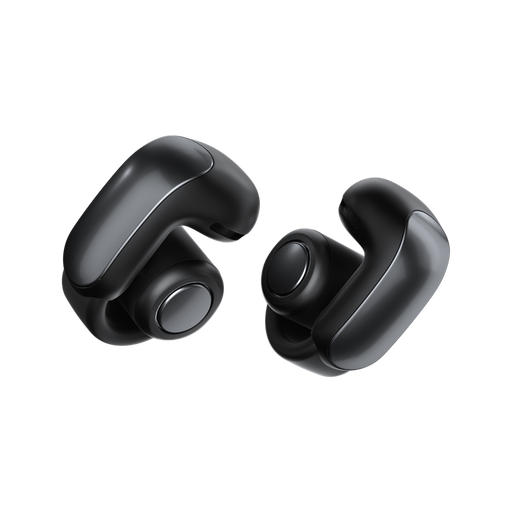
Why it suits this profile: Suitable for everyday listening and calls, and for users looking for an open design with Bluetooth 5.3 and a charging case.
The product information specifies an open design and IPX4. This means you should not treat the model as fully waterproof.
Bluetooth 5.3, up to 7 hours of playback according to the product description and an open-ear wearing style.
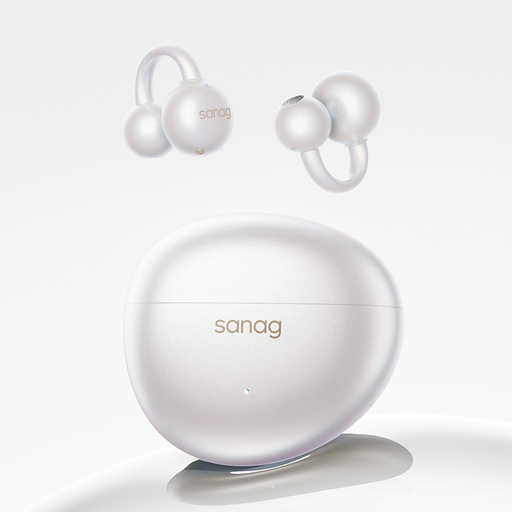
Why it suits this profile: The over-ear bone-conduction design is aimed at athletes who do not want earbuds in the ear canal and want to keep their ears open during outdoor activities.
The product information warns that a high volume can mask surrounding sounds. Wearing an open design does not replace paying attention to traffic and other sounds.
Bone-conduction technology, over-ear wearing style and a stated open AI translation feature.
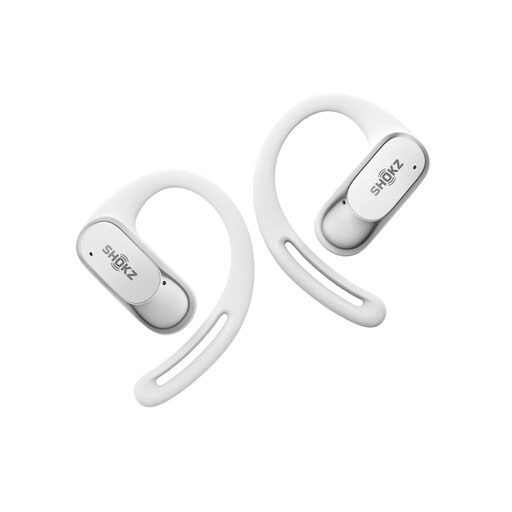
Why it suits this profile: The ear hook, built-in microphone and IP54 rating suit runners and active users who also want to make calls.
According to the product details, IP54 protects the earbuds against dust and light splashes, but not against submersion or heavy rain.
Bluetooth 5.2, stereo audio, built-in microphone and a charging case with a capacity of 600 mAh according to the product specifications.
We have compiled a complete, up-to-date list of products that fully meet these strict selection criteria and the applicable European safety regulations.
An open design helps keep surrounding sounds audible, but it is not a safety feature you can rely on completely. Keep these points in mind:
A built-in microphone can be useful for phone calls, but wind and traffic can affect clarity. So do not just look at whether a microphone is present; also consider its positioning and the call settings available in the accompanying app.
Yes, ear-hook and clip-on models are among those designed for this purpose. Choose a fit that remains stable while you move and check the IP rating. When running in busy traffic, you still need to keep the volume limited and actively monitor your surroundings.
This depends on battery usage, charging frequency, sweat, storage and maintenance. A model may work for several hours per charge, while a charging case provides additional usage time. For example, the Sony LinkBuds Clip specifies 9 hours per headphone and 37 hours in total with the case. Treat figures like these as product specifications under certain conditions, not as a fixed guarantee of daily use.
Many models have a built-in microphone and Bluetooth profiles for calls. Their suitability depends on wind noise, the microphone and your surroundings. An open design can be practical for calls at home or in the office; on a busy cycle path, clarity may vary.
