
Vandaag of morgen in huis

Kwaliteit gegarandeerd

Welkomstaanbiedingen ontgrendelen: GRATIS bezorging | Tot 80% korting | Gratis 30 dagen JoyPlus-proefperiode
Download de app
When running, cycling or working out, you want to listen to music without being completely cut off from your surroundings. Open-ear Bluetooth earbuds for sport can be a good solution, but not every model works in the same way. Ear clips, bone-conduction headphones and open-ear headphones differ in how they are worn, how they reproduce sound and how well they protect against moisture.
Marketing copy often mentions features such as noise cancellation, AI calling or water resistance. These terms only tell you something useful if you check the technical details and usage limitations.
With an open-ear model, the speakers are generally positioned beside or above the ear canal. With bone-conduction headphones, sound is transferred through contact points near the ear and skull. A clip-on model, on the other hand, attaches to the outer ear.
Comfort varies from person to person. An ear clip can be comfortable if you do not want earbuds inside your ears, while a bone-conduction model puts less pressure around the ear canal. So check that the product genuinely has an open design, rather than simply being described as a “sports earbud”.
With in-ear earbuds, active noise cancellation can reduce background noise. With open-ear models, it works differently, and “noise cancelling” may refer to phone calls or specific modes. According to the product description, the Sanag S6S Nova supports active noise cancellation; consult the manual for the exact modes.
Do not use noise cancellation in situations where you need to hear traffic, cyclists or warnings. An open design is no substitute for staying alert. Some product warnings therefore advise against using earbuds while cycling, driving or operating machinery.
Pay close attention to the exact IP rating:
The charging case often has a lower level of protection than the earbuds. According to the product specifications, the QCY Melobuds Neo are rated IPX5, but the case is not waterproof. A model suitable for swimming should therefore not only have a high IP rating, but should also provide instructions on rinsing, drying and charging.
For running, an ear hook, ear clip or band behind the head are practical ways to improve stability. Look at the weight of each earbud, the shape of the hook and the material that touches your skin. According to the product description, the TALIX G1 uses a silicone ear hook and weighs 5.2 grams per earbud. These are verifiable details, but the fit still depends on your ears.
For fitness and everyday use, soft contact points and an adjustable or flexible design are often more important than a large number of additional features.
Check whether the stated playback time applies per charge or includes the charging case. The Baseus Eli Sport 1 states around 7 to 8 hours per charge and around 30 hours with the case, measured by Baseus at a volume of 70 per cent. According to Baseus’s own measurements, actual usage time may vary.
A model with a magnetic charging cable, such as the Verbex K08 and Mojawa Run Plus, can be useful when travelling or taking part in outdoor sports. However, check that the cable is specifically designed for the model and that the connection points are dry before charging.
Bluetooth 5.3 or 5.4 mainly tells you about the supported connection technology; it does not automatically guarantee a longer range or better sound. Also look at:
The TALIX G1 is described as having a four-microphone array for calls. The product description links this to algorithmic noise cancellation. This is a supplier product specification, not a guarantee that every voice will remain audible on every street.
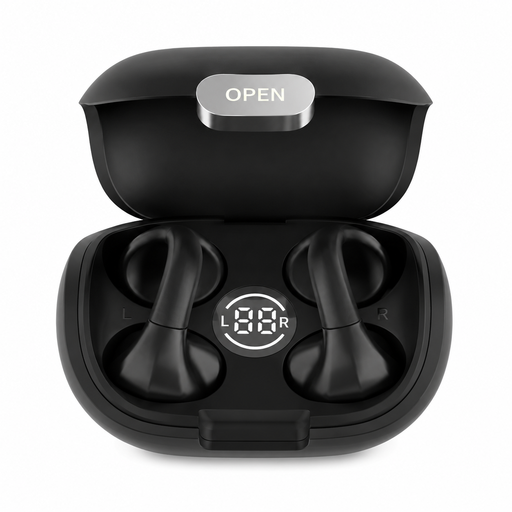
Why it suits this profile: The clip-on and ear-hook design is aimed at fitness, travel and everyday use. The stated playback time is around 5 to 7 hours.
The specifications mention Bluetooth 5.4 and a range of up to 15 metres. The available information does not state an IP rating, so do not use it as waterproof sports earbuds.
Ear hook, touch controls and charging case with digital display.
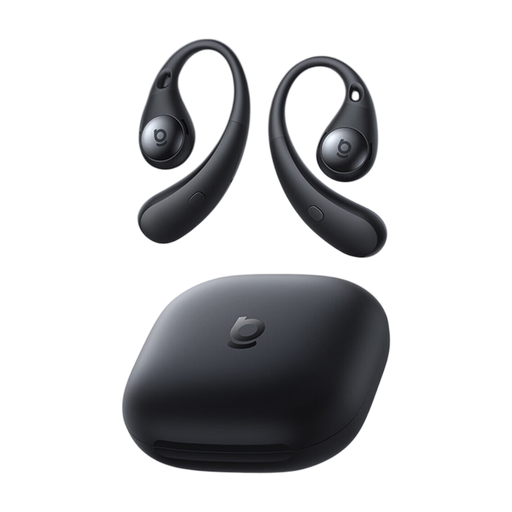
Why it suits this profile: This model combines an open-ear design with Bluetooth 6.0, support for SBC, AAC and LDAC, and around 8 hours of listening per charge.
The product information lists specific codecs, frequency range and charging time. No water resistance is mentioned, so this model is best suited to dry weather and everyday use.
Open design, LDAC support and USB-C charging.
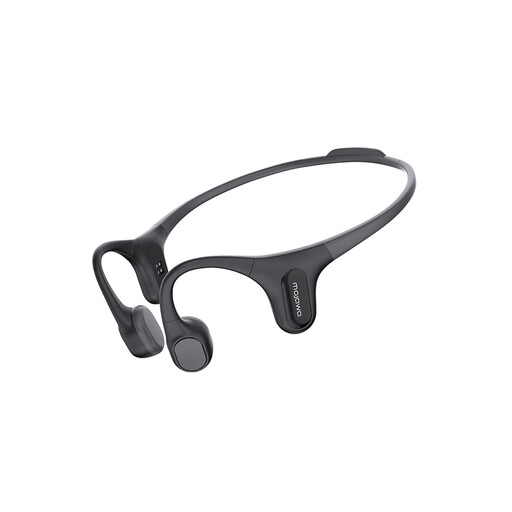
Why it suits this profile: The bone-conduction design is intended for running, gym sessions and everyday use. The product name and description state 32 GB of storage and IP68 water resistance.
The stated IP68 rating is better suited to intensive outdoor sports than a model without an IP rating. However, follow the instructions on rinsing, drying and charging.
32 GB of built-in MP3 storage and an open-ear bone-conduction design.
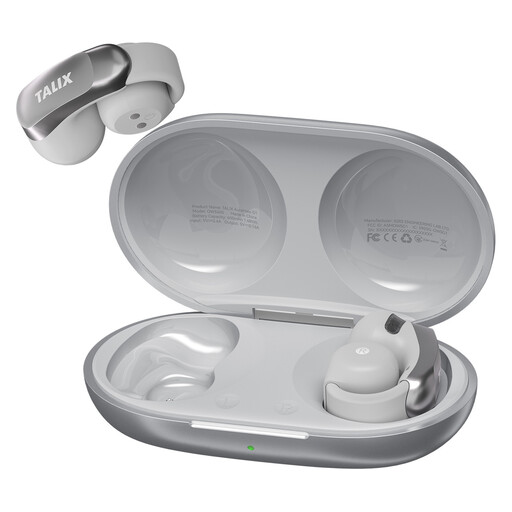
Why it suits this profile: According to the product description, the ear clip weighs 5.2 grams per earbud. Four microphones, Bluetooth 5.3 and total battery life of up to 28 hours are suitable for work, travel and light training.
The product description states IPX4, meaning sweat and light rain fall within the specified use. Immersion and heavy rain should be avoided.
Up to 7 hours per charge, 28 hours with the case and, according to the product specifications, 2 hours of playback after 10 minutes of charging.
We have put together a complete, up-to-date list of products that fully meet these strict selection criteria and the applicable European safety regulations.
They can be a good choice for running if you want to listen to music while remaining aware of sounds around you. Check the stability, weight and water resistance. Keep the volume low enough and do not use noise cancellation in places where traffic noise is important.
Bone-conduction headphones usually rest near the temples and transfer sound through contact points. Clip-on earbuds attach to the outer ear and direct sound towards the ear from the outside. The listening experience, pressure distribution and fit vary. If you do not want earbuds inside your ears, you can compare both designs for comfort and stability.
Battery life per charge is around 5 to 8 hours for many models, while a charging case can provide several additional charges. Actual usage time depends on volume, Bluetooth features, calls and any noise cancellation. Keep the earbuds dry in the case, avoid prolonged heat and charge them with the supplied or a suitable cable. This helps limit wear to the battery and charging contacts.
