
Vandaag of morgen in huis

Kwaliteit gegarandeerd

Welkomstaanbiedingen ontgrendelen: GRATIS bezorging | Tot 80% korting | Gratis 30 dagen JoyPlus-proefperiode
Download de app
Open-ear Bluetooth earbuds let you listen to music or podcasts without completely blocking your ear canal. That makes them appealing to runners, cyclists, commuters and people who find in-ear models uncomfortable. However, not every open design is suitable for every situation. A low price, a striking term such as “AI” or long battery life does not automatically tell you anything about fit, call quality or durability.
Joybuy Product Recommendation Officer highlights the key points to consider. This helps you compare clip-on earbuds, wireless open-ear headphones and other models based on verifiable specifications rather than marketing language.
Open-ear models rest on or around the outer ear. An ear hook, silicone clip or flexible construction can help keep the model in place, but the shape of your ear determines how comfortable it feels. Pressure on the outer ear can become irritating, particularly during longer train journeys or extended running sessions.
Therefore, pay attention to the weight per earbud, the clip material and whether you can adjust its position. A model weighing 5.2 grams per earbud, such as the TALIX G1, offers a different wearing experience from a larger model with a rigid ear hook.
In practice, an IPX4 rating means protection against splashes, sweat and light rain under the manufacturer’s specified conditions. It does not mean that you can submerge the earbuds or use them in heavy rain without risk.
Also check whether the charging case has the same protection. The Baseus Bowie MC1, for example, is specifically stated not to be waterproof. This model is therefore less suitable for sport in wet conditions, even if the open-ear design itself seems appealing.
With open-ear earbuds, surrounding sounds are usually easier to hear than with fully sealed in-ear models. This is useful in traffic, but the sound level of your music, wind and traffic will still depend on your surroundings.
Products with “noise cancelling” often use microphones and software to reduce background noise during calls or in certain listening modes. According to Sanag’s product information, the S6S Nova supports specific noise-reduction modes; refer to the manual for details. So do not see noise-cancelling earbuds as a guarantee that all surrounding sounds will disappear or that calls will sound equally clear everywhere.
An ear clip Bluetooth headset clips around or onto the outer ear. This can provide a secure fit when walking or working out, without the pressurised feeling of in-ear earbuds. An ear hook can offer extra support during fast movements, while a lighter clip is often more comfortable for everyday use.
Pay attention to:
Terms such as bone-conduction earbuds are sometimes used for models that do not literally work according to traditional bone-conduction principles. The Sanag S8S Ultra, for example, is described as a “bone conduction concept” with transducers positioned by the cheek and an open design. Therefore, always check the technical description rather than relying solely on the product title.
Bluetooth 5.3 and Bluetooth 5.4 are current connection standards. They can contribute to a stable connection and lower energy consumption, but the actual experience also depends on your smartphone, obstacles and software.
For everyday use, the following are also important:
The Verbex M8 lists Bluetooth 5.4, a range of up to 15 metres and approximately 5 to 7 hours of playback time. These are specific details that can be compared with other models.
Do not look only at the number of hours provided by the earbuds. Manufacturers often also state the additional capacity offered by the charging case. Sony LinkBuds Clip, for example, offers 9 hours from the earbuds and 37 hours in total with the case. Soundcore Aeroclip is specified as offering up to 8 hours of playback time.
Also check:
For sports earbuds and running earbuds, a clearly stated splash-resistance rating is useful as a minimum. IPX4 is suitable for sweat and light splashes according to the stated product information, but not for submersion. Store the earbuds somewhere dry after use and only charge them once the connectors and contact points are dry.
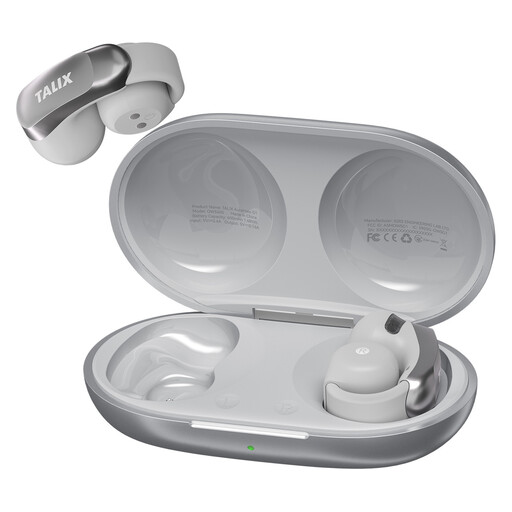
Why it suits this profile: The clip-on design, weight of 5.2 grams per earbud and Bluetooth 5.3 provide a straightforward starting point for everyday use, walking and light training.
The specifications clearly state the weight, fit and IPX4 protection. This makes the choice more concrete than a general claim about comfort alone.
Up to 7 hours of playback per charge, 28 hours with the case, four microphones and fast charging according to the product information.
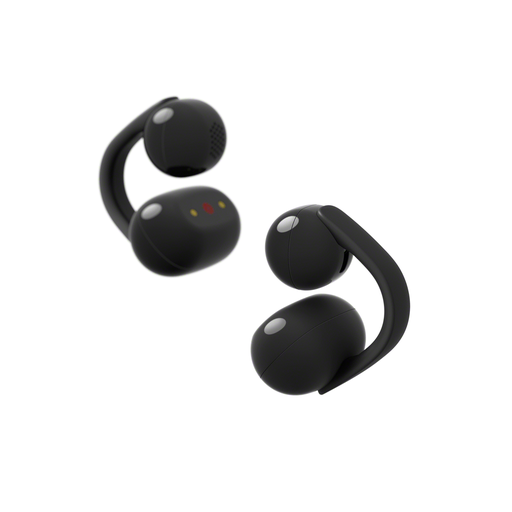
Why it suits this profile: This open-ear model is aimed at commuters and music listeners who value a lightweight clip, adjustable sound and long total battery life.
The product information lists Bluetooth 5.3, IPX4 and a 10-band equaliser. This allows you to assess the connection, protection and sound settings separately.
9 hours of playback from the earbuds, up to 37 hours with the charging case and a 3-minute quick-charge function for 1 hour of use according to Sony.
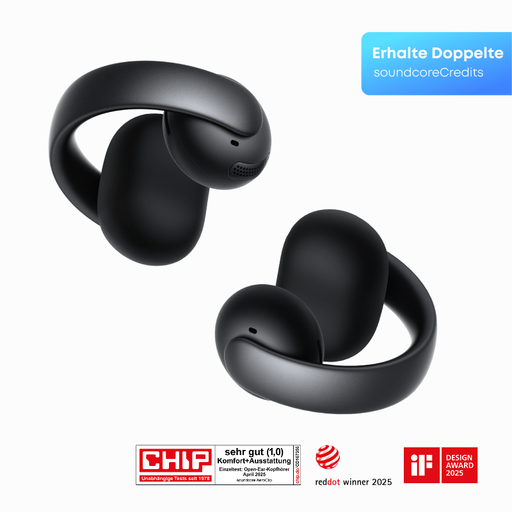
Why it suits this profile: The flexible open-ring construction, four beamforming microphones and open-ear positioning make it suitable for sport, commuting and frequent calls.
The construction is specified as flexible and the microphone arrangement is clearly described. This helps you assess the fit and call performance before buying.
Up to 8 hours of continuous playback, Bluetooth 5.4 and an open-ring design that can withstand up to 20,000 bends according to the product information.
We have put together a complete, up-to-date list of products that fully meet these strict selection criteria and the applicable European safety regulations.
An open design helps you continue to hear sounds around you, but it is no substitute for staying alert. Do not use earbuds while driving. Also take care when cycling and keep the volume low enough to hear traffic, warnings and other road users.
The following practical points also apply:
That depends on the fit, weight and water resistance. A clip or soft ear hook may stay more securely in place while running than a loose-fitting model. Check the IP rating and keep the volume moderate. Open-ear does not mean you are completely safe in every traffic situation.
Playback time per charge is typically a few hours for many models; the charging case extends the total usage time. Actual battery life depends on volume, calls, Bluetooth features and software. The lithium battery also gradually ages, so its capacity may decrease over time.
Not necessarily. There are affordable clip-on models with Bluetooth 5.3, while more expensive versions offer additional features such as equaliser settings, multipoint, multiple microphones or more extensive app controls. Compare the fit, battery life, IP rating and warranty rather than looking at the price alone.
