
Critical take comparer
You listen back to takes in a quiet room and want to assess differences in sound, timing or placement; sound isolation isn’t your top priority.


If you mainly compare recorded takes in a quiet room, open-back wired headphones are an obvious choice, as long as sound leakage isn’t an issue. Choose closed-back headphones instead if you also record with a microphone or share the room. Manufacturers describe open-back models as suitable for critical listening, but that isn’t a direct comparison of their sound: compare the same takes yourself and check the connection, cable and exact model.
You listen back to takes in a quiet room and want to assess differences in sound, timing or placement; sound isolation isn’t your top priority.
You switch between takes during long sessions and consider fit, cable and replaceable wear parts as well as sound.
You use a microphone or share the space, so sound leakage and isolation may matter more than an open-back design.
Best when: you’re comparing differences between takes in a quiet room and sound leakage isn’t a concern.
The trade-off: open-back earcups provide little isolation and can let sound reach a live microphone or people nearby.
Best when: you monitor while recording, share the room or want to reduce background noise.
The trade-off: isolation also depends on fit; closed-back doesn’t automatically mean a model sounds better for comparing takes.
First, decide whether you’ll only listen back afterwards or also use a microphone during recording. Then check the fit, connection and exact model; an impedance rating alone won’t tell you whether your device can drive the headphones sufficiently.
| What to consider | What should you check? | Who should pay particular attention? |
|---|---|---|
| Differences in sound | Compare the same familiar takes at a similar listening level and check whether the design is open-back or closed-back. | If I mainly want to assess subtle differences in sound in a quiet room, I want to base my judgement on the same recordings. Around 36% of consumers prioritise comparing sound above all else. |
| Stereo placement | Listen to passages with clear placement and reverb; decide whether you can do this without a live microphone. | When I compare panning, depth and reverb between takes, I want to hear what matters to my mix. Around 29% of consumers prioritise stereo placement. |
| Fit and maintenance | If possible, wear the headphones for a longer period and check whether the ear pads and cable are replaceable on each model. | During long editing sessions, I want a fit that works for me and to know which parts can be replaced. Around 21% of consumers prioritise comfort and maintenance. |
| Sound leakage and isolation | Decide whether you’ll be recording at the same time or sharing the room; check the fit and impedance version against your output. | If I use a microphone or share the space, I want to minimise sound leakage and background noise. This is the top priority for around 14% of consumers. |
Manufacturers’ descriptions of a product’s intended use and sound aren’t an independent comparison of the models you’re considering.
Compare the same familiar takes at a similar listening level and decide which differences matter to your work.
Open-back headphones let sound into the room, which can be a problem with a live microphone or in a shared space.
Before buying, decide whether you’ll only listen back afterwards or also monitor during takes.
beyerdynamic offers 32-, 80- and 250-ohm versions, each intended for different audio sources.
Check the full model details, connection and usable listening level with your own output.
beyerdynamic describes the open-back DT 900 PRO X as suitable for critical listening and mixing, and the closed-back DT 770 PRO for monitoring.
Sennheiser describes the open-back HD 490 PRO as a model for mixing, and the open-back HD 560S for analytical listening and A/B comparisons.
AKG positions the open-back K702 for precise listening and mixing when isolation isn’t the top priority.
The closed-back ATH-M50x is a wired model that Audio-Technica also describes as suitable for studio work.
Sony describes the MDR-7506 as a foldable professional model you can take between workplaces.
This selection features closed-back over-ear headphones with a stated wired listening option. These features don’t automatically make a model suitable for critical take comparisons; assess the sound using your own reference recordings.
 No image available
The product description lists an included 3.5 mm cable for wired listening; check that the connection suits the way you work.
The product name describes wireless over-ear headphones with noise cancelling and a 60-hour battery life.
 No image available
The product description lists an audio cable for wired listening without using the battery; check that the cable and connection work with your device.
The product information lists a closed-back design and Bluetooth.
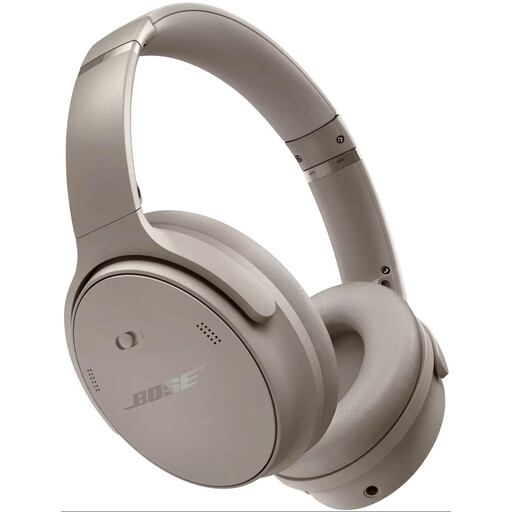 No image available
The product description lists an audio cable for listening without using the battery; check the connection and fit for your needs.
The product information lists Bluetooth and active noise cancelling.
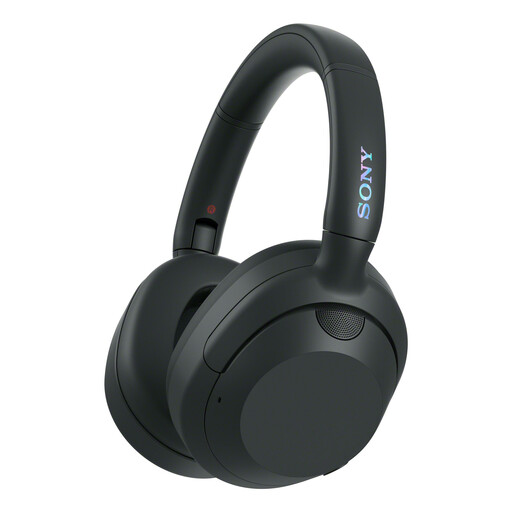 No image available
The product description lists a detachable cable and a 3.5 mm connection for wired listening; check that it matches your device.
The product information lists a closed-back design and over-ear fit.
 No image available
The product description lists a detachable cable for wired listening; check which connection you need.
The cable listed has USB-C and 3.5 mm connections. The product information also lists active noise cancelling.
If a microphone could pick up the playback, well-fitting closed-back headphones are the more obvious choice. If you only listen back in a quiet room after recording, there’s no need to rule out an open-back model for that reason.
Check both your device’s output and the plug and supplied adaptor for the exact model. For example, AKG lists a 3.5 mm plug with a 6.3 mm adaptor for the K702; beyerdynamic also specifies different intended audio sources for the DT 770 PRO impedance versions.
Before buying, check whether replacement ear pads are available for the exact model. AKG lists replaceable ear pads for the K702, as does beyerdynamic for the DT 770 PRO; don’t assume this applies to an entire range of models.
Keep the volume low and take breaks. The World Health Organization recommends an average of 80 dB for up to 40 hours a week and, at 90 dB, four hours a week; the volume setting on your device doesn’t necessarily show the sound level reaching your ears.
When you buy from a business online at a distance, you generally have a 14-day cooling-off period; check the relevant exceptions and returns policy. A product must also be fit for purpose, and if there’s a fault, you should in principle contact the seller. In the Netherlands, not all products have a fixed statutory warranty period of two years.