
Archive editor in a quiet room
After restoration, you mainly assess vocal tone, remaining artefacts and stereo imaging. An open-back model can be compared here without sound leaking to colleagues being a concern.


If you work in a quiet, separate room, compare an open-back studio headphone to assess tonal balance and stereo imaging. In a shared space, a closed-back model is a more logical contender, as you’ll need to consider both background noise and sound reaching your colleagues. With either design, check the fit, compatibility with your headphone output and whether the cable reaches comfortably at the desk’s highest setting without getting in the way. Manufacturer specifications don’t prove that a particular model will make restoration flaws easier to hear.
After restoration, you mainly assess vocal tone, remaining artefacts and stereo imaging. An open-back model can be compared here without sound leaking to colleagues being a concern.
You want to listen while minimising distractions from conversations and other sounds. A closed-back model is worth considering, but assess how well it fits you and how much noise it actually blocks out.
If your desk height changes, you’ll benefit from a cable route with enough room to move, a compatible connection and headphones that stay comfortable during longer listening sessions.
Best for: a quiet, separate listening space where you want to assess tonal balance and stereo imaging.
Bear in mind: an open-back design is less suitable if background noise affects your assessment or other people can hear what you’re playing.
Best for: a shared workspace where conversations or other sounds could be distracting.
Bear in mind: the fit affects how useful the isolation is for you; a longer cable also calls for careful cable management.
| What to consider | What to look for | Who is this important for? |
|---|---|---|
| Restoration details | Compare the same familiar excerpts; don’t base your choice solely on a stated frequency range or a manufacturer’s claim. | If I want to assess remaining clicks, noise, speech and stereo imaging, I don’t want to mistake differences in the headphones’ sound for differences in the recording. Around 33% of consumers prioritise restoration details and assessing sound. |
| Noise in the workspace | Try closed-back earcups on your own head in your workspace; a claim about passive isolation doesn’t give a specific isolation rating. | If I work close to colleagues, I want fewer distractions and to minimise disturbance to others. For around 27% of consumers, the workspace and the effect of background noise are the main concern. |
| Cable and connection | Measure the cable route at both desk heights and check the plug and cables included with the version you’ve chosen. | When switching between sitting and standing, I want enough reach without the cable running alongside moving parts or across a walkway. For around 20% of consumers, freedom of movement and the connection are the main considerations. |
| Fit and replaceable parts | Assess the fit during a realistic listening session and check that replacement ear pads or cables are compatible with the exact model. | If I’m assessing audio for long stretches, I want the headphones to remain comfortable and compatible parts to be replaceable. Around 20% of consumers give fit and maintenance top priority. |
In a shared space, sound from open-back headphones can leak out, or background noise can affect your assessment.
First decide whether your listening space is quiet and separate. Then compare open-back and closed-back models using the same excerpt.
A cable that’s long enough when you’re sitting may pull when the desk is raised. A headphone’s stated impedance alone doesn’t predict the volume your output can deliver.
Measure the cable route at both desk heights and test the headphones with your own output before buying any extra parts.
The World Health Organization (WHO) notes that sound level, listening duration and repeated exposure to loud sound all matter.
Keep the volume at a controlled level and tackle distracting background noise instead of turning it up further.
The manufacturer positions the closed-back DT 700 PRO X for monitoring; its detachable straight cables are 1.8 m and 3 m long.
According to Audio-Technica, the closed-back ATH-M50x comes with cable options for different desk setups.
The open-back HD 600 is an option to compare in a quiet listening space. Sennheiser describes its construction as open-back.
AKG positions the closed-back K371 for studio monitoring and lists three detachable cables.
Neumann positions the open-back NDH 30 for editing, mixing and mastering; it can be compared in a quiet listening space.
These Joybuy options include wired listening; the range covers both consumer headphones and a gaming headset. Check the connection, cable route and fit for your own listening space. Product descriptions don’t prove that a model is suitable for accurately assessing restoration details.
 No image available
An option if you want to listen over a wired connection at your desk and use Bluetooth as well.
The product details list a closed-back, over-ear design, active noise cancellation and an audio cable for listening without battery power.
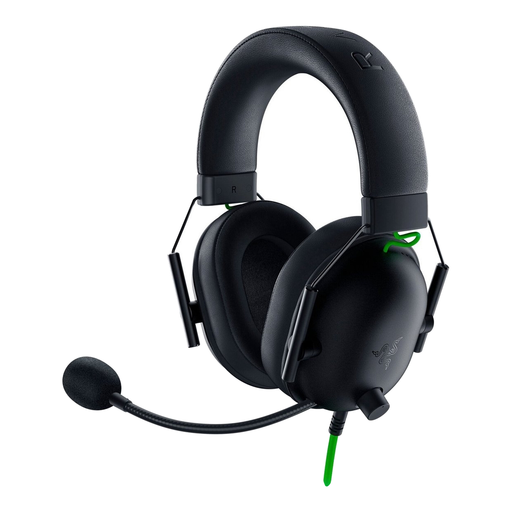 No image available
A wired headset to consider if its 3.5mm connection is compatible with your headphone output.
The product details list an analogue 3.5mm connection, passive noise cancellation and a 1.3 m cable. Check that the cable is long enough when your desk is raised.
 No image available
Could suit you if you want the option of wired and wireless listening; check that the included connection is compatible with your equipment.
The product details list wired and wireless connections, a 200 cm cable, stereo playback, active noise cancellation and a weight of 260 g.
 No image available
An option if you want to use a detachable cable as well as listen over Bluetooth.
The product details list active noise cancellation, a foldable design and a 1 m cable with USB-C and 3.5mm connections. The charger isn’t included. The product information mentions magnets and advises consulting a doctor if you have a medical implant.
Use the same familiar excerpts at a similar, controlled listening level. Listen separately for speech, any remaining clicks or noise, and stereo imaging. Restoration software can address these types of flaws, but product specifications don’t prove that one pair of headphones will make them easier to assess.
Measure the cable route with the desk at its highest and lowest positions, and check your headphone output and the cables supplied with the version you’ve chosen. Keep the cable clear of moving desk parts and walkways.
The WHO identifies sound level, listening duration and repeated exposure to loud sound as factors that matter. Keep the volume at a controlled level and tackle distracting background noise instead of listening at a higher volume.
For distance purchases from a business, you’ll usually have 14 days to change your mind, subject to exceptions, according to the Dutch government. If a product is faulty, contact the seller, who is responsible for resolving the problem. The terms of your specific purchase determine which rules apply.
According to Arboportaal, employees must wear hearing protection if their daily exposure to noise exceeds 85 dB(A). This rule applies to occupational exposure at work; it isn’t a general purchasing standard for everyone listening at home.