
Restoration checker
You compare original and edited archive recordings for clicks, noise and newly introduced artefacts. iZotope advises against over-processing audio during restoration, so faithful playback matters more than adding extra effects.


If you work in a quiet, private space, open-back studio headphones may suit you for assessing spatial placement and balance. If there’s background noise or you share a desk, closed-back headphones are a more practical choice. Check familiar audio clips for clicks and new editing artefacts, and consider the fit, cable and connection too. This practical advice doesn’t prove that one model is better at detecting restoration errors.
You compare original and edited archive recordings for clicks, noise and newly introduced artefacts. iZotope advises against over-processing audio during restoration, so faithful playback matters more than adding extra effects.
You listen while there’s background noise or other people nearby. In that situation, choosing between open-back and closed-back headphones affects both isolation and how much sound leaks out to those around you.
You check lots of clips in a row and weigh up fit, listening volume, cable and desk space. Try the fit for yourself if you can; weight alone doesn’t determine how comfortable a model will be for you.
Choose these when: you work in a quiet, private space and assess spatial placement and balance.
Trade-off: the open design offers less isolation and may let sound leak out to other people.
Choose these when: you want to reduce background noise or work at a shared desk.
Trade-off: check the fit and seal for yourself; they won’t be the same for everyone.
| What to consider | What to look for when buying | Who is this important for? |
|---|---|---|
| Restoration detail | Compare the original and restored audio using a familiar clip at the same volume. A quoted frequency range alone doesn’t prove that playback is neutral. | If I want to distinguish clicks and new artefacts from sounds already in the recording, I put this check first. Around 33% of consumers give restoration detail top priority. |
| Isolation and shared workspaces | Decide whether you need isolation and whether sound might leak out to people nearby; choose a design that suits your space. | If I’m working with background noise or other people are nearby, my surroundings matter a lot. Around 27% of consumers prioritise isolation or the choice between open-back and closed-back headphones. |
| Comfort during long sessions | If possible, try the pressure and warmth of the ear pads, wearing your own glasses if you use them. Weight alone doesn’t tell you exactly how a pair of headphones will feel. | When I’m checking lots of clips in a row, I want a fit I find comfortable and a volume that means I don’t need to turn it up to search for detail. Around 20% of consumers prioritise comfort during extended wear. |
| Connection and cable space | Check the output on your playback device, any adapter you might need, the cable type and how the cable will run. For models with different impedance options, check the exact version. | At a small desk, I want to know whether the cable and connection will work with my audio interface or computer. Around 20% of consumers put connection and manageable cable space at the top of their list. |
The start and end frequencies alone don’t show how loudly individual frequencies are played back or how clearly an editing artefact can be heard.
Compare original and restored clips on your own playback setup, and don’t use the quoted range as your only buying criterion.
The choice between open-back and closed-back headphones depends partly on background noise and sound leakage, not just on how you want to assess spatial playback.
First, decide whether your workspace is quiet and private enough. If it isn’t, compare closed-back models and check the fit for yourself.
According to Thomann Netherlands, the ATH-R30x has a fixed 3 m cable. The DT 770 PRO is available in versions with different impedance ratings.
Before buying, check the exact version, plug, supplied adapter, cable type and connection on your audio interface.
The K371 is a closed-back, foldable studio model for anyone who values isolation and compact storage.
The ATH-R30x is an open-back model for a quiet workspace. The ATH-M50x is a separate, closed-back model.
The open-back HD 490 PRO is designed for a quiet, permanent workspace and comes with two types of ear pad.
The DT 770 PRO is a closed-back studio model available in versions with different impedance ratings.
The MDR-7506 is a foldable, closed-back monitor model if compact storage is important to you.
These Joybuy options list features such as wired listening, a foldable design or noise cancellation. Those features alone don’t show that a model is a neutral studio reference or suitable for reliably assessing restoration artefacts.
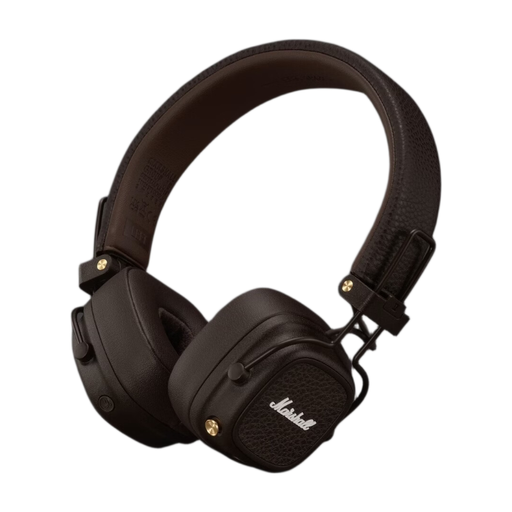 No image available
The listed wired connection may be useful if you want to listen via a cable; the product details don’t establish how neutrally these headphones reproduce archive audio.
Bluetooth 5.3, a 3.5mm audio cable included, a foldable design and a stated weight of 186 g.
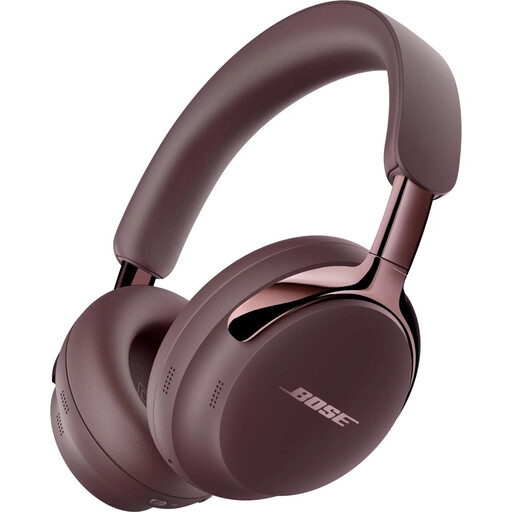 No image available
The wired connection described may suit you if you want to use a cabled audio source; noise cancellation doesn’t automatically make these a neutral studio reference.
Bluetooth 5.4 and a detachable cable with USB-C and 3.5mm connections. The product information says that a charger isn’t included and PD fast charging isn’t supported. The headphones contain magnets; if you have a medical implant, ask the manufacturer and your healthcare professional about possible compatibility.
 No image available
The listed audio cable connection gives you the option to listen via a cable; the stated design and noise cancellation don’t prove that this model is suitable for critical restoration checks.
Closed-back design, Bluetooth 5.3, an audio cable connection and a stated battery life of up to 24 hours.
 No image available
The listed USB-C and 3.5mm cables may be useful if you want to listen via a cable; these features don’t prove that the headphones provide neutral playback for archive checks.
Bluetooth, USB-C audio and a 120 cm cable; the product details also list a 3.5mm cable, active noise cancellation, memory foam ear pads and an adjustable headband.
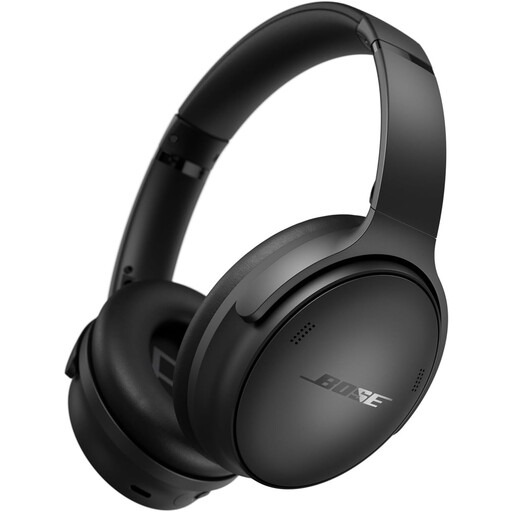 No image available
The listening modes described may be useful if you want to compare different listening environments, but they don’t establish whether this model reproduces restoration artefacts neutrally.
The product information lists noise cancellation, Quiet and Aware modes, soft ear cushions and a headband designed for longer listening sessions.
No, not automatically. iZotope says tape hiss can be part of the listening experience. Compare the original with the edited version to spot any newly introduced artefacts too; this is advice from a restoration software maker, not an independent headphone test.
First, check whether your playback device has a 3.5mm or 6.3mm connection, and where the cable can run. Thomann Netherlands lists the ATH-R30x as having a fixed 3 m cable and a 6.3mm adapter, so bear this in mind when arranging your desk.
Keep the volume low and take regular breaks. The World Health Organization gives an average of 80 dB for up to 40 hours a week as an example; at 90 dB, it gives four hours a week. This is health advice, not a setting you can work out from a headphone’s impedance or volume level.
When you buy as a consumer, you’re entitled to a product that works as it should; according to the Dutch government, there’s no fixed statutory warranty period in the Netherlands. If a product is faulty, contact the seller to find a solution. Any manufacturer’s warranty is in addition to this.
When you buy from a business at a distance, you usually have a 14-day cooling-off period. The Dutch government distinguishes between buying from a business and, for example, buying from a private individual. Before ordering, check the returns information that applies to your purchase.