Who is this for?

Musician mixing strings

This musician wants to assess individual string parts and their stereo placement in a quiet home studio. Sonarworks discusses using headphones for mixing, while Beyerdynamic and Sennheiser describe models designed for studio work.

Creator dealing with outdoor noise

This creator works by a window, where background noise can disrupt critical listening, and needs to weigh open-back listening against passive isolation. Sonarworks describes limited isolation as a drawback of open-back headphones; Audio-Technica lists passive noise isolation for the ATH-M50x.

Producer working in long sessions

This producer switches between arranging and mixing, and pays attention to fit, ear pads and replaceable parts. Sennheiser lists replaceable, washable pads for the HD 490 PRO; Beyerdynamic explains how worn ear pads can affect the sound you hear.

What to consider when choosing

Open-back studio headphones

Best for: a quiet workspace where you want to assess the balance and stereo placement of strings critically.

Trade-off: according to Sonarworks, an open-back design offers little isolation from background noise and lets sound leak out.

Closed-back studio headphones

Best for: a workspace where background noise is often audible, or when you want to reduce sound leakage during recording.

Trade-off: check your mix on a second playback system too; a good seal also depends on how the ear pads fit.

What to consider What to look for Who is this important for?
Balance and stereo placement Listen to familiar reference music and check panning and balance on a second playback system too. If I want to assess individual string parts and their placement in a quiet room, this comes first. Around 39% of consumers say balance and stereo placement are their top purchase priority.
Isolation Listen in your usual workspace to see whether noise from outside interferes with assessing your mix, and check that the ear pads fit securely. If noise by the window could mask subtle differences in the mix, isolation matters to me. Around 23% of consumers give protection from background noise their highest priority.
Comfort and maintenance Wear the headphones long enough to notice any pressure points, and check whether suitable replacement ear pads are available. For long sessions, I want a fit that stays comfortable for me and parts that can be replaced. Around 23% of consumers name comfort and maintenance as their top priority.
Connectivity Check the output, plug size, included adaptor and usable listening level with your own interface or computer. If I want to use the headphones with my existing mixing setup, I check the connections before buying. Around 15% of consumers prioritise compatibility with their own device.

Common mistakes

  • Choosing an open-back model without trying it in your workspace

    Open-back headphones offer little isolation from outside noise, even if they’re designed for mixing.

    Compare open-back and closed-back listening when the noise around your window is representative of your usual working conditions.

  • Assuming impedance or plug size proves compatibility

    A compatible plug doesn’t guarantee that your interface or computer’s headphone output will provide the listening level you want.

    Compare the connection details with your own device and, if possible, try the combination out. Beyerdynamic lists a nominal impedance of 48 ohms for the DT 900 PRO X; don’t judge compatibility on that figure alone.

  • Treating worn ear pads as a cosmetic issue only

    A change in fit or seal can affect the balance you hear, including the bass.

    Check the condition of your ear pads and whether suitable replacements are available before continuing to base mixing decisions on a worn pair.

Brands to consider

beyerdynamic

The open-back DT 900 PRO X is designed for use in a quiet room, including when switching between an audio interface and other devices.

  • According to the official specifications, the DT 900 PRO X has a detachable cable, a supplied 6.35 mm adaptor and a nominal impedance of 48 ohms.
  • In 2022, Sonarworks rated this model as suitable for mixing. That assessment applies to this specific model and doesn’t indicate how every beyerdynamic model performs; the open-back design doesn’t block background noise.

Sennheiser

According to the manufacturer, Sennheiser’s open-back HD 490 PRO is designed for producing and mixing, with different ear pads for these tasks.

  • The manufacturer lists replaceable, washable pads and a detachable cable.
  • The manufacturer’s claims about sound localisation and comfort don’t guarantee the same experience for you. Try the fit for yourself, and bear in mind that an open-back model lets in outside noise.

Audio-Technica

The closed-back ATH-M50x is worth comparing if background noise is a factor or if you use your headphones while recording.

  • Audio-Technica lists passive noise isolation and three detachable cables included with this model.
  • A closed-back design doesn’t prove that it’s the right stereo reference for every buyer. The manual advises against storing the ATH-M50x in direct sunlight.

Neumann

Neumann describes the open-back NDH 30 as a model for critical editing, mixing and mastering.

  • The claim about precise stereo localisation comes from Neumann. In a model-specific review in 2025, Sonarworks described the sound as relatively neutral.
  • In that review, Sonarworks also noted the weight as a drawback. A quiet room and a comfortable fit remain important considerations.

Headphones at Joybuy

This selection includes consumer over-ear headphones, including models with wireless features and noise cancellation. For mixing strings, check that wired use and the connection are compatible with your audio interface; these product features alone don’t make a pair of headphones a studio reference.

Sennheiser MOMENTUM 4 Wireless, black

Sennheiser MOMENTUM 4 Wireless, black

Check that the wired connection suits your mixing setup; wireless features don’t automatically make this model a studio reference.

The product information lists adaptive noise cancellation, adjustable EQ and an included 3.5 mm audio cable for wired listening.

The description mentions a padded headband and deep ear pads.

View at Joybuy

Bose QuietComfort Ultra Bluetooth Headphones, black

Bose QuietComfort Ultra Bluetooth Headphones, black

Before choosing this model for wired mixing, check that the included audio cable and connection are suitable for your interface.

The product information lists active noise cancellation and an audio cable for use without a battery.

Bluetooth is listed in the product title.

View at Joybuy
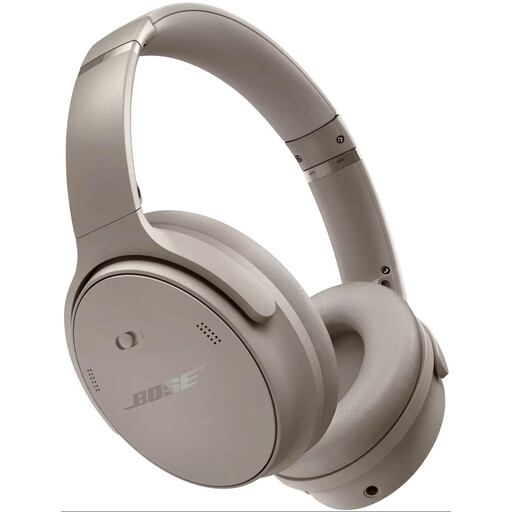
Bose QuietComfort Headphones, Sandstone

Bose QuietComfort Headphones, Sandstone

Before using these for mixing, check that the connection is compatible with your own equipment.

The product information lists Bluetooth, active noise cancellation and a transparency mode.

The description mentions a lightweight design for extended wear.

View at Joybuy

Bose QuietComfort Ultra Headphones (2nd Gen), black

Bose QuietComfort Ultra Headphones (2nd Gen), black

Before choosing this model for mixing, check that wired use with the listed connections is compatible with your audio interface.

The product information lists active noise cancellation and a detachable cable with USB-C and 3.5 mm connections.

A charger isn’t included, and PD fast charging isn’t supported.

View at Joybuy

Frequently asked questions

Do I always need to choose open-back headphones for mixing strings?

No, open-back headphones aren’t the right choice for every workspace. Compare an open-back model in a quiet room, and consider a closed-back model if background noise is distracting. Also check your mix outside your headphones.

How should I look after headphones often left by a sunny window?

According to Audio-Technica’s manual, don’t store the ATH-M50x in direct sunlight or near heat sources. Check the manual for other models; this advice doesn’t establish a damage threshold for all headphones.

How can I listen safely during long mixing sessions?

Keep the volume at a sensible level and take regular breaks. The World Health Organization gives the example of a maximum of 40 hours a week at an average of 80 dB; at higher levels, safe listening time decreases. This is health guidance, not a Dutch product specification or legal volume limit.

Who can help if headphones bought online break too soon?

For a consumer purchase in the Netherlands, the seller is responsible for the statutory guarantee if the product doesn’t perform as you could reasonably expect under normal use. ACM ConsuWijzer explains that a limited manufacturer’s warranty doesn’t replace this right.

Can I return headphones bought online?

For a distance purchase by a consumer, there is generally a 14-day withdrawal period from delivery, with some exceptions. Your Europe explains this period; check the terms and any return costs for your order before buying.
