
Vandaag of morgen in huis

Kwaliteit gegarandeerd

Welkomstaanbiedingen ontgrendelen: GRATIS bezorging | Tot 80% korting | Gratis 30 dagen JoyPlus-proefperiode
Download de app
At first glance, a workspace can look neat, even while cables, documents and office supplies are piling up in drawers and boxes. When buying office storage furniture, many people focus mainly on colour and price. That can cause problems later: a desk may not fit the room, a cabinet may not have enough load capacity, or a mobile filing cabinet may be awkward to move.
Use these points to help you choose the right home office desk, office filing cabinet or compact desk organiser.
A piece of furniture that is 100 cm wide might fit neatly against the wall, but the usable space may be smaller because of drawers, legs or a built-in storage compartment. So, as well as checking the length, width and height, check:
For a corner desk, it’s also important to check which side the longer and shorter sections are on. A flexible model may be more practical if you regularly change the layout of your room.
Having lots of compartments doesn’t automatically mean you can store heavy ring binders, printers or tools in them. Check the maximum load capacity of the desktop, shelves and individual drawers. For a bookcase with drawers, the load capacity of each shelf is particularly important.
Put heavy items at the bottom of a cabinet and follow the assembly instructions. Product information often recommends securing a tall cabinet or office filing cabinet to the wall with an anti-tip device.
A drawer unit on wheels is handy if you want to change your layout, but check whether the wheels can be locked. An open cabinet may not be suitable for documents containing personal information. An office cabinet with a lock or a mobile filing cabinet with a lock can provide a practical storage solution. Check how many keys are included, and whether the lock secures just one drawer or the entire cabinet.
Measure your space before you order. Ideally, leave enough room around a desk to pull out your chair and open drawers fully. A space-saving desk with vertical compartments often makes better use of a small room than a wide model with little storage.
A compact computer desk measuring 90 × 50 × 74 cm could suit a student bedroom or small home office. If you use several screens, documents and accessories, you may be better off with a desktop around 135 to 150 cm wide.
Many models are made from MDF, chipboard or engineered wood with a melamine or lacquer finish. These materials are relatively easy to clean, but load capacity varies from one product to another. A steel cabinet is usually a sensible choice for heavier ring binders or tools; always check the stated load capacities.
Also consider the assembly requirements. Some desks arrive in several packages and need to be assembled at home. With a pre-assembled cabinet, you may only need to attach the wheels. This can make a difference if you want to set up your workspace quickly.
Fully extending drawer runners give you access to the back of a drawer. On a mobile cabinet, 360° swivel castors make it easier to manoeuvre, while brakes stop it rolling away during use. Wall fixings and an anti-tip kit are useful safety features for tall cabinets.
When choosing a desk organiser, check how many compartments it has and how tall they are. Pens, calculators and documents each need a different layout. A vertical organiser can save space on a small desktop.
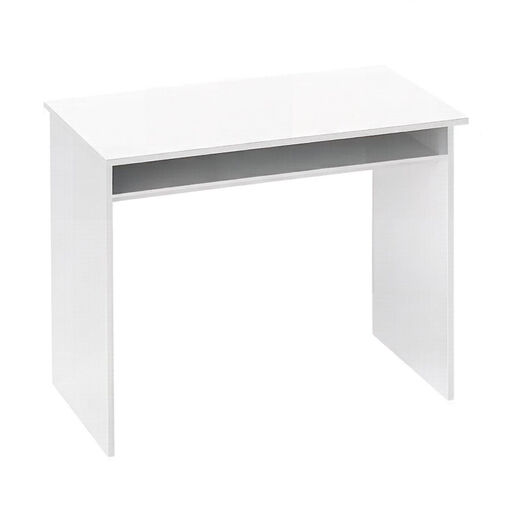
Why it suits this profile: Its compact size makes it a good fit for students, first-time buyers and people working from home in a small room. The open shelf keeps books and office supplies within easy reach.
The product description gives the dimensions and maximum load of 80 kg. This lets you compare its size and load capacity in advance, rather than judging it by appearance alone.
90 × 50 cm desktop, open storage shelf measuring 85 × 33 × 10 cm and clear legroom beneath the desk.
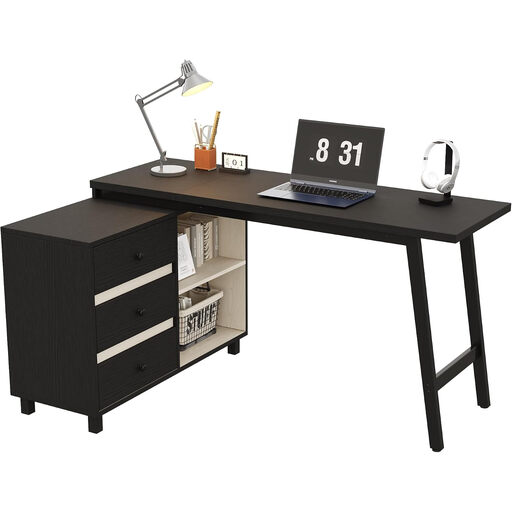
Why it suits this profile: This corner desk combines a 150 × 50 cm desktop with three drawers and two open compartments. It’s a good fit for professionals or small business owners who use several screens and documents.
The combination of closed drawers and open compartments helps keep your things off the desktop. However, check the total dimensions of 150 × 100 × 76 cm against your room before buying.
MDF with melamine veneer, a 0.9 mm steel frame and a stated load capacity of 60 kg.
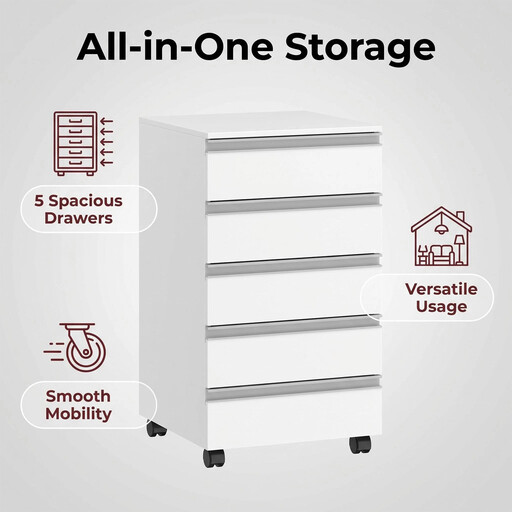
Why it suits this profile: The five drawers are designed to hold plenty of documents, materials or office supplies. The cabinet works well in an office, studio, workshop or home office.
The stated dimensions of approximately 40 × 40 × 65.5 cm and total load capacity of 50 kg make it easier to plan a spot for the cabinet or fit it beneath a desktop.
Five drawers, 360° swivel castors and two lockable front castors, according to the product description.
We’ve put together a complete, up-to-date list of products that meet these strict selection criteria and current European safety regulations.
Start by choosing a desk that fits along the available wall. A compact desk with open compartments or a fold-away model can save floor space. Then make use of the room’s height with a narrow bookcase or desk organiser. Keep the things you use every day within easy reach, and store less frequently used documents in a lockable office cabinet.
Lifespan depends on the materials, load, assembly and how you use it. MDF and chipboard are suitable for normal office and home use, provided they aren’t overloaded. Steel cabinets can be a practical option for more intensive use. Check screws, drawer runners and wheels regularly, and follow the maximum load capacities given in the product information.
It mainly depends on the combination of furniture you need. A desk with built-in storage may cost less than buying a desk, drawer unit and bookcase separately. So compare more than just the purchase price: consider the dimensions, assembly, mobility, whether it can be locked and how many useful storage compartments it has.
