
The colleague brewing for everyone
You regularly brew loose-leaf oolong for several people and want to avoid leaving the leaves to steep while you get back to work.


Choose based on how much tea you brew at a time and whether the leaves can steep in the shared pot. An automatic tea maker can stop the infusion according to the selected settings; with a kettle and removable tea basket, you’ll need to take the leaves out yourself at the right time. Using a kettle and a separate tea infuser keeps the shared kettle available for other drinks, but you’ll need to keep an eye on the steeping time yourself.
You regularly brew loose-leaf oolong for several people and want to avoid leaving the leaves to steep while you get back to work.
You want to prepare oolong without making the shared kettle inconvenient for colleagues who drink something else.
You usually make one small portion and want to choose a suitable temperature without repeatedly heating or cleaning a large pot.
| What to consider | What to look for | Who is this important for? |
|---|---|---|
| Temperature and steeping time | Compare your oolong’s brewing instructions with the temperature settings, and check whether the appliance only has a timer or also removes the leaves from the water. | If I don’t want to keep checking the infusion while I’m working, I look for settings that suit my tea. Around 36% of consumers prioritise temperature and steeping time. |
| Sharing with colleagues | Decide whether the leaves can steep in the shared pot, whether the infuser is removable and who will clean the pot after use. | If I want the kettle to remain useful for colleagues who drink other things, keeping the tea separate from the water matters. Around 29% of consumers prioritise shared use. |
| Amount per brew | Compare the minimum fill level with the actual tea capacity and the number of people you’re making tea for. | For one cup, I don’t want to heat more water than necessary; for a group, one brew needs to make enough. Around 21% of consumers prioritise portion size. |
| Cleaning and everyday use | Check which parts are removable and follow the instructions for cleaning and descaling. Place a hot appliance on a stable surface away from walkways. | If several colleagues use the appliance, I want its parts to be practical to clean and its controls easy to understand. Around 14% of consumers prioritise maintenance and everyday use. |
Recommended temperatures and steeping times can vary by tea, so one programme won’t necessarily suit every variety.
Read the brewing instructions for your tea and compare them with the appliance’s adjustable temperature and steeping time.
Sage lists separate capacities for the Tea Maker Compact: 1 litre for the kettle function and 0.8 litres for tea.
If you’ll be using it with colleagues, compare the stated tea capacity and minimum fill level rather than looking only at the largest capacity shown on the packaging.
According to Bosch, the Bosch TWK8613P has a removable limescale filter, but it isn’t described as a kettle with a tea basket for steeping leaves.
Check whether a tea infuser is included if you want to brew loose-leaf tea in the appliance.
Sage offers Tea Maker models for anyone who wants to control temperature and infusion in one appliance.
The Attentiv 26200-70 combines a kettle with a removable tea basket, for making hot water or loose-leaf tea as needed.
The Styline TWK8613P is a temperature-selectable kettle for anyone who prefers to steep tea in a separate infuser or pot.
The TA 1200 is an automatic tea maker with a separate brewing-to-serving jug setup and an oolong programme.
The HD9359/90 is a kettle with preset temperatures, for an office that mainly needs hot water for different drinks.
These Joybuy products include temperature-selectable kettles for oolong brewed separately, as well as an automatic tea maker. According to the Netherlands Food and Consumer Product Safety Authority, a CE marking is required for electrical products covered by the relevant regulations. Before buying, check the marking and product documentation for the specific model.
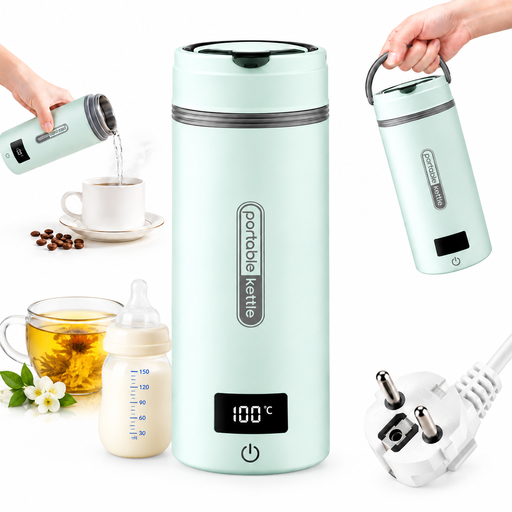 Image unavailable
Suitable if you heat a small amount of water and steep the oolong separately.
The product title lists a 400 ml capacity, a display, four temperature settings and a 304 stainless steel interior.
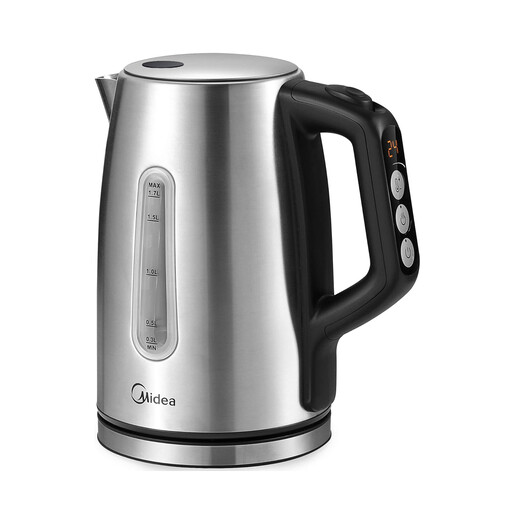 Image unavailable
The capacity may suit you if you’re heating water for several colleagues and steeping the tea separately.
The product title lists a 1.7-litre capacity, 2200 W, six temperature settings from 40 °C to 100 °C and a keep-warm function.
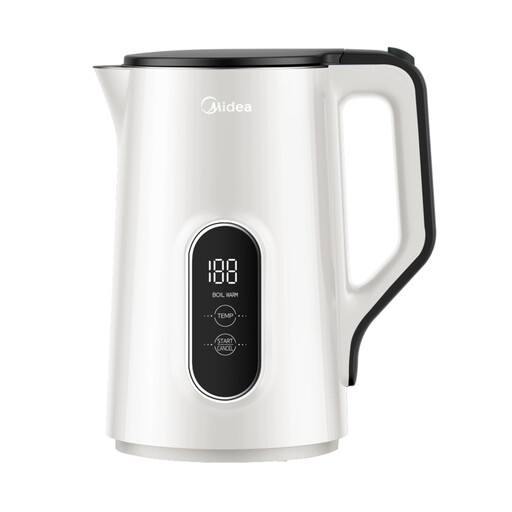 Image unavailable
This kettle is designed for heating water; steep loose-leaf oolong in a separate infuser or pot.
The product title lists a 1.5-litre capacity, variable temperature control from 45 °C to 100 °C and 2200 W.
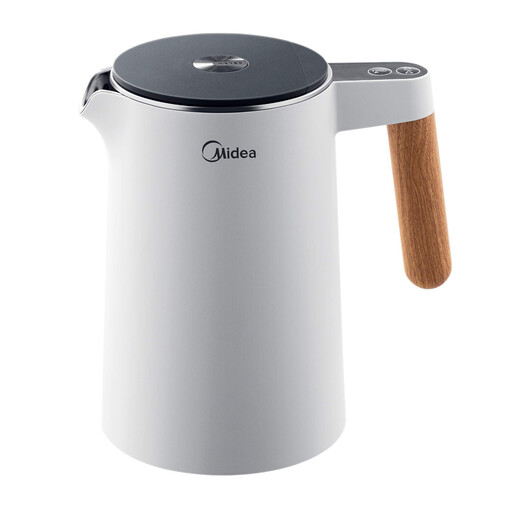 Image unavailable
Suitable if you’re heating water for several cups and steeping the oolong separately.
The product title lists a 1.5-litre capacity, 2200 W, seven temperature settings from 45 °C to 100 °C and a keep-warm function.
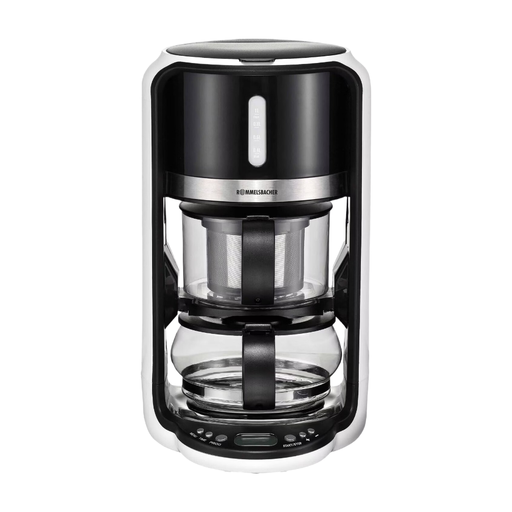 Image unavailable
Suitable if you want to set the temperature and steeping time for loose-leaf tea in an automatic tea maker.
According to Rommelsbacher, the TA 1200 has four brewing temperatures of 80 °C, 85 °C, 90 °C and 100 °C, with an adjustable steeping time of up to 10 minutes. Descriptions differ on capacity and construction, so check the exact version.
Start by following the instructions for your particular tea. Tea retailer Art of Tea gives around 85–97 °C and approximately 3–5 minutes as a general starting point for many oolongs, noting that this varies by variety. These aren’t fixed settings for every oolong.
No. Sage says the Tea Maker STM800BSS4EEU1 has a basket that lowers and rises automatically. For the Russell Hobbs Attentiv, the manufacturer describes a removable basket and a timer; you’ll need to take the leaves out of the water yourself when you want to stop the infusion.
Agree on who will empty and clean the tea infuser. If colleagues mainly need plain hot water, using a separate tea infuser or pot keeps the infusion out of the shared kettle. Don’t heat more water than you need, and descale the kettle according to the instructions for your chosen model.
No. The Netherlands doesn’t have a fixed statutory guarantee period. The Dutch government says the seller must provide an appropriate solution if a product is faulty; a manufacturer’s guarantee is separate. The consumer rights that apply to a purchase made by an employer need to be assessed separately for that purchase.
According to the Netherlands Food and Consumer Product Safety Authority, a CE marking is required for electrical products covered by the relevant regulations. The marking is a declaration by the manufacturer; it doesn’t mean that the NVWA has inspected every item in advance. Check the marking and product documentation for the specific model.