What should you look for when buying?
First, check the brewing instructions for your oolong, how much tea you want to serve at a time and whether you want to stop the infusion yourself. The percentages below show the main buying priority for consumers in each situation.
| What to consider | What should you check? | Who is this most important for? |
|---|
| Temperature and brewing time |
Check the temperature settings or adjustment range, the timer and whether you can remove the basket once the tea has brewed. |
If I want to tailor the flavour to the oolong I’m serving, I look at both temperature and brewing time. Around 33% of consumers put this first. |
| Amount per brew |
Compare the maximum tea fill line with how much you want to serve at once; also check how easy it is to top up and pour. |
If I want to share a pot with friends, the amount of tea per brew is my main deciding factor. Around 27% of consumers prioritise brewing a pot to share. |
| Hands-on brewing while entertaining |
Check whether the basket is removable or moves automatically, and whether you can set the brewing time. |
If I don’t want to remove the leaves from the tea myself while entertaining, I look at how the basket and timer work. Around 20% of consumers prioritise less hands-on timing. |
| Cleaning and aftercare |
Check which parts can be removed, what the instructions say and which retailer you’re buying from. |
If I regularly brew loose-leaf tea, I want to know how to clean the parts and who to contact if something goes wrong. Around 20% of consumers give maintenance and aftercare top priority. |
Kettles at Joybuy
These products suit an approach where you heat water to a selected temperature, then let the oolong brew in a separate teapot.
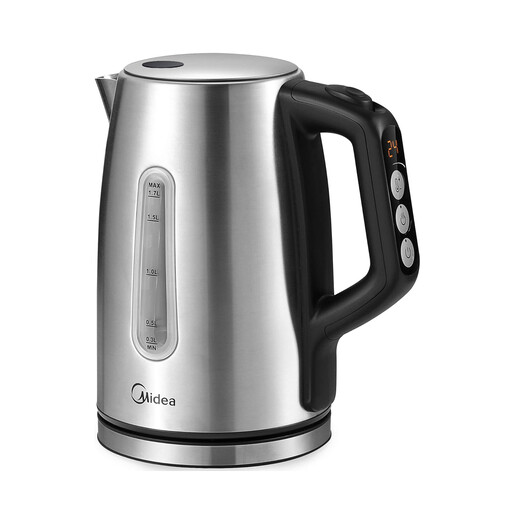 Image unavailable
Midea kettle, 1,7 L, 6 temperature settings
Suitable if you want to heat water separately for oolong and keep an eye on the brewing time yourself in a teapot.
The product name lists a capacity of 1,7 L, 2200 W and six temperature settings from 40–100 °C.
View at Joybuy
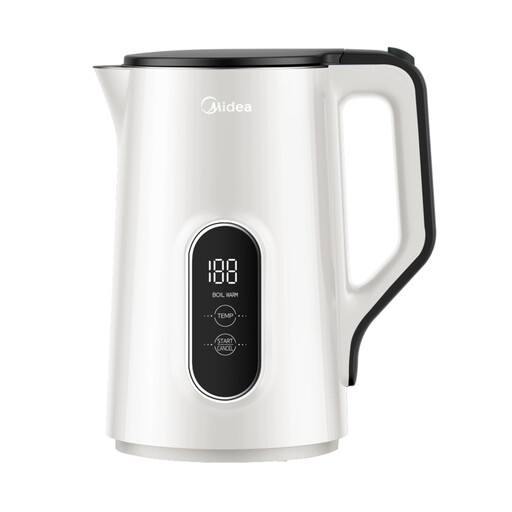 Image unavailable
Midea kettle, 1,5 L, 45–100 °C
Suitable if you want to adjust the water temperature and brew the oolong separately in a teapot afterwards.
The product name lists a capacity of 1,5 L, temperature control from 45–100 °C and 2200 W.
View at Joybuy
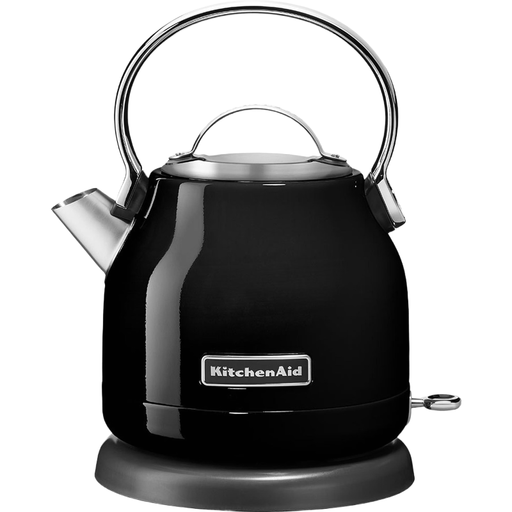 Image unavailable
KitchenAid 5KEK1222EOB, 1,25 L
Suitable if you want to heat water with temperature control and monitor the infusion yourself in a separate teapot.
The product name lists a capacity of 1,25 L, temperature control and a keep-warm function.
View at Joybuy
Frequently asked questions
What temperature should I set for oolong?
Start with the instructions for your tea. Tefal gives 80–90 °C as general guidance for oolong, but TeaVivre specifies 100 °C for one particular lightly roasted oolong. This means there’s no evidence to support one fixed setting for all oolongs.
Can I leave the basket in an automatic tea maker?
Follow the manual for your specific model and use the recommended brewing time. Manufacturers describe automatic basket movement on the Sage the Tea Maker and Severin WK 3422 reviewed here; with the Tefal BJ760DE0, you remove the basket from the tea yourself.
How do I use and clean a tea maker safely?
Follow the manual for your chosen model. Sage says to let parts cool completely before taking them apart, distinguishes between WATER MAX and TEA MAX, and warns about hot water and steam.
Who should I contact about a fault, and do online purchases come with a cooling-off period?
According to the Dutch Government, the retailer is your point of contact for a statutory guarantee; the Netherlands has no fixed statutory guarantee period. ACM ConsuWijzer says that online purchases generally come with a cooling-off period of up to 14 days after delivery. Check which exceptions and returns conditions apply.
Is CE marking compulsory for an electric tea maker in the Netherlands?
The Netherlands Food and Consumer Product Safety Authority says that CE marking is compulsory for electrical products covered by the relevant rules. The low-voltage rules apply to products operating at 50–1000 V AC or 75–1500 V DC. This alone does not establish whether a specific model on sale is correctly marked or meets all applicable requirements.


