
Parents who want to pack an extra quickly
There’s no need to slice pre-sliced pieces at home. If you want to be able to take a slice with you straight away, individually wrapped pieces are another option; either way, check the weight per portion.


Sliced ontbijtkoek can be an easy extra to pack in a school lunch, but it shouldn’t replace the lunch essentials: the Netherlands Nutrition Centre recommends wholemeal bread, vegetables and fruit, among other things. Choose between plain, wholemeal and varieties making a claim about no added sugars, based on the nutritional information and the portion you want. Check the ingredients, allergens and any warnings about sweeteners on every pack.
There’s no need to slice pre-sliced pieces at home. If you want to be able to take a slice with you straight away, individually wrapped pieces are another option; either way, check the weight per portion.
Peijnenburg lists 5.1 g of fibre per 100 g for its sliced wholemeal variety, compared with 3.1 g per 100 g for the plain sliced variety tested. This difference can help you choose between types of ontbijtkoek; according to the Netherlands Nutrition Centre, wholemeal bread, vegetables and fruit should still be part of the recommended lunch essentials.
Rye, wheat and warnings about the possible presence of other allergens vary by product. Read the label on the pack you’re putting in the lunchbox and check the rules at your child’s school.
First decide what place ontbijtkoek will have in the school lunch. Then compare the packaging and nutritional information that best match your main concern.
| What to consider | What to check when buying | Who is this most important for? |
|---|---|---|
| Its place in the lunch | Check that a slice remains an extra alongside the lunch essentials. Compare fibre per 100 g if you’re choosing between plain and wholemeal. | If I pack ontbijtkoek, I want to make sure bread, vegetables and fruit don’t disappear from the lunchbox. For around 33% of consumers, these lunch essentials come first. |
| Added sugars and sweeteners | Read the exact product claim, the sugar content per 100 g, the ingredients and any warnings. | I want to avoid added sugar, but I also want to know which sweeteners are in the slice. Around 27% of consumers give this consideration top priority. |
| Packaging and portion size | Check the weight per slice and choose between a pack of slices to portion at home and individually wrapped slices. | On busy mornings, I want to pack a suitable portion without having to slice it. For around 20% of consumers, this convenience matters most. |
| Allergens and school rules | Read the ingredients list and any warnings about possible allergen presence on the current label; also check the school’s rules. | Before I pack anything, I need to know whether the ingredients are suitable for my child and comply with the class rules. This check comes first for around 20% of consumers. |
A slice is quick to pack, but it doesn’t replace the lunch recommended by the Netherlands Nutrition Centre, which includes wholemeal bread, vegetables and fruit.
Pack the lunch essentials first, then decide whether a slice of ontbijtkoek would make a suitable extra.
The wholemeal ontbijtkoek tested contains rye. What’s more, a claim about no added sugars doesn’t mean a product is sugar-free; the zero varieties tested contain sweeteners.
Check the ingredients, allergen information and nutritional values for the variety you’ve chosen, even if the front of the pack looks familiar.
Jumbo gives a serving size of 25 g for its plain sliced variety; the Peijnenburg plain sliced variety tested has 28 g slices. So the figures per slice aren’t based on the same amount.
Compare products per 100 g first, then check how many grams you’ll actually be packing.
Online ingredient and allergen information can be contradictory. This is especially important when rye or other gluten-containing grains are a concern.
Check the current label on the physical pack before packing it, and take the school’s rules into account.
Peijnenburg offers plain, wholemeal, zero and individually wrapped varieties of ontbijtkoek, among others. Compare the specific variety, not just the brand name.
The sliced plain variety is an option if you want to portion slices from one pack at home.
Albert Heijn lists plain, wholemeal and zero varieties among its 485 g sliced own-brand options.
Lidl lists a 485 g plain sliced ontbijtkoek as an in-store product.
This sliced wholemeal ontbijtkoek is an option if you’re looking for a slice to pack as an extra in a school lunch. Before packing it, check that the portion, ingredients and school rules are suitable.
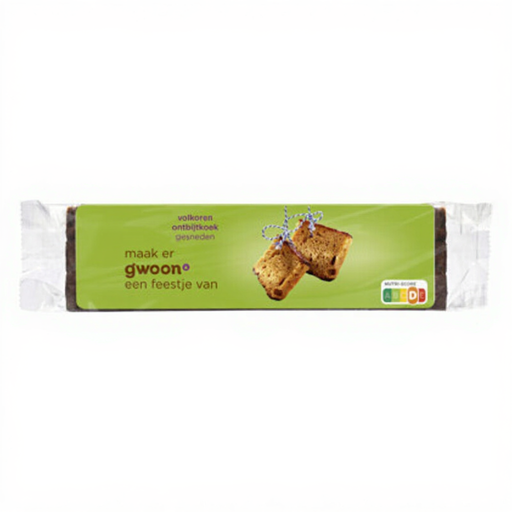 Image unavailable
For anyone who wants to pack a pre-sliced wholemeal variety as an extra.
485 g pack. Check the allergens on the physical label and see how much a slice weighs before deciding on the portion size.
It’s best to pack sliced ontbijtkoek as an extra rather than as a replacement for the lunch essentials. For school lunches, the Netherlands Nutrition Centre recommends wholemeal bread, vegetables and fruit, among other things.
You can’t assume that’s true for every brand. Among the Peijnenburg varieties tested, the sliced wholemeal variety lists 5.1 g of fibre per 100 g, while the sliced plain variety lists 3.1 g. For another pack, compare the nutritional information per 100 g again.
A claim about no added sugars doesn’t mean the ontbijtkoek is sugar-free. Check ‘of which sugars’ on the label, and read which sweeteners and warnings apply to the variety you’ve chosen.
Don’t assume that ‘wholemeal’, ‘plain’ or ‘zero’ means gluten-free. The regular sliced varieties tested contain rye or other gluten-containing grains, so check for an explicit gluten-free product description and read the current label before choosing a pack.
Yes. Check the rules at your child’s school or in their class before packing ontbijtkoek. The Netherlands Nutrition Centre advises parents to check the school handbook, website or app; you should also check the product label yourself.