
Small households that don’t eat much ontbijtkoek
If you sometimes have a slice in the evening, weigh up a 265–300 g loaf against a larger pack that you might not finish.


For a late-night snack in a small household, a 265–300 g loaf of ontbijtkoek is a practical choice if you’re unlikely to finish a larger one. Choose individually wrapped bars if having a pre-portioned snack matters more to you than buying a loaf. Check the label too: no added sugar doesn’t automatically mean no sweeteners or gluten-free.
If you sometimes have a slice in the evening, weigh up a 265–300 g loaf against a larger pack that you might not finish.
An individually wrapped bar suits anyone who’d rather not cut and store a loaf each time. Just check how many bars are in the pack.
Ingredients, fibre, sugars, sweeteners and gluten may all affect your choice. Compare the nutritional information for the specific variety you’re planning to buy.
Start by thinking about how much ontbijtkoek you actually eat. Then decide whether a set portion or a particular recipe is more important to you.
| What to consider | What to check | Who is it for? |
|---|---|---|
| Smaller pack | Compare the net weight and number of slices; also check the storage advice once opened. | If I only have a slice now and then, I don’t want to be left with a large, opened loaf. For around 38% of consumers, reducing waste matters most. |
| Set portion | Check how many bars or individual portions the pack contains and how much each portion weighs. | For a late-night snack, I’d rather grab a pre-portioned bar than cut into a loaf. Around 25% of consumers put portioning convenience first. |
| Ingredients and nutritional value | Compare fibre and sugars per 100 g, and check the ingredients list for added sugars and sweeteners. | When choosing between varieties, I want to know what a sugar or wholegrain claim means for the product. Around 25% of consumers prioritise comparing labels. |
| Gluten-free option | Check the gluten-free wording or certification on the pack, and read the allergen information. | If I need to avoid gluten, a small size alone isn’t enough: the product’s suitability comes first. For around 12% of consumers, this is the most important requirement. |
A relative sugar claim doesn’t tell you how much sugar an ontbijtkoek bar contains. PLUS makes a claim of 30% less sugar for its bars.
Compare the nutritional information per 100 g and per portion, rather than relying only on the wording on the front of the pack.
According to the product information, the small, sliced Peijnenburg variety contains xylitol and rye. So its sugar claim doesn’t mean it’s free from sweeteners or gluten.
Check the ingredients and allergen information on the current pack. If you need a gluten-free option, look for an explicit gluten-free label.
A 485 g loaf means more ontbijtkoek left open at once than a pack of around 265–300 g. That matters most if you only have a slice now and then.
Choose a size that suits how often you eat ontbijtkoek, and consider individual portions if you rarely finish a loaf.
Lidl lists its ontbijtkoek bars as an in-store product. Whether the variety you want is available can vary from one visit to the next.
Check the current range and read the label on the pack you actually buy.
Peijnenburg offers a 265 g sliced loaf of ontbijtkoek with nine slices, labelled ‘no added sugar’.
Jumbo lists 280 g plain and wholegrain ontbijtkoek, as well as a 300 g unsliced gluten-free variety.
PLUS offers ontbijtkoek bars labelled ‘less sugar’ in a pack of six, weighing 300 g.
This ALDI own brand includes a 485 g sliced wholegrain loaf of ontbijtkoek.
Lidl lists ontbijtkoek bars labelled ‘less sugar’ as an in-store product.
This pick suits anyone who prefers an individual portion for a late-night snack rather than cutting into a loaf.
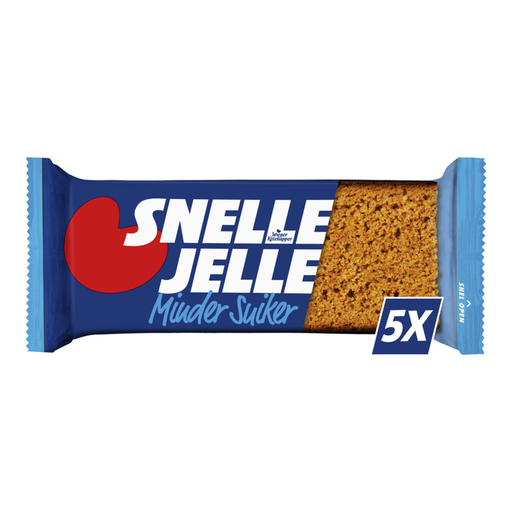 Image unavailable
A good fit if you’d rather grab an ontbijtkoek bar for a late-night snack than cut into a loaf. Check the portion size, ingredients and nutritional values on the pack; the product name alone doesn’t tell you how much sugar it contains.
A loaf of around 265–300 g is worth considering if you often don’t finish a larger one. Peijnenburg lists a 265 g variety with nine slices; Jumbo offers 280 g ontbijtkoek and a 300 g gluten-free variety. Check the number of slices as well as the weight.
No, the terms don’t mean the same thing. According to the product information, the small Peijnenburg variety labelled ‘no added sugar’ still contains sugars and the sweetener xylitol. Compare the ingredients and nutritional information on the pack.
Not on the basis of the sugar claim: it says nothing about gluten. According to the product information, PLUS ontbijtkoek bars contain rye. If you need a gluten-free option, check the label and allergen information for the specific product. Jumbo lists the Crossed Grain certification for its 300 g unsliced variety.
Don’t assume that it does. The agreement on baker’s salt, published by the Ministry of Health, Welfare and Sport in 2008, describes measures to encourage its use and related agreements, but doesn’t confirm the ingredients in every ontbijtkoek product. Check the label of the specific product if iodine matters to you.
Follow the storage advice on the pack and seal the opened loaf well. If you only have a slice now and then, a smaller loaf or a pack of individual portions may suit the way you use it better.