What should you look for when choosing?
First decide who will be speaking and needs to be heard at the table. Then check which style of headset and connection will suit that setup.
| What to consider |
What should you check? |
Who is this important for? |
| Making sure your own voice comes across |
Check whether the microphone is adjustable and whether its connection is compatible with your device. Test the sound in your teaching app. |
If I’m teaching the online lesson myself, I want the person I’m speaking to to hear me clearly. Around 36% of consumers put making their own voice heard first. |
| Letting several people at the table join in |
Compare the stated pickup range with the seating arrangement and test each seat using your chosen calling app. |
If a pupil or another participant is sitting beside me, I want them to be able to join the online conversation too. Around 29% of consumers prioritise shared conversations around the table. |
| Connecting to your teaching device |
Check the port on your computer or tablet and the full variant name, including any adapter. |
If I want to use the headset with different devices, its connection needs to be compatible with my equipment. Around 21% of consumers make device compatibility their top priority. |
| Comfort during lessons |
Check whether it’s a mono or stereo version, and look at the adjustability and ear cushions. |
When I have back-to-back lessons, I want a style of headset that feels comfortable to wear. Around 14% of consumers put comfort first. |
Products for online conversations around the table
The selection below includes personal headsets for online conversations and a speakerphone for shared conversations around the table.
 No image available
Sennheiser MOMENTUM 4 Wireless
Personal headphones for online conversations; the product title describes an over-ear design.
The title mentions wireless use, noise cancellation, 60-hour battery life, fast charging and four microphones.
View at Joybuy
 No image available
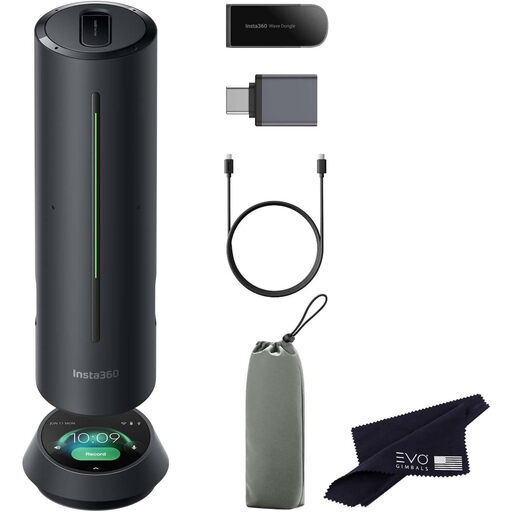
Insta360 Wave AI Conference Speakerphone
A speakerphone for conversations where several people want to take part from the table; sound is played into the room.
The product title mentions Bluetooth.
View at Joybuy
 No image available
Jabra Evolve2 75
A personal headset for online conversations. Check that the specific version suits your device and preferred style.
View at Joybuy
 No image available
Logitech PC 960 USB
A wired headset for anyone looking for a personal setup at their computer.
The product title mentions a USB connection; check that it’s compatible with the port on your teaching device.
View at Joybuy
 No image available
Logitech H650e Stereo
Stereo headset for personal online conversations. Check the exact connection of the version before buying.
View at Joybuy
Frequently asked questions
Can one headset microphone pick up all the pupils around the kitchen table?
Don’t count on it: a personal headset microphone is designed for the wearer. Consider a speakerphone if several people are taking part in the same online conversation, and test the setup from every seat.
How do you set up a headset for a trial lesson?
Connect the right version, select the headset as the input and output device in your teaching app, and position the microphone by your mouth. Check the volume and mute button during a test call; the exact settings vary by device and app.
Should you choose a wireless headset for teaching around the table?
Not necessarily if you’re sitting in a fixed spot. With a wired version, check that the cable suits your setup; with a wireless version, check the connection and battery life in advance.
What warranty applies if a headset breaks in the Netherlands?
When you buy as a consumer, you’re entitled to a product that works properly. According to the Dutch government, there’s no fixed term for the statutory guarantee in the Netherlands; contact the seller if there’s a problem. Any manufacturer’s warranty is in addition to this.
Can you record conversations with pupils to listen to them again later?
A headset doesn’t in itself give you permission to record conversations. If you process personal data in doing so, the Dutch Data Protection Authority says you need an applicable legal basis under the GDPR; consent is one possible legal basis, but it isn’t automatically required. The regulator also says that schools should have arrangements covering recordings, information for pupils and retention periods. The right assessment depends on who is recording, why, and how the data is processed.


