Choose based on the baking tray or oven dish you want to use, and whether you’ll be cooking other dishes at the same time. The capacity in litres alone doesn’t tell you how much usable tray space you’ll have. A compact freestanding fan oven may suit a smaller portion and a kitchen without a built-in housing, while a suitable built-in oven with several shelf levels can offer more room for a larger weekend meal. Before buying, check the internal dimensions, installation requirements and what’s actually included.
Which oven is right for you?
Weekend cook preparing food for a crowd
You want to cook onion wedges and possibly other dishes at the same time. So check the dimensions of your dish and baking tray, as well as which shelf levels the oven supports. The Consumentenbond recommends checking the internal dimensions; Bosch says the HBA534BB3 can bake on up to three levels.
Cook with a small kitchen
You want to cook a modest portion without a built-in housing, and need room for both the oven and the required ventilation clearance. Inventum lists the freestanding OV307B as having a capacity of 30 litres and coming with a baking tray. The manual for a freestanding oven remains the definitive guide to installing that specific model.
Cook looking to keep running costs down
You don’t want to choose a larger oven than you need for a small dish, and want to compare energy use on a like-for-like basis. Milieu Centraal says a large oven uses around 20% more energy to cook a dish than a medium-sized oven. Energy use per standardised fan-oven cycle is another way to compare models, but it won’t give an exact measure for your recipe.
What should you look for when choosing?
Compact freestanding fan oven
Suitable for: a smaller portion and a kitchen without a suitable built-in housing, as long as your dish fits on the baking tray.
Bear in mind: the available tray space and the clearance around the model; follow the instructions for that specific oven.
Built-in oven with several shelf levels
Suitable for: a larger weekend meal or cooking other dishes alongside your onion wedges, provided the housing and baking trays fit.
Bear in mind: the correct built-in dimensions and energy use for the way you cook. Bosch specifies that the HBA534BB3 can bake on up to three levels; this doesn’t guarantee even results with every combination of dishes.
Start by considering usable baking space and installation; then compare the controls, cleaning and energy use in light of how you’ll use the oven.
| What to consider |
What to look for |
Who it matters most to |
| Baking space |
Measure your largest oven dish and compare it with the internal dimensions, baking tray and usable shelf levels. |
If I’m using a larger dish or want to cook side dishes too, I need to know whether everything will fit and which levels can be used at the same time. Around 34% of consumers say baking space is their top buying priority. |
| Installation |
Check the housing dimensions for a built-in model, or the external dimensions and required clearance for a freestanding model. |
Without a suitable built-in housing, I need to be able to position a freestanding oven safely; for a built-in model, the housing must be the right size. Installation is the top priority for around 27% of consumers. |
| Controls and cleaning |
Check how to set the time and temperature, whether the baking tray can be removed, and what cleaning instructions come with the model. |
I want to be able to adjust the settings while cooking and know how to clean the tray and oven afterwards. Controls and cleaning come first for around 20% of consumers. |
| Energy and costs |
Compare ovens of a suitable size and, where applicable, their energy use per standardised fan-oven cycle. |
For a small portion, I don’t want to choose more capacity than I need, and I want to compare energy use on a like-for-like basis. Energy and overall costs are the top priority for around 19% of consumers. |
Buying pitfalls
-
Choosing based only on capacity in litres
The stated capacity won’t tell you whether your oven dish or baking tray will fit. If it’s the wrong size, you may have to cook in several batches.
Measure your largest dish and check the internal dimensions and the size of the baking tray supplied.
-
Treating a compact oven like a built-in oven
A freestanding model may need ventilation clearance; requirements vary from appliance to appliance.
Follow the installation and safety instructions for the exact model you’re buying.
-
Assuming an energy label reflects the energy use of your recipe
The European Commission describes energy use per standardised fan-oven cycle. This isn’t the same as the energy used to cook your onion dish; the size of the oven and how you use it also make a difference.
Compare ovens that suit the size of your portions, and treat extra features as options rather than proof of better onion wedges.
Brands compared
Inventum
Freestanding fan ovens for kitchens without built-in housing; the OV307B is one option for smaller meals.
- Inventum lists the OV307B as having a capacity of 30 litres, a temperature setting of up to 230 °C and a baking tray included.
- Check that your dish will fit. These specifications alone don’t tell you how onion wedges will cook in your particular setup.
Bosch
Built-in ovens for kitchens with a suitable housing; the HBA534BB3 is one example with several shelf levels.
- Bosch lists the HBA534BB3 as having a capacity of 71 litres and 3D hot air for baking on up to three shelf levels.
- This is a manufacturer specification, not an independent test of onion wedges or the full product range.
AEG
Built-in ovens with fan cooking and additional features; the NBU5A40PM is one example with a cleaning feature.
- AEG lists this model as having a capacity of 72 litres and the ability to bake on three levels.
- AEG describes the AirFry baking tray as an optional accessory. Check what’s included with your version.
Siemens
Built-in ovens with a range of heating settings; the HB634GBS1 is one example with 4D hot air.
- Siemens lists this model as having a capacity of 71 litres and several heating settings.
- These specifications don’t show that this model roasts onion wedges better than other ovens that have been tested.
Ovens at Joybuy
This selection includes built-in ovens with several shelf levels and a freestanding fan oven for smaller meals.
 No image available
Bosch HBF133BR0 built-in oven
A built-in model for cooking onion wedges and other dishes on several levels; check that it fits your housing before you buy.
Capacity: 66 litres; 3D hot air for up to three levels; five programmes; temperature setting of 50–275 °C; EcoClean Direct.
View at Joybuy
 No image available
Bosch HBA534BB3 Serie 4 built-in oven
Suitable if you want to cook other dishes alongside your onion wedges on several levels, provided the baking trays and built-in housing fit.
Capacity: 71 litres; 3D hot air for up to three levels; EcoClean Direct; Cleaning Assistance.
View at Joybuy
 No image available
Bosch HQG572EB3 built-in oven
A built-in option if you’re looking for a fan function and a dedicated cleaning feature; check that the extra functions suit the way you cook.
Capacity: 71 litres; 3D hot air for up to three levels; Air Fry function; steam function; pyrolytic cleaning.
View at Joybuy
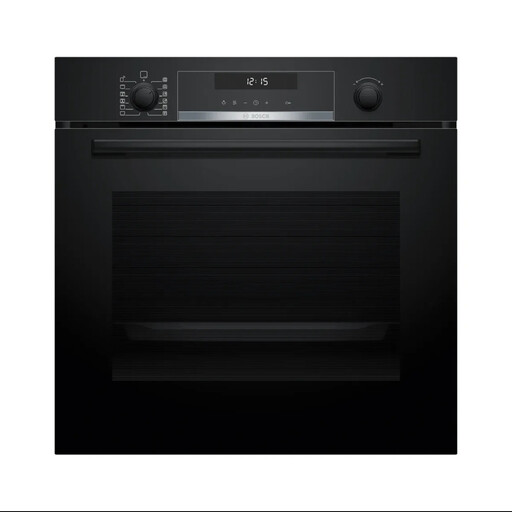 No image available
Bosch HBG578EB7 built-in oven
Suitable if you want to use several levels and are looking for a pyrolytic cleaning function; you’ll need a suitable housing for installation.
Capacity: 71 litres; 3D hot air for up to three levels; Air Fry function; Home Connect; pyrolytic cleaning.
View at Joybuy
 No image available
Wiggo WMO-E456(W) freestanding mini oven
A freestanding option if you don’t have built-in housing and want to cook onion wedges using the convection function. Place the oven on a stable, heat-resistant surface and keep the ventilation openings clear.
Power: 2000 W; capacity: 45 litres; convection function with turbo fan; six cooking functions; 90-minute timer; four shelf positions.
View at Joybuy
Frequently asked questions
Can you put a freestanding fan oven under a kitchen cupboard?
Check the installation instructions for the exact model. The manual for the Mestic MHO-120 requires clearance around and above the oven, and says not to place it under a wall unit. Those instructions don’t automatically apply to other ovens.
What can you do if your oven develops a fault soon after you buy it?
According to ACM ConsuWijzer, the retailer must offer an appropriate free solution if an oven develops a fault sooner than you could reasonably expect under normal use. This could mean a repair, replacement or refund. The circumstances determine what’s appropriate, and a manufacturer’s warranty doesn’t replace your statutory rights.
How long can you keep cooked onion?
According to Voedingscentrum, cooked onion can be kept in the fridge for two days. Cool leftovers quickly, store them in a sealed container and don’t leave them out of the fridge for more than two hours.


