
Vandaag of morgen in huis

Kwaliteit gegarandeerd

Welkomstaanbiedingen ontgrendelen: GRATIS bezorging | Tot 80% korting | Gratis 30 dagen JoyPlus-proefperiode
Download de app
Finding a suitable first taste seems simple, until you’re standing in front of the shelf with dozens of flavours, age labels and claims to choose from. With Olvarit baby food, it’s about more than taste. The age recommendation, texture, portion size, ingredients and allergens all help determine whether a product is right for your baby or toddler.
Pay attention to marketing claims, too. For example, ‘no added sugar’ doesn’t mean a product contains no sugars: fruit naturally contains sugar. And ‘pure’ doesn’t tell you much about the ingredients on its own. Always check the ingredients list and the information on the packaging.
A jar of baby food from 4 months usually has a smoother texture than a meal for older children. Products for babies from 6, 8, 12, 15 or 18 months may have a coarser texture and contain more ingredients.
Don’t choose based only on a flavour that appeals to you. First check that the age on the label matches your child’s stage of development. The age indication is a guide; if you’re unsure, also follow the advice of your health visitor or another healthcare professional.
A baby food with no added sugar may still contain natural sugars from fruit. Likewise, ‘no preservatives’ doesn’t automatically tell you how much vegetable, fruit, grain or protein it contains.
So compare the ingredients in order of quantity. For example, Olvarit Cauliflower Baby Puree 4M+ lists 100% cauliflower. Olvarit Apple 4M+ states that no sugar has been added and, according to the product information, contains apple purée with vitamin C.
Milk, gluten, egg and celery are found in different varieties. For example, Olvarit Carrot-Chicken-Potato 8M+ lists wheat as an allergen, while according to the product information, Olvarit Carrot-Chicken-Rice 6M+ is free from cereals containing gluten and cow’s milk protein.
After opening, any leftovers should generally be covered, kept in the fridge and used within 48 hours. Always check the label, as instructions may vary between products. A larger pack isn’t good value if you can’t use the rest in time.
Use the age on the packaging as your first filter:
So the terms Olvarit fruit purée, Olvarit vegetable purée and Olvarit meals refer to different occasions. Don’t just look at the flavour: consider the texture your child is already used to as well.
Check at least these three things:
Olvarit Tomato-Chicken-Rice 12M+ lists tomato, rice, carrot and chicken, among other ingredients. The product information lists gluten as an allergen. According to the product description, Olvarit Spaghetti with Ham and Tomato 18M+ contains egg, gluten and milk, among other ingredients.
Claims about a product’s effects or benefits shouldn’t be taken as medical facts. When a brand talks about developing a taste for new flavours or using natural ingredients, this is the brand’s product description. Base your choice primarily on information you can check, such as age, ingredients, weight and allergens.
A 125-gram jar can be handy for first tastes or as an extra. For an older baby or toddler, a 200- or 250-gram pack may be a better fit for a meal. The right amount varies by child and mealtime.
Fruit purées are convenient when you’re out and about, but at home you can pair a vegetable purée or meal with other suitable foods. Follow the label’s instructions for heating and storage, and check the use-by date before serving.
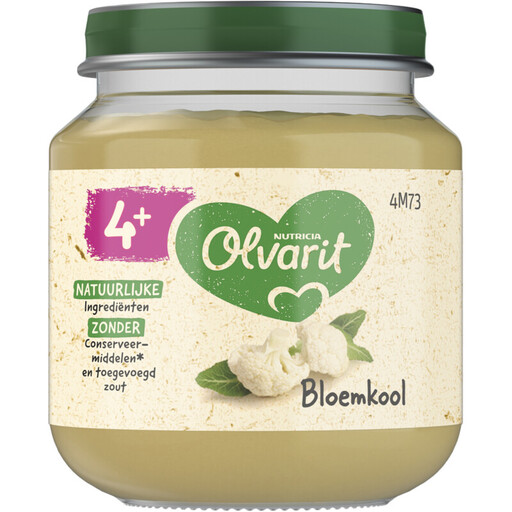
Why it suits this need: A straightforward choice for introducing your baby to vegetables, with a small 125-gram portion and a short ingredients list.
The age recommendation and portion size are clearly stated. According to the product information, the purée is made from 100% cauliflower and contains none of the 14 major EU allergens.
125 grams; from 4 months; no preservatives according to the product information.
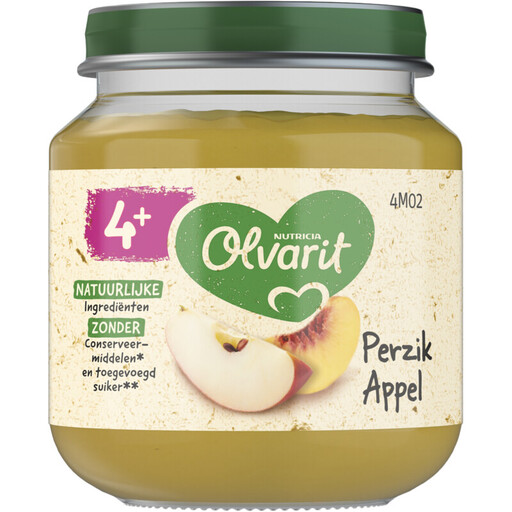
Why it suits this need: A good choice for parents looking for a fruit purée with a familiar combination of flavours and clear product information.
The packaging states that no sugar or preservatives have been added. However, the natural sugars from fruit are still present.
125 grams; from 4 months; ingredients include peach, apple and banana.
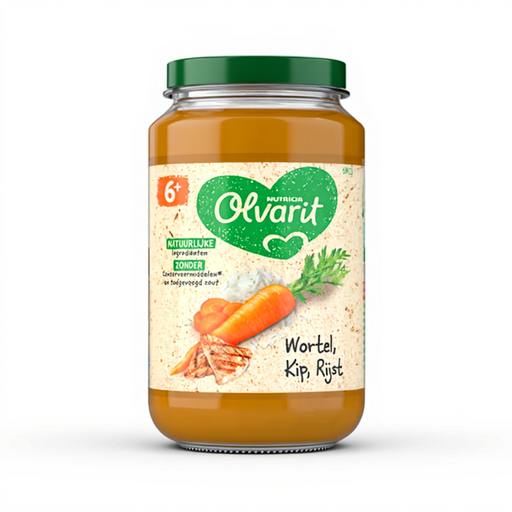
Why it suits this need: Handy for parents who want a complete meal option with vegetables, rice and chicken ready to serve from 6 months.
The age recommendation, 200-gram portion and allergen information are specified. According to the product information, the product contains no preservatives.
200 grams; from 6 months; carrot, rice and chicken as recognisable ingredients.
We’ve put together a full, up-to-date list of products that meet these strict selection criteria and the current European safety regulations.
There are fruit and vegetable purées labelled as suitable from 4 months, including apple, pear, peach and apple, and cauliflower. At this stage, these products are intended only as supplementary foods; always check the packaging and follow the feeding advice that applies to your child.
A fruit purée is mainly made from fruit and is often available in 125- or 200-gram portions. A meal usually combines vegetables with potato or rice and a source of protein such as chicken, beef, ham or turkey. Meals often have a higher age recommendation, for example from 6, 8, 12, 15 or 18 months.
For many products, leftovers should be covered, kept in the fridge and used within 48 hours. Breakfast products may have different storage times. Always read the instructions on the packaging, and check the use-by date and guidance for after opening.
