
Fans of chunky tapenade
You want to be able to stop chopping before the olives become too fine. KitchenAid recipes describe pulsing until you reach the desired consistency; this is not evidence of a difference in performance between machines.


For separate small portions, a small chopper bowl is a good fit; for preparing food together or doing extra slicing and grating, a larger food processor is an option. Then check the chopping blade, pulse control, usable processing capacity and cleaning requirements. Manufacturer specifications and recipes are not a comparative test of how well different machines chop olives.
You want to be able to stop chopping before the olives become too fine. KitchenAid recipes describe pulsing until you reach the desired consistency; this is not evidence of a difference in performance between machines.
You’re making a separate batch and want a suitably sized small chopper bowl, rather than simply a large nominal bowl capacity. Magimix describes a mini bowl for tapenade and gives both the total capacity and processing capacity for the Mini Plus.
You want to make batches one after another and may also need to prepare ingredients for slicing. For food businesses, the NVWA emphasises cleaning work surfaces and kitchen utensils after use. The food safety rules that apply depend on how the workshop is organised.
Start by choosing based on portion size and the texture you want. Then check the cleaning requirements and any other tasks you plan to use the machine for.
| What to consider | What should you check? | Who is this important for? |
|---|---|---|
| Texture control | Check whether the model has a chopping blade and pulse control. Check the texture as you go and stop when it’s how you want it. | If you want to keep the olives chunky, you’ll want to adjust as you chop; around 36% of consumers prioritise texture control. |
| Small portions | Compare the processing capacity and the included small blade with the amount you plan to prepare in each batch. | For a small portion, you’ll want a bowl that suits the amount you’re making, not just a high total capacity; around 29% of consumers prioritise portion size. |
| Cleaning | Check the cleaning instructions for each part, including which parts are removable or dishwasher-safe. | When preparing several batches in a row, you’ll want to clean the food-contact parts between batches according to the instructions; around 21% of consumers prioritise cleaning. |
| Preparing larger quantities | Compare the permitted processing capacity with the bowl capacity, and check which chopping accessories are included. | If you’re preparing food for several participants at once, you’ll want to estimate how much you can make in each batch; around 14% of consumers prioritise capacity for a shared preparation. |
Total capacity and usable processing capacity can differ. Magimix lists a total capacity of 1.7 l and a processing capacity of 600 ml for the Mini Plus.
Look up the permitted processing capacity for the exact model and make sure it suits the portion you plan to prepare in each batch.
A food processor attachment is not automatically a standalone machine; the Kenwood KAH65.000PL accessory attaches to a Kenwood kitchen machine.
Before buying, check whether the product is a complete machine or just an accessory, and whether you have the compatible drive unit it needs.
Bosch describes the MCM3501M accessories as generally dishwasher-safe. This does not automatically apply to every individual part.
Check the cleaning instructions for the bowl, lid and blade separately.
Magimix describes a mini bowl for making tapenade, making the Mini Plus a relevant option if you mainly prepare small portions.
According to KitchenAid, the 5KFP0719EBM is a compact food processor with a 1.7 l bowl and a pulse mode.
According to Bosch, the MultiTalent 3 MCM3501M is designed for a range of food preparation tasks as well as chopping.
According to Kenwood, the MultiPro Compact FDP300WH is a multifunctional food processor with a 2.1 l bowl.
These Joybuy products are choppers with small or larger bowls for preparing separate portions or making food together. For olives, check the manual, suitable quantity and cleaning instructions for the exact model.
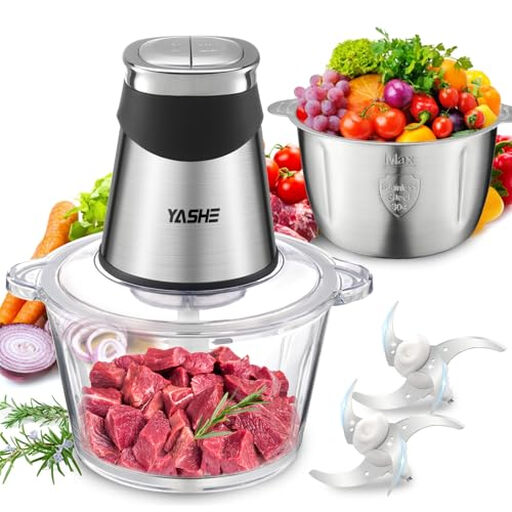 No image available
The two bowls and blade sets may be useful for preparing different ingredients separately.
Specifications listed: 1.8 l and 2 l bowls, a 500 W motor, two speeds and two blade sets.
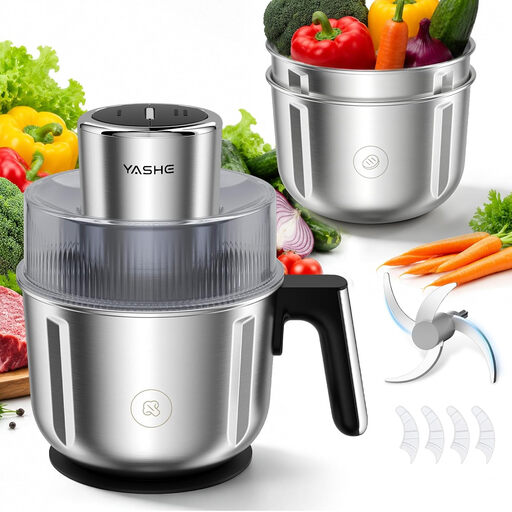 No image available
The three bowls make this model worth comparing if you need to prepare different quantities.
The product description lists pulse cycles of up to 30 seconds.
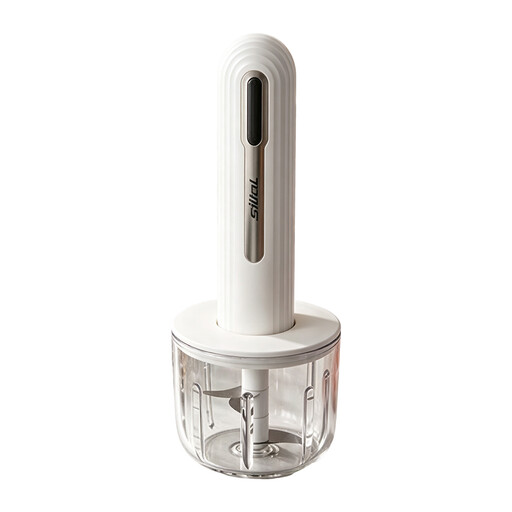 No image available
This compact model is described as suitable for small portions; its transparent bowl lets you see the contents as you chop.
According to the product description, the removable parts are designed for hand-washing. It is not suitable for bones, ice or hot ingredients.
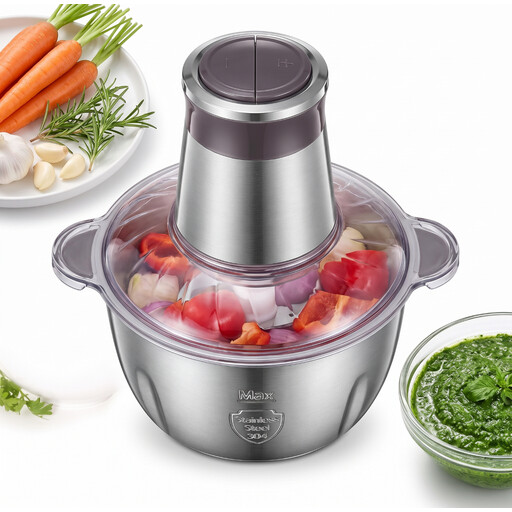 No image available
The 2.5 l bowl may be worth comparing for preparing food together; bowl capacity is not a tested measure of how many olives it can chop.
Specifications listed: 2.5 l stainless steel bowl, two speeds and three blades.
 No image available
The two bowl sizes may suit you if you want to make both small and larger batches.
Specifications listed: 2 l and 0.6 l glass bowls, and a power rating of 300 W. The product description states that the bowls and lids are not heat-resistant.
Use pitted olives for the recipes mentioned: both Magimix and KitchenAid specify olives without stones. Check your own machine’s instructions too; these recipes aren’t a general safety statement for every model.
Clean the parts that come into contact with food according to the instructions for the exact model. The NVWA includes cleaning kitchen utensils after use in its checklist for food businesses; don’t assume that every machine part is dishwasher-safe.
The Netherlands Nutrition Centre (Voedingscentrum) recommends keeping opened olive tapenade in the fridge for 4 days. For homemade tapenade, consider the ingredients and hygienic preparation separately; this product advice doesn’t set a universal shelf life for homemade versions.
For a business that prepares or processes food or drink, Ondernemersplein describes hygiene rules and a food safety plan based on HACCP; an approved hygiene code can also be used. Whether these business requirements apply depends on how the workshop is organised, so don’t assume they apply to a private gathering.
No. According to ACM ConsuWijzer, statutory guarantees apply in addition to any seller’s or manufacturer’s warranty. If a product breaks sooner than you could reasonably expect under normal use, the seller must offer an appropriate free remedy; the manufacturer’s warranty period doesn’t automatically limit your statutory rights.