
Evening viewer who wants to see shadow detail
If you mainly watch TV in a darkened room, you’ll want to make out details in night-time scenes and look out for possible halos around bright objects.


For travel programmes in a dark room, OLED is a natural starting point if deep blacks and shadow detail matter most. Mini-LED is also worth comparing if the TV is often used in a bright room or displays static images for long periods. Picture quality depends on more than the technology alone: choose a screen size to suit your viewing distance, and assess regular broadcasts, HDR and the energy consumption of the specific model too.
If you mainly watch TV in a darkened room, you’ll want to make out details in night-time scenes and look out for possible halos around bright objects.
If you switch between travel programmes, streams and regular broadcasts, you’ll want to assess colour and HDR, as well as how the TV handles lower-quality sources.
Taking viewing distance and seating into account can help you work out whether a different screen size or display technology would suit your set-up better.
Best for: evening viewing in a dark room, where deep blacks and night-time footage matter.
Bear in mind: static picture elements displayed for long periods remain a consideration because of the risk of burn-in.
Best for: a TV that is also often used in daylight or displays static information for long periods.
Bear in mind: local dimming can create visible halos around bright details against a dark background.
Best for: anyone who prioritises screen size and purchase price over the deepest blacks.
Bear in mind: a 4K label alone doesn’t tell you how well a TV displays dark scenes or regular broadcasts.
| What to consider | What should you look for? | Who should prioritise this? |
|---|---|---|
| Shadow detail and halos | Compare OLED with the local dimming on a specific mini-LED model using dark scenes; don’t judge by the number of dimming zones alone. | If I’m watching night-time cityscapes or a bright moon against a dark sky, I want to see detail without distracting halos. Around 31% of consumers prioritise shadow detail above all else. |
| Colour, HDR and broadcasts | Try both a regular broadcast and HDR content suited to the TV, and compare footage of the same quality. | When I switch between colourful landscapes, streams and regular broadcasts, I want a TV that can handle these different sources. Around 25% of consumers prioritise how the TV displays different sources and colours. |
| Screen size and viewing position | Measure the distance from your viewing position to the TV and check that the screen and stand will fit. If your seating is spread out, consider the viewing angle too. | If I’m watching with others or sitting to one side of the screen, I want the size to suit the distance and seating arrangement. For around 19% of consumers, screen size and viewing position are the main considerations. |
| Purchase and running costs | Compare the EU energy labels for SDR and HDR on the exact models, using kWh per 1000 hours. | If you want to manage the cost of buying and using the TV, compare both consumption figures against your own viewing habits. Around 13% of consumers put these costs at the top of their list. |
| Static images displayed for long periods | Consider whether logos, information bars or menus stay on screen for long stretches. If they do, weigh the risk of OLED burn-in against possible halos on mini-LED TVs. | If fixed picture elements are often displayed for long periods, I want to take that into account when choosing a screen type. This is the main consideration for around 12% of consumers. |
QLED and mini-LED are LCD technologies that use a backlight. The implementation of local dimming can make a noticeable difference in dark scenes.
Compare a dark scene with small bright details, and check each TV for halos and how well it preserves shadow detail.
Source quality and picture performance matter too. A quoted peak brightness for a series or a number of dimming zones isn’t an independent measurement of the specific screen variant.
Watch regular broadcasts alongside suitable HDR footage, and look up information on the exact model variant.
In the Netherlands, statutory consumer rights are separate from any commercial warranty. A set manufacturer’s warranty period doesn’t automatically determine when your statutory rights end.
Check what additional cover a voluntary warranty product offers before taking it out.
The EU energy label lists separate information for SDR and HDR, making it possible to compare consumption figures for each picture mode.
Compare both label figures for the exact models, on the same basis of kWh per 1000 hours.
The LG OLED55C68LA is a documented 55-inch OLED C6 model for comparing OLED contrast and Dolby Vision.
According to Philips, the Philips 55OLED810/12 combines a 55-inch OLED screen with Ambilight and Dolby Vision.
The European TCL 55C7K is a 55-inch QD mini-LED model to compare with OLED.
The Samsung QE55S90HAEXXN is a documented 55-inch OLED S90H with a Glare Free screen.
The Sony K-55XR8M2 is another 55-inch OLED model to compare for picture processing, connections and placement.
The options shown are LG OLED TVs in a range of screen sizes. OLED is a good fit if dark scenes matter to you; check whether each model’s screen size suits your viewing distance.
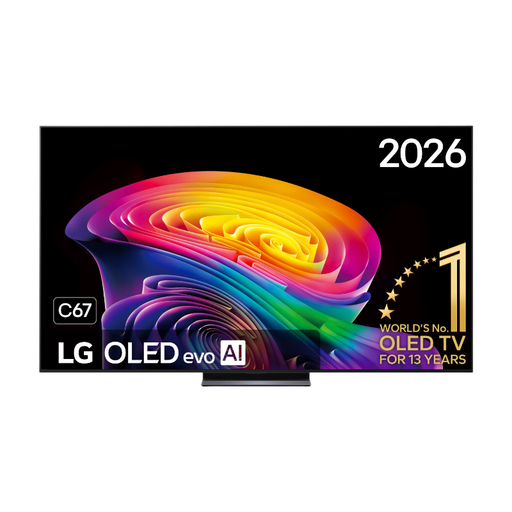 Image unavailable
OLED is worth considering if dark scenes and shadow detail matter most; check whether 83 inches suits your viewing distance.
Specifications: 83 inches, OLED, 4K and Dolby Vision.
The general risk of OLED burn-in remains a consideration if static picture elements are displayed for long periods.
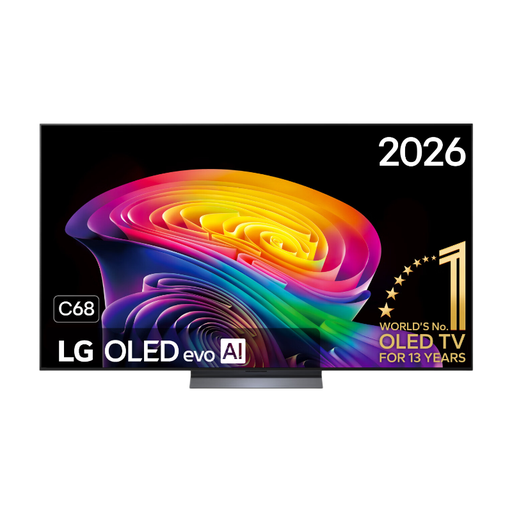 Image unavailable
This OLED model is worth comparing for dark scenes; measure your viewing distance to see whether 65 inches suits your set-up.
Specifications: 65 inches, OLED, 4K, Dolby Vision, HDR10 and HLG.
The general risk of OLED burn-in remains a consideration if static picture elements are displayed for long periods.
Image unavailable
A 55-inch OLED model to compare for evening viewing in a dark room; check that the size suits the distance from your seat.
Specifications: 55 inches, OLED, 4K, Dolby Vision, HDR10 and HLG.
The general risk of OLED burn-in remains a consideration if static picture elements are displayed for long periods.
 Image unavailable
This smaller OLED size is worth considering if a larger screen won’t suit your viewing area; measure the available space and viewing distance.
Specifications: 42 inches, OLED, 4K Ultra HD, Dolby Vision and HDR10.
The general risk of OLED burn-in remains a consideration if static picture elements are displayed for long periods.
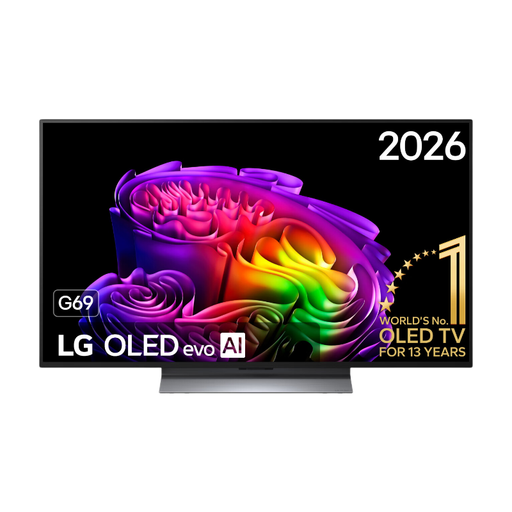 Image unavailable
This 48-inch OLED model is an option to compare with other screen sizes for dark scenes; choose a size to suit your viewing distance.
Specifications: 48 inches, OLED, 4K, Dolby Vision, HDR10 and HLG.
The general risk of OLED burn-in remains a consideration if static picture elements are displayed for long periods.
Measure the distance from your viewing position to where you plan to put the TV. The Dutch Consumers’ Association cites around 2.4 times the screen diagonal as a preferred viewing distance based on its research. Use this as a starting point, and also check that the TV and stand will fit.
No, a 4K label alone doesn’t tell you how good the picture quality is. The Dutch Consumers’ Association points out that not all 4K TVs deliver a good picture, so watch a broadcast of the kind of quality you usually view at home too.
OLED is a natural starting point if deep blacks and shadow detail matter most, while mini-LED is also worth comparing if the TV is often used in a bright room. With mini-LED, check dark scenes for possible halos; with OLED, factor in long periods of static images.
Compare the SDR and HDR figures on the EU energy labels for the exact models, expressed in kWh per 1000 hours. To estimate your own costs, you’ll also need your viewing hours for each picture mode and your electricity tariff.
If a product is faulty despite being used normally, the seller in the Netherlands is responsible for providing an appropriate remedy at no cost under the statutory guarantee. This doesn’t automatically expire after a fixed two-year period; any commercial warranty is separate.