
Viewers with limited space
You want the TV and its position to fit your room. Measure the viewing distance and the available space before choosing a screen size; the Consumentenbond describes a measuring method you can use as a starting point.


First, measure your viewing distance and the space available for the TV, stand or wall bracket; the shape of your living room alone won’t determine the right screen size. For dark crime-drama scenes, it may be worth comparing a suitable OLED model, while in a room with plenty of daylight you can also assess LCD/QLED models for brightness and reflections. For the exact TV, check how clearly voices come through, whether it has the apps you want and how much energy it uses.
You want the TV and its position to fit your room. Measure the viewing distance and the available space before choosing a screen size; the Consumentenbond describes a measuring method you can use as a starting point.
When watching crime dramas, you pay attention to details in the shadows and how well the TV displays black. The Consumentenbond notes that deeper blacks can be a feature of OLED.
You often watch in daylight or sit at an angle to the screen. So assess reflections, brightness and viewing angle for the specific model and your set-up.
Start by measuring, then compare picture quality and the practical features that matter in your room. The Consumentenbond gives the measured viewing distance divided by 2.4 as a rule of thumb for estimating screen diagonal in centimetres. Use it as a starting point, not a fixed requirement.
| What to consider | What to look for when buying | Who is this important for? |
|---|---|---|
| Size and positioning | Measure the distance from your eyes to the planned screen position and check the dimensions, including the stand, or the mounting details for the exact model. | If I have limited space, I want a screen that suits both my viewing distance and the space available; around 28% of consumers prioritise size and positioning. |
| Dark scenes | Compare dark images on the exact model and adjust the contrast at home so that details remain visible in both light and dark areas. | When watching crime dramas in the evening, I want to make out details in the shadows without blacks looking grey; around 28% of consumers prioritise dark scenes. |
| Daylight and viewing angle | Assess reflections in lighting similar to your room, and also look at the screen from seats positioned at an angle. The Consumentenbond notes that OLED generally offers a wider viewing angle, while QLED often has higher brightness. | If I watch during the day or don’t sit directly in front of the TV, I want to be able to assess the picture from my usual seat; around 17% of consumers prioritise visibility in daylight. |
| Dialogue and streaming | Listen to speech on the exact model and check that your preferred streaming service is available on its TV platform. A media player connected via HDMI can be an alternative. | If I want to hear dialogue clearly and watch my series on a particular service, I want to check both in advance; around 16% of consumers prioritise this combination. |
| Overall running costs | Compare the energy label for the exact version and check whether you’ll need a stand or wall bracket. The energy use shown on the label is expressed in kWh per 1,000 hours. | If I want to keep purchase, installation and running costs under control, I compare energy use and the positioning required; around 11% of consumers prioritise these costs. |
Viewing distance is only a starting point: the TV’s external dimensions, stand and chosen position also determine whether it will fit.
Measure the available width and viewing distance, then check the dimensions of the exact version, including the stand or mounting details.
A stand or wall bracket may need extra space, so check in advance which positioning option suits your room.
QLED is a type of LCD with a backlight. A technology name or HDR label alone doesn’t prove how well a particular TV displays dark scenes.
Compare the exact models using dark images, and also check brightness and reflections in the lighting conditions you’ll use the TV in.
Apps vary between smart TVs and can be discontinued, so a service may not always remain available in the same way.
Check that your preferred service is available on the exact model. If an app is missing, a separate media player connected via HDMI may be an alternative.
A separate media player means an extra device and a spare HDMI port.
The LG OLED42C68LA is a 42-inch OLED model with webOS, worth comparing if you’re looking for a compact size.
According to Samsung Netherlands, the Samsung QE42S90HAEXXN is a 42-inch OLED model with Glare Free technology.
Philips offers two different compact options here: the 42OLED811/12 with OLED and the 43PUS9000/12 with QLED.
According to the manufacturer, the TCL P7K range includes a 43-inch QLED version, offering an LCD alternative to compare with compact OLED models.
This selection includes a 42-inch OLED model and several 43-inch TVs to compare side by side. Measure the viewing distance and available space before choosing a screen size.
 No image available
A compact OLED option to compare if dark scenes matter to you.
42 inch, 4K Ultra HD, Dolby Vision, HDR10 and webOS.
 No image available
A 43-inch option to compare with compact OLED models; check that its dimensions suit your viewing distance and available space.
43 inch, 4K and Nano UHD.
 No image available
A 43-inch model to include in your comparison; measure the space for the TV and check it has the features you need for watching series.
43 inch and 4K.
 No image available
A QLED option to compare with OLED; assess dark scenes and reflections in lighting similar to your room.
43 inch, 4K UHD, Google TV, HDR10+ and Dolby Vision.
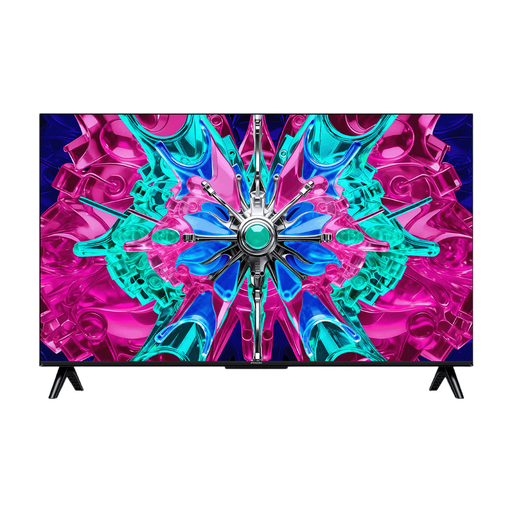 No image available
A 43-inch LED option to compare with OLED; check that its size and position suit your living room.
4K, 50 Hz and smart TV.
It depends on more than just how narrow the room is. Measure the distance from your eyes to the planned screen position; the Consumentenbond suggests dividing this distance by 2.4 as a starting point for estimating the diagonal in centimetres. Then check the TV’s external dimensions and stand.
Use your usual room lighting and a scene with both light and dark areas. Adjust the contrast and brightness so that you can see details in both; don’t automatically use the extra-bright shop setting as your starting point.
There’s no guarantee: the apps available vary between smart TVs, and apps can be discontinued. Check that your preferred service is available on the exact TV; if an app is missing, a separate media player connected via HDMI may be an option.
When you buy from a business at a distance, you will usually have a 14-day cooling-off period; the Rijksoverheid says the seller must inform you about this. You’re also entitled to a product that meets the required standards, and you can contact the seller if there’s a problem.
The energy label shows energy use in kWh per 1,000 hours. The European Commission describes this unit of measurement for displays; compare the label for the exact version, not one for a different model or size.