For platform games in a dark room, your choice mainly depends on black levels, how clearly fast movement is displayed and how often the screen shows static images. OLED is a good fit if deep blacks are your priority, while VA is an LCD alternative for contrast in a dark room. IPS may suit more varied use with static on-screen elements. RTINGS.com explains these panel differences, but performance varies between models. Also check the output from your PC or console and, for OLED, the care instructions and warranty terms for the specific model.
Who is this choice relevant to?
Players who want to see dark levels clearly
You mainly play atmospheric platform games in a dark room and want to distinguish dark areas from bright details. RTINGS.com discusses black uniformity specifically in relation to dark scenes in a dark room.
Players who value fast movement
You prioritise a clear image in motion and responsive performance during jumps and camera movements. RTINGS.com highlights motion handling, input lag and refresh rate as factors to consider when choosing a gaming monitor.
Users with mixed screen use
You also use your screen for menus, desktop work or other content with static elements, so you take panel care and compatibility with your console or PC into account.
What should you look for when choosing?
OLED or QD-OLED
Good for: playing in a dark room when deep blacks and clear fast movement are your top priorities.
Also consider: displaying the same HUD elements or other static images for long periods makes the risk of OLED burn-in relevant. Follow the care instructions for the exact model.
VA LCD
Good for: anyone looking for contrast in a dark room who wants to consider an LCD alternative to OLED. RTINGS.com says VA generally offers higher contrast than IPS.
Also consider: some VA monitors can show dark motion smearing, so check the performance of the specific model.
IPS LCD
Good for: anyone who also uses their LCD screen for other tasks or values wide viewing angles. RTINGS.com lists IPS as an alternative for those looking to avoid the risk of OLED burn-in.
Also consider: IPS generally offers less contrast than VA and OLED in a dark room. Check the model's black uniformity and motion handling.
| What to consider |
What to check before buying |
Who should prioritise this? |
| Black levels |
Compare panel type, contrast and black uniformity for dark levels with bright objects. |
If I mainly play dark levels, I want to distinguish black areas from bright details. Around 33% of consumers put black levels first. |
| Motion clarity |
Check motion handling and input lag measurements at the refresh rate you use; GtG response time is not the same as input lag. |
When making fast jumps, I want to follow characters and backgrounds clearly. Around 27% of consumers give motion clarity and responsiveness top priority. |
| Static images and care |
For OLED, check the care instructions and coverage terms for the exact model. |
If my screen also displays static HUD elements or desktop windows for long periods, I want to know what care it needs. Around 20% of consumers prioritise static use and care. |
| Compatibility with your device |
Check that the input you use supports your preferred resolution and refresh rate with your PC or console. |
I want my own console or PC to support the selected display mode. Around 20% of consumers make device compatibility their top buying priority. |
Common buying pitfalls
-
Confusing minimum response time with input lag
A minimum GtG figure does not describe the full delay between an input and the image appearing on screen. On its own, it also says little about dark motion smearing.
Compare input lag and motion handling measurements in the gaming mode you actually use.
-
Choosing OLED without considering static on-screen elements
Displaying the same static elements for long periods can cause permanent burn-in on OLED screens. The terms of any manufacturer cover may depend on following the prescribed panel care routine.
Check the care instructions and terms for the exact model. Also consider LCD options if static images make up a large part of your screen use.
-
Assuming the model variant from the title alone
For the Samsung Odyssey OLED G6 G60SD with model number LS27DG602SUXEN, Samsung Netherlands lists 360 Hz. A Joybuy listing for the same model number gives 240 Hz in the title and 360 Hz in the description.
Before buying, ask for confirmation of the version on offer and check that the model number matches the specifications.
Brands to consider
AOC
AOC lists a QHD QD-OLED panel and 240 Hz for the Q27G4ZDR. These are manufacturer specifications, not the results of an independent performance test.
- The stated panel technology may suit anyone looking for OLED black levels in dark levels.
- The US product page consulted lists a three-year warranty, including burn-in cover subject to care requirements. Check whether these terms apply to the version sold in the Netherlands.
MSI
MSI lists a 27-inch QHD Rapid VA panel and a maximum refresh rate of 180 Hz for the MAG 27CQ6F.
- VA is a relevant LCD option to consider when contrast in a dark room matters.
- The stated minimum response time of 0.5 ms GtG is not an input lag measurement and does not guarantee the absence of dark motion smearing.
Philips
Philips lists a 27-inch QHD IPS panel and 144 Hz for the Evnia 27M2N3500NF/00.
- IPS may suit anyone who also uses their screen for other tasks and values wide viewing angles.
- The stated 0.5 ms Smart MBR is a specified mode, not an independently measured general response time. The Evnia range includes different models and panel types.
Samsung
Samsung Netherlands lists QHD OLED and 360 Hz for the 27-inch Odyssey OLED G6 G60SD, model LS27DG602SUXEN.
- The manufacturer's specifications give you the model number and intended screen configuration to check when comparing products.
- A Joybuy listing with the same model number gives conflicting information about 240 Hz and 360 Hz. Confirm which version is on offer before relying on that specification.
Joybuy product picks
These Joybuy picks focus on OLED and QD-OLED gaming monitors for anyone who values deep blacks in dark levels. With OLED, also consider static on-screen elements displayed for long periods and the care instructions for the model.
 No image available
AOC GAMING Q27G4ZDR 26.5-inch QHD QD-OLED 240 Hz gaming monitor
This QD-OLED monitor is a good fit if deep blacks matter to you. Bear in mind the risk of OLED burn-in with static on-screen elements displayed for long periods.
26.5-inch, QHD, 2560 × 1440 and 240 Hz.
Joybuy
 No image available
LG UltraGear 34GX900A-B 34-inch curved WQHD OLED 240 Hz gaming monitor
This OLED option may suit anyone looking for deep blacks in dark levels. Consider the risk of static on-screen elements displayed for long periods.
34-inch curved screen, 3440 × 1440 and 240 Hz.
Joybuy
 No image available
MSI MAG 341CQP QD-OLED X28 34.18-inch curved UWQHD 280 Hz monitor
This QD-OLED monitor may suit anyone who prioritises black levels in dark games. Factor in the risk of OLED burn-in with static images displayed for long periods.
34.18-inch curved screen, 3440 × 1440 and 280 Hz.
Joybuy
 No image available
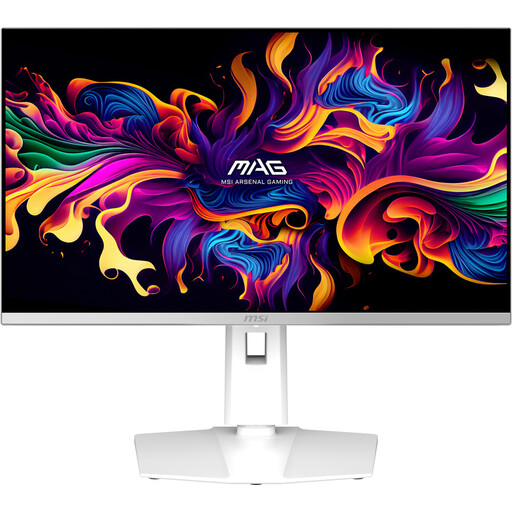
MSI MAG 272QPW QD-OLED X28 27-inch QHD 280 Hz gaming monitor, white
This QD-OLED model is an option if deep blacks matter to you. Also check the care instructions for static use.
27-inch, 2560 × 1440, 280 Hz and white.
Joybuy
 No image available
MSI MAG 272QP QD-OLED X24 26.5-inch WQHD 240 Hz monitor
This QD-OLED monitor may suit anyone looking to play dark levels with deep blacks. Consider how often you use the screen for static content over long periods.
26.5-inch, WQHD, 16:9 and 240 Hz.
Joybuy
Frequently asked questions
Is the highest refresh rate automatically the most important thing for platform games?
No, the highest refresh rate is not automatically the most important factor. Also consider motion handling, input lag and image quality, and check which output mode your device and game actually support.
How do you check the video output on a PS5?
Sony advises going to Settings > Screen and Video > Video Output to view the current output signal or adjust the video output. Also check which resolution and refresh rate the monitor connection you use supports.
What should you know about caring for an OLED monitor?
Images that remain unchanged for long periods can cause burn-in on OLED screens. Follow the care instructions for the exact model and check the terms of any manufacturer cover; these terms are not automatically the same for all OLED monitors.
What are my rights as a Dutch consumer when buying online?
According to ACM ConsuWijzer, online purchases generally come with a statutory cooling-off period of up to 14 days after delivery, subject to applicable exceptions. You also have a statutory guarantee: if a product breaks during normal use sooner than you could reasonably expect, the seller must provide an appropriate solution.


