
Players who prioritise dark-room contrast
If you mainly play in the dark and want dark backgrounds to look black, compare the contrast performance of the exact model. RTINGS.com highlights panel contrast as an important consideration for dark rooms.


If you mainly play in a dark room and deep blacks matter to you, OLED is worth considering. If the same cards or interface elements stay on screen for long periods, VA LCD is an alternative to weigh up. IPS is most relevant if wide viewing angles or mixed use matter more. Also compare text clarity on the exact model, the connections your device needs, and, for OLED, the panel care guidance and warranty terms.
If you mainly play in the dark and want dark backgrounds to look black, compare the contrast performance of the exact model. RTINGS.com highlights panel contrast as an important consideration for dark rooms.
If cards, menus or other fixed interface elements remain visible for long periods, consider readability and the potential risk of OLED burn-in. RTINGS.com notes that prolonged display of static elements is something to bear in mind with OLED.
If you also use your screen for other tasks or often view it from an angle, compare text clarity, viewing angles and connections. RTINGS.com notes that IPS typically offers wider viewing angles than VA.
Best for: making deep blacks your main priority, while varying the content on screen regularly.
Consider: displaying the same interface elements for long periods carries a risk of burn-in; panel care features do not eliminate that risk.
Best for: weighing up dark-room contrast against long sessions with the same cards, bars or menus on screen.
Consider: RTINGS.com notes that VA typically offers more contrast than IPS, while IPS offers wider viewing angles.
Best for: viewing from different angles or choosing an LCD screen for mixed use.
Consider: RTINGS.com notes that IPS typically offers less contrast than VA, which can matter in a dark room.
Start with card readability and the picture you want in a dark room. Then consider how long fixed elements stay on screen and which connections your PC or console needs. Refresh rate comes after that.
| Consideration | What should you check? | Who should give this more thought? |
|---|---|---|
| Black levels | Compare the contrast performance of the exact model in a dark room; don’t rely on the panel label alone. | If you mainly play in the dark and want deep blacks, put contrast first; around 33% of consumers cite black levels as their main reason for buying. |
| Card text | Check text clarity on the exact model and assess its resolution and screen size from your usual viewing distance. | If I want to read cards and tooltips comfortably, I look beyond resolution alone; around 33% of consumers give readability top priority. |
| Static interface | With OLED, consider elements that remain on screen for long periods, and read the care instructions and warranty terms for the model. | If you often leave the same game interface on screen for a long time, weigh up that risk before choosing a panel; around 25% of consumers say this is their main consideration. |
| Mixed use and connections | Check the viewing angles and available ports, and whether your device supports your preferred resolution and refresh rate. | If I also use the screen for other tasks or don’t always sit directly in front of it, versatility and connections matter; around 9% of consumers put these needs first. |
A high quoted refresh rate won’t automatically make a monitor more suitable for a relaxed card game; how much it matters depends on your other games and your device.
Compare card text, dark-room contrast and connections first. Then decide whether the quoted refresh rate suits the other games you play.
If the same interface elements stay in the same place for long periods, the potential risk of OLED burn-in is worth considering.
Compare your usage with a VA LCD alternative, and read the care instructions and warranty terms for the exact OLED model.
Resolution alone doesn’t tell you exactly how text will look; screen size, pixel density and the model’s display performance all play a part. RTINGS.com notes that text clarity is partly subjective.
Check text clarity on the specific model at the scaling and viewing distance you use.
ASUS ROG describes the PG32UCDM Gen3 as a 31.5-inch 4K QD-OLED model with a visible screen size of 31.5 inches, for those comparing a large screen with OLED contrast.
Dell lists the AW2725Q as a 27-inch 4K QD-OLED option for those comparing sharpness and dark-room contrast in a smaller size.
MSI offers the MAG 27CQ6F, a QHD Rapid VA model, and the MAG 274QRF QD E2, a separate QHD Rapid IPS model, so you can compare two LCD options.
Samsung lists the 27-inch QHD Odyssey G5 G55C, model LS27CG552EUXEN, as a curved gaming monitor.
This selection of Joybuy products focuses on VA LCD gaming monitors for those weighing up dark-room contrast. Compare text clarity, screen size and connections with your own needs.
 Image unavailable
A VA panel is worth considering if you’re weighing up dark-room contrast; check text clarity from your usual viewing distance.
27 inches; QHD 2560 × 1440; 180 Hz; 1 ms; FreeSync Premium; HDR10; 2× HDMI 2.0 and 1× DisplayPort 1.4.
 Image unavailable
This VA monitor is worth considering as part of your dark-room comparison; check that the ultra-wide format suits your card layout.
34 inches; WQHD; VA panel; 1800R curve; 120 Hz.
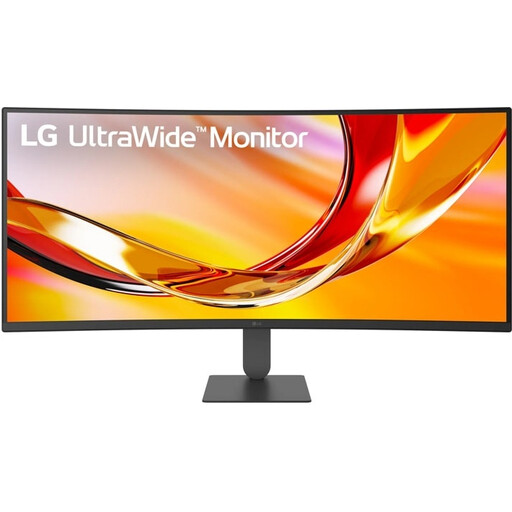 Image unavailable
A VA panel may suit those comparing dark-room contrast; check whether the curved, wide screen works with your seating position.
34 inches; WQHD 3440 × 1440; VA panel; curved screen; 144 Hz.
 Image unavailable
This VA monitor is an option if you’re considering contrast in a dark room; check how text and card layouts look on the ultra-wide screen.
34 inches; UWQHD 3440 × 1440; VA panel; 1500R curve; 165 Hz; DisplayPort; VESA 75 × 75 mm.
 Image unavailable
A Rapid VA panel is worth considering when weighing up dark-room contrast; check that the curve is comfortable for your seating position.
27 inches; WQHD 2560 × 1440; Rapid VA panel; curved screen; 240 Hz; 0.5 ms; FreeSync Premium.
Not just because of the game genre. First decide what kind of text clarity and picture quality you want; also consider the refresh rate in relation to your other games and the device you use.
Compare text clarity on the exact model, the combination of resolution and screen size, and the picture from your own seating distance. Resolution alone doesn’t tell you exactly how text will look; RTINGS.com notes that text clarity is partly subjective.
Vary the content on screen where possible and follow the care instructions for your chosen model. These features don’t guarantee that burn-in is impossible.
No. According to ACM ConsuWijzer, statutory rights apply alongside a retailer’s or manufacturer’s warranty. Keep the product information and contact the retailer if there’s a problem to discuss your situation.
The Dutch government states that electrical devices placed on the market in the EU must meet the applicable safety requirements and carry a CE mark. Check the information and marking on the specific product; CE marking is not an independent assessment of picture quality.