Who is this choice relevant to?

Players who want responsive controls

You react during short bursts of play and want your actions to appear on screen straight away. Compare input lag in gaming mode separately from pixel response time: RTINGS.com describes these as different aspects of the gaming experience.

Players in a dark room

You play with little ambient light and care most about how blacks look in dark scenes. Compare OLED with the black levels of a specific Mini LED model, rather than relying on the screen technology alone.

Players with long HUD sessions

You often play for long periods with the same score bar or menu elements on screen. Sony Netherlands warns that prolonged or repeated static images on OLED can cause permanent image retention.

What should you look for when choosing?

OLED

Best for: anyone who prioritises deep blacks and fast-moving images in a dark room.

Consider: according to Sony Netherlands, prolonged or repeated static images can cause permanent image retention.

Mini LED LCD

Best for: anyone who wants to factor in the risk associated with recurring fixed game elements on OLED and compare models with zone-controlled backlighting.

Consider: the Mini LED label doesn’t guarantee how blacks, bright elements or motion will look on a particular model.

Other LCD TVs

Best for: anyone who prioritises screen size and overall usability, and checks the gaming features of the specific TV.

Consider: the LCD or LED label alone won’t tell you about black levels, motion clarity or input lag.

What to consider What should you check? Who should pay extra attention?
Controls and motion Compare input lag in gaming mode at your resolution and refresh rate; assess motion handling separately. If I play fast-paced games, I want to assess both responsive controls and clear motion. Around 34% of consumers prioritise responsive controls.
Dark-scene contrast Compare black levels and bright interface elements in dark scenes on the exact models you’re considering. In a dark room, I want to weigh up blacks and bright details against dark backgrounds. Around 33% of consumers give dark-scene contrast top priority.
Fixed HUD or score bar Consider how long and how often fixed elements stay on screen; check the model’s screen-care features. During long sessions with the same score bar on screen, I want to factor in the risk associated with OLED. Around 20% of consumers prioritise a fixed interface.
Size and energy use Check the dimensions and placement; compare the energy label figures for SDR and HDR. If room size or energy use determines my choice, I want to weigh up dimensions and the energy label alongside gaming features. Around 13% of consumers prioritise a suitable size and running costs.

Common buying mistakes

  • Confusing pixel response time with input lag

    Motion clarity and the delay between pressing a button and seeing the result on screen are different things. A fast pixel response therefore doesn’t prove that the controls will feel responsive.

    Compare input lag in gaming mode at the refresh rate you use, and assess motion handling separately.

  • Assuming an advertised high refresh rate is always achievable

    Output depends on the TV, connection, game and console or PC. Philips lists 144Hz HDMI VRR for gaming on a connected PC; this isn’t a promise that every console can use it.

    Check the requirements for both the TV and your gaming source, as well as the game itself.

  • Choosing an OLED TV without considering fixed game elements

    Sony Netherlands warns that prolonged or repeated static images can cause permanent image retention.

    Weigh this risk against the black levels you want, and check the screen-care features and terms for the exact model.

  • Looking only at screen size

    The TV needs to fit the space available. The European energy label provides information including energy use for SDR and HDR.

    Check the dimensions of your chosen model and compare its energy label figures.

Brands to compare

LG

The OLED C6 range is worth comparing if black levels and PC gaming features matter to you; the model mentioned is OLED55C68LA.

  • LG lists 4K gaming up to 165 Hz, G-SYNC compatibility and FreeSync Premium for this model.
  • These are manufacturer specifications, not an independent input-lag measurement or a guarantee that a game will use that refresh rate. For long sessions with fixed HUD elements, also consider the general risks associated with OLED.

Philips

According to Philips, the 55OLED810/12 combines an OLED screen with Ambilight, which may be relevant if you’re also considering the lighting behind the screen.

  • Philips lists VRR up to 144 Hz and says that 144Hz HDMI VRR, G-SYNC and FreeSync for gaming require a connected PC.
  • The PC requirement doesn’t mean you’ll get 144 Hz with a console. Ambilight alone says nothing about input lag.

Sony

The BRAVIA 5 K55XR52BP.CEI is a Mini LED model to compare with OLED if fixed game elements are an important consideration.

  • Sony confirms that this model uses Mini LED and warns about prolonged static content on OLED.
  • This doesn’t prove that the BRAVIA 5 performs better than an OLED TV in motion or in a dark room; compare the specific models.

Joybuy products

This selection includes OLED and Mini LED TVs to compare for gaming in a dark room.

LG OLED55C68LA 55-inch OLED Evo AI C6 4K Smart TV

LG OLED55C68LA 55-inch OLED Evo AI C6 4K Smart TV

An OLED option to weigh up for black levels in a dark room alongside the use of fixed HUD elements.

The product name lists 120 Hz native and VRR up to 165 Hz.

View on Joybuy
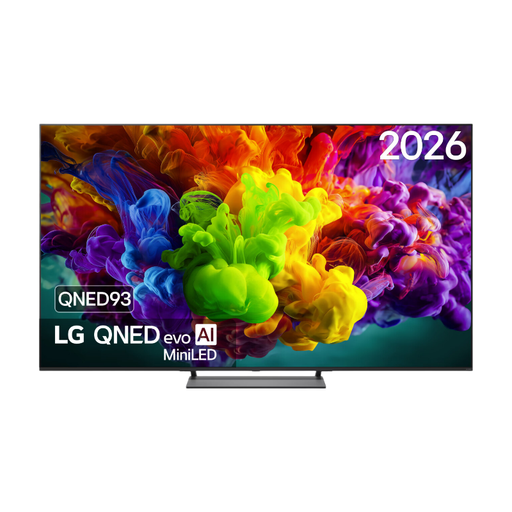
LG 55QNED93B6A 55-inch QNED Evo AI Mini LED 4K Smart TV

LG 55QNED93B6A 55-inch QNED Evo AI Mini LED 4K Smart TV

A Mini LED LCD option to compare with OLED if you’re considering fixed game elements.

The product name lists 120 Hz and VRR up to 144 Hz.

View on Joybuy
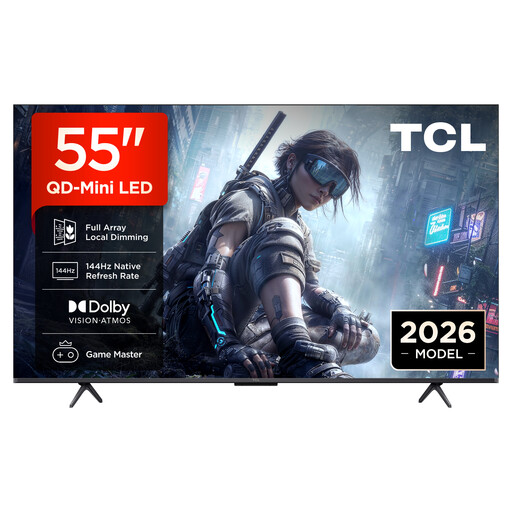
TCL 55T8D 55-inch QLED with QD-Mini LED and 4K

TCL 55T8D 55-inch QLED with QD-Mini LED

A QD-Mini LED option to compare with OLED for fast-moving games.

The product name lists 4K and 144 Hz VRR.

View on Joybuy

METZ 55MNE8000Z 55-inch QD-Mini LED Google TV

METZ 55MNE8000Z 55-inch QD-Mini LED Google TV

A QD-Mini LED model to compare with OLED as an LCD alternative.

The product name lists 4K, 144 Hz, VRR and ALLM.

View on Joybuy
TCL 55T8C 55-inch 4K QLED Smart TV

TCL 55T8C 55-inch 4K QLED Smart TV

A QLED option to consider for a gaming set-up with a 55-inch screen.

The product name lists 144 Hz.

View on Joybuy

Frequently asked questions

Do I need a 144 Hz TV or higher for arcade sports games on a PS5?

No, not to use the 120Hz output described by PlayStation. Check whether your game supports 120Hz output, whether your TV and connection are compatible, and what output signal the PS5 displays. A PC can use other refresh rates if every part of the connection supports them.

How can I check that VRR and gaming mode are working?

On PS5, go to ‘Settings > Screen and Video > Video Output’ to see information about the connected HDMI device and the VRR and 120Hz output settings. According to PlayStation, ALLM automatically switches a compatible TV to a low-latency mode; VRR depends on the TV and game.

What should I do during long OLED gaming sessions with a fixed score bar?

Consider how long and how often the same static content appears: Sony Netherlands lists fixed game images as a possible cause of image retention. Check your model’s screen-care features. LG says that pixel cleaning on applicable OLED TVs can run while the TV is switched off, and that the TV needs to remain plugged in; this doesn’t rule out permanent retention.

What consumer rights and energy information matter when buying online in the Netherlands?

For distance purchases from a business, you usually have a 14-day cooling-off period, according to the Dutch government. ACM ConsuWijzer explains that your statutory guarantee applies in addition to the manufacturer’s warranty and depends on what you could reasonably expect from the product under normal use. For energy information, compare the European label for the exact TV model, including its SDR and HDR figures.
