Who is this choice relevant to?

Players who want to see dark scenes clearly

If you usually play with the lights off, you’ll want to distinguish characters and platforms clearly against dark backgrounds. RTINGS and the Consumers’ Association describe black levels and contrast as important considerations when comparing TV screens.

Players spread out across the sofa

If not everyone sits directly in front of the TV, it’s important that the action remains easy to follow from the seats at either end of the sofa. The Consumers’ Association highlights viewing angles and recommends measuring your viewing distance at home.

Players who keep the same game on screen for long periods

If you often play the same game with fixed on-screen elements, you may want to factor in the trade-offs of OLED and prolonged display of static images. RTINGS emphasises that an extreme stress test does not directly predict what happens with normal, varied use.

What should you look for when choosing?

OLED

Best for dark scenes and playing from several seats taking priority over displaying the same fixed HUD for long periods.

Trade-off RTINGS rates OLED highly for dark rooms. Image retention remains a consideration with prolonged static images, although extreme test results don’t predict normal, varied use.

Mini-LED LCD

Best for frequently playing the same game for long periods with fixed on-screen elements, or regularly using the TV in a bright room.

Trade-off RTINGS describes possible blooming around bright objects in dark scenes. Also check the picture from the seats at either end of your sofa.

What to consider What to look for Who should consider this?
Dark scenes Compare black levels and possible blooming around bright objects in gaming mode and in a dark scene. If I play with the lights off, I want to distinguish dark backgrounds and bright game objects clearly. Around 33% of consumers prioritise visibility in dark scenes.
Viewing from the sofa Measure your viewing distance and check the picture from both ends of the sofa. When we play with several people, I want everyone to be able to follow the action from their seat. Around 27% of consumers prioritise good visibility for all players.
Responsiveness and refresh rate Check that your console, game and HDMI input support the features you want. If precise controls matter for my games, I want to choose features that my console and titles can actually make use of. Around 20% of consumers prioritise controls and suitable gaming features.
Long-term use Factor in fixed on-screen elements and compare the product information for the exact TV version. If I often play the same game for long periods, I want to consider the impact of fixed on-screen elements and how I use the TV. Around 20% of consumers prioritise long-term use and running costs.

How to avoid common buying mistakes

  • Assuming a high Hz figure means every game runs at that frame rate

    Your console and game help determine what output is actually available. Nintendo lists up to 60 fps at 4K output for Switch 2; support also varies by game.

    First check your console’s output and the game in question. Then check which settings the TV supports on the HDMI input you plan to use.

  • Judging the viewing angle only from directly in front of the TV

    In co-op games, players may sit at either end of the sofa and view the screen at an angle. The Consumers’ Association lists viewing angle and visibility as factors to consider when assessing a TV.

    Check where everyone sits and assess the picture from the seats at either end of the sofa too.

  • Assuming OLED or mini-LED has no drawbacks with prolonged use

    These screen types involve different trade-offs for dark scenes and fixed on-screen elements. RTINGS warns about image retention under prolonged, extreme exposure to static images, but notes that such tests don’t directly predict the outcome with normal, varied use.

    Compare a dark game scene and consider how often the same fixed game elements stay on screen for long periods.

Brands to compare

LG

The Dutch OLED55C68LA from the C6 range is an OLED option for anyone who prioritises dark scenes.

  • For the 55-inch C6, LG lists OLED evo and Brightness Booster as manufacturer specifications; these aren’t independent gaming measurements.
  • The general trade-off between OLED and image retention remains relevant if you play for long periods with the same fixed HUD.

TCL

The Dutch 55C7K is a QD mini-LED option to compare with OLED.

  • TCL lists mini-LED and a native refresh rate of 144 Hz for the C7K.
  • Check for possible blooming in a dark room and assess the viewing angle of the exact version; range specifications aren’t automatically measured values for the 55-inch TV.

Philips

According to Philips, the Dutch 55OLED810/12 combines OLED with Ambilight.

  • Philips lists a 55-inch OLED TV and VRR 144 Hz.
  • Ambilight may be worth considering if you want ambient lighting, but it doesn’t prove better gaming performance. Bear in mind the OLED trade-off with a fixed HUD too.

Sony

The K-55XR8M2 BRAVIA 8 II is an OLED alternative where the layout of the connections may matter.

  • Sony specifies four HDMI inputs, with VRR on HDMI 3 and 4.
  • If you connect several devices that use VRR, you’ll need to bear this port layout in mind. The specification isn’t a measurement of input lag.

Samsung

The S95H is an OLED model to include in a broader comparison of gaming TVs.

  • RTINGS names the S95H it tested as its best all-round gaming pick.
  • That overall assessment isn’t specifically focused on co-op platform games in a dark Dutch living room. Check the full Dutch model code and connections.

Joybuy products for gaming in the dark

These product picks are OLED TVs for dark gaming scenes. Compare the screen size with your viewing distance and bear in mind the long-term use of fixed game elements.
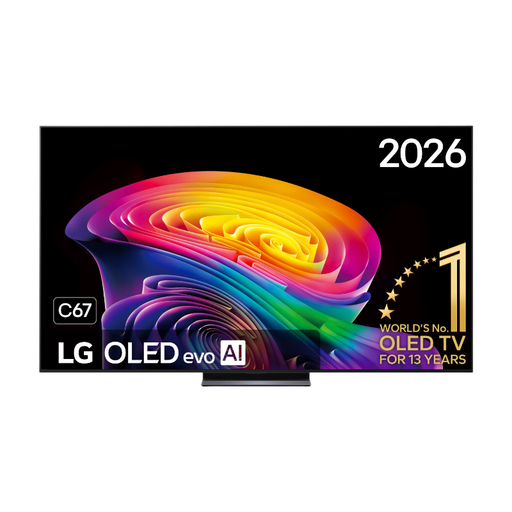
LG OLED83C67LA 83-inch OLED Evo AI C6 4K Smart TV

LG OLED83C67LA 83-inch OLED Evo AI C6 4K Smart TV

This OLED version is designed for dark scenes; measure your viewing distance to see whether 83 inches will suit your room.

83 inches, 4K, 120 Hz and VRR up to 165 Hz according to the product name.

Image retention remains a consideration if you play for long periods with the same fixed HUD.

View at Joybuy
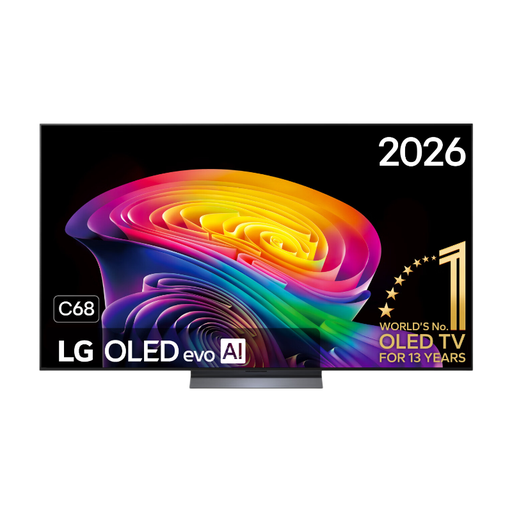
LG OLED65C68LA 65-inch OLED Evo AI C6 4K Smart TV

LG OLED65C68LA 65-inch OLED Evo AI C6 4K Smart TV

This OLED version suits anyone who prioritises dark scenes; measure your viewing distance and check visibility from every seat.

65 inches, 4K, 120 Hz and VRR up to 165 Hz according to the product name.

Image retention remains a consideration if you play for long periods with the same fixed HUD.

View at Joybuy
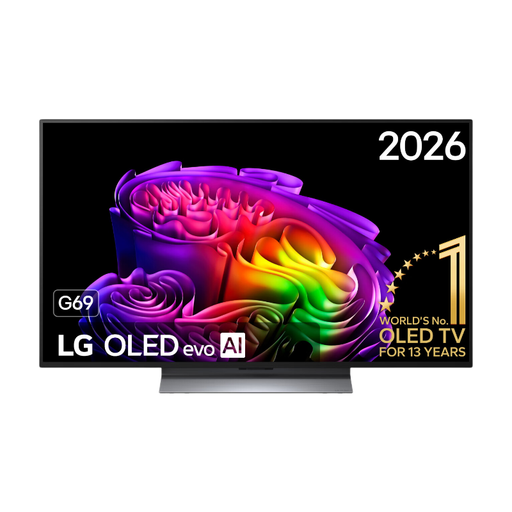
LG OLED55C68LA 55-inch OLED Evo AI C6 4K Smart TV

LG OLED55C68LA 55-inch OLED Evo AI C6 4K Smart TV

This 55-inch OLED version is an option for dark gaming scenes; check that the size suits your sofa’s viewing distance.

55 inches, 4K, native 120 Hz and VRR up to 165 Hz according to the product name.

Image retention remains a consideration if you play for long periods with the same fixed HUD.

View at Joybuy
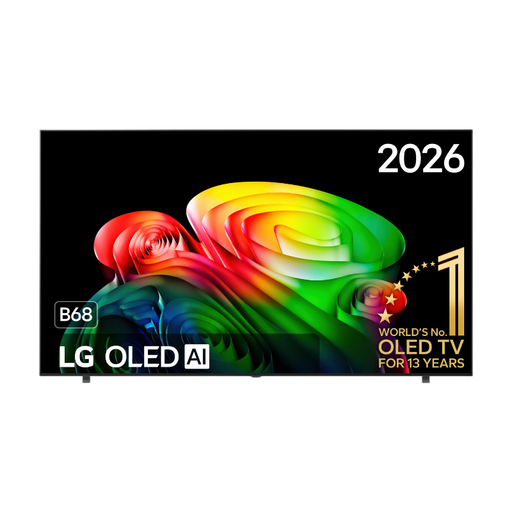
LG OLED48G69LS 48-inch OLED Evo AI G6 4K Smart TV

LG OLED48G69LS 48-inch OLED Evo AI G6 4K Smart TV

This 48-inch OLED TV is a smaller-screen option for dark scenes; compare its size with your available space and viewing distance.

48 inches, 4K, native 120 Hz and VRR 165 Hz according to the product name.

Image retention remains a consideration if you play for long periods with the same fixed HUD.

View at Joybuy
LG OLED77B68LA 77-inch 4K OLED Smart TV

LG OLED77B68LA 77-inch 4K OLED Smart TV

This 77-inch OLED version is for anyone considering a large screen for dark gaming scenes; measure your viewing distance first.

77 inches, 4K, 120 Hz and VRR 144 Hz according to the product name.

Image retention remains a consideration if you play for long periods with the same fixed HUD.

View at Joybuy

Frequently asked questions

Do I need a 120 Hz TV for every co-op platform game?

No, it depends on the console and the game. Nintendo lists up to 60 fps at 4K output for Switch 2; also check which output your game supports.

Which HDMI input should I use for VRR?

It varies by TV model. For the K-55XR8M2, Sony lists VRR on HDMI 3 and 4; check the port layout and required settings for the exact TV.

Is image retention inevitable when gaming on OLED?

No, that isn’t what the available test results show. RTINGS does point to a risk with prolonged, extreme exposure to static images and emphasises that such a test doesn’t directly predict the outcome with normal, varied use.

What are my rights if a TV I bought online isn’t as expected?

In the Netherlands, the seller is responsible for the statutory guarantee if a product doesn’t perform as you could reasonably expect under normal use. For a new TV bought online, you’ll generally also have a 14-day cooling-off period after delivery; exceptions and the circumstances of the purchase may be relevant.

Does a TV in the Netherlands need an energy label?

EU rules on energy labels and ecodesign cover televisions. Compare the label and product information sheet for the exact version; this information alone doesn’t tell you which TV best suits your needs.
