For football games in a dark room, OLED is generally the better choice if deep blacks and motion matter most. Mini-LED LCD is an alternative if you often have static game elements on screen for long periods or use the TV in brighter surroundings. RTINGS and the Consumers' Association discuss differences in black levels and viewing angles, but make sure you check the exact model from every seat. Also compare input lag in the game mode you use, and check that the TV, HDMI input, console and game all support your preferred refresh rate and VRR.
Who is this buying guide for?
Players in a darkened room
You want to keep track of the pitch during local football matches, even in dark scenes. The choice between OLED and mini-LED also depends on how much ambient light there is in the room at other times. The Consumers' Association covers factors such as black levels and viewing angles when choosing a television.
Groups sitting in different places
If you’re playing together, players sitting to the side should still be able to see the pitch and game elements. Measure your viewing distance and check the viewing angle of the exact model from the furthest seat; the Consumers' Association recommends measuring your viewing distance at home.
Frequent match players
If you play often, consider how quickly the TV responds to controller input and whether score bars remain on screen for long periods. Check the game mode, source you’re using and screen care instructions; settings and features vary by TV, console and game.
What should you look for?
OLED
A good choice if: you mainly play in the dark and care about deep blacks, motion and visibility from different seats.
Worth bearing in mind: displaying the same static game elements for long periods carries a risk of burn-in; follow the instructions for the exact model.
Mini-LED LCD
A good choice if: you also use the TV in brighter surroundings or are particularly concerned about static game elements being displayed for long periods.
Worth bearing in mind: bright objects against a dark background can create visible halos on some models; check the exact screen in similar conditions.
Use the table to compare the main buying priorities for local football games in a dark room.
| What to consider |
What to look for when buying |
Who is this important for? |
| Contrast in the dark |
Compare the black levels of the exact model and look for halos around bright game elements. |
If we mainly play in a darkened room, we want dark areas of the picture to remain clearly visible; around 31% of consumers prioritise dark-scene performance. |
| Size and viewing angle |
Measure the viewing distance and available space; check the picture from the furthest seat, too. |
When several of us are watching from different seats, we want to be able to follow the pitch and interface; around 25% of consumers prioritise visibility from multiple seats. |
| Responsiveness and motion |
Check input lag in the game mode you use, and whether the TV, input, console and game support 120Hz output and VRR. |
If quick reactions matter during our matches, we want to know what the game and source we’re using actually support; around 25% of consumers prioritise responsiveness. |
| Long-term use and warranty |
Read the care instructions and warranty terms for the exact set; also check whether installation is required. |
When we play often with recurring static elements on screen, we want to know what care the screen needs and what the terms cover; around 19% of consumers prioritise long-term use and warranty. |
Common buying mistakes
-
Assuming a 144 Hz TV means every football game runs at 144 frames per second
Actual output also depends on the game, source and selected video output settings. So a high refresh rate on the TV doesn’t guarantee that every game will use that frequency.
First check which output the console and game you use support. Then compare input lag with the settings you play with.
-
Judging picture quality only from directly in front of the screen
During a local match, players sitting to the side may see a different picture from someone in the middle.
Measure the seating positions and check the exact model from the furthest seat before choosing a size and screen.
-
Comparing OLED and mini-LED only by peak brightness
In a dark room, black levels, motion and possible halos matter too. With static elements on screen for long periods, you should also consider the risk of burn-in with OLED.
Think about the lighting and how long you play in your room, and don’t treat manufacturers’ brightness figures as directly comparable measurements.
-
Confusing an optional service plan with your statutory rights
An extra plan doesn’t replace your statutory rights if a product is faulty. According to the Government of the Netherlands, there is no fixed statutory warranty period in the Netherlands; what you can reasonably expect from a product depends on the circumstances, among other things.
Check what an optional plan covers and who you can contact if there’s a fault. The retailer is responsible for dealing with a faulty product.
Brands to consider
LG
The OLED C6 range includes a 55-inch model for the Dutch market, the OLED55C68LA, for anyone looking to combine OLED with gaming features.
- In a comparison of models by Tweakers, the C6 stood out as an option for high-contrast pictures in the dark.
- The glossy finish can make reflections more noticeable. This finding applies to the C6 tested, not all LG TVs; with OLED, also bear in mind the risk from static images displayed for long periods.
Samsung
The 55-inch Samsung S90H OLED for the Dutch market, model QE55S90HAEXXN, is worth considering if you’ll also use the TV in a room with incoming light.
- In Tweakers’ comparison of models, the matte finish reduced sharp reflections.
- With incoming light, blacks can look greyer. This comparison is specific to the S90H and isn’t a general conclusion about Samsung TVs.
TCL
The 55C7K is a documented mini-LED LCD model for anyone who takes static game elements displayed for long periods into account.
- TCL lists a native refresh rate of 144 Hz for this model.
- That specification alone doesn’t confirm a game’s frame rate or measured input lag. Check this model for possible halos and its viewing angle.
Sony
The BRAVIA 5 K-55XR5 is a mini-LED LCD model with a stated screen refresh rate of 120 Hz.
- Sony lists VRR support for HDMI inputs 3 and 4 on this model.
- Check the port layout if you’re connecting more than one gaming device; this model-specific specification doesn’t apply to other Sony TVs.
Philips
The 55OLED810/12 OLED for the Dutch market combines OLED with Ambilight, which some viewers may enjoy during matches.
- Philips lists VRR and 144 Hz for this model.
- Ambilight is a matter of personal preference, not a proven gaming advantage. Check the inputs and instructions for the exact model.
Joybuy products
This selection features LG OLED TVs for gaming in a dark room. Measure the available space and viewing distance, and check that the screen sizes listed will suit your seating positions.
 No image available
LG OLED83C67LA 83-inch OLED evo AI C6 4K Smart TV
An OLED TV for gaming in a dark room; bear in mind the risk of burn-in if static game elements remain on screen for long periods.
Listed in the product name: 4K, 120Hz native and VRR up to 165Hz.
Joybuy
 No image available
LG OLED65C68LA 65-inch OLED evo AI C6 4K Smart TV
An OLED TV for gaming in a dark room; bear in mind the risk of burn-in if static game elements remain on screen for long periods.
Listed in the product name: 4K, 120Hz native and VRR up to 165Hz.
Joybuy
No image available
LG OLED55C68LA 55-inch OLED evo AI C6 4K Smart TV
An OLED TV for gaming in a dark room; bear in mind the risk of burn-in if static game elements remain on screen for long periods.
Listed in the product name: 4K, 120Hz native and VRR up to 165Hz.
Joybuy
 No image available
LG OLED48G69LS 48-inch OLED evo AI G6 4K Smart TV
An OLED TV for gaming in a dark room; bear in mind the risk of burn-in if static game elements remain on screen for long periods.
Listed in the product name: 4K, 120Hz native and VRR 165Hz.
Joybuy
 No image available
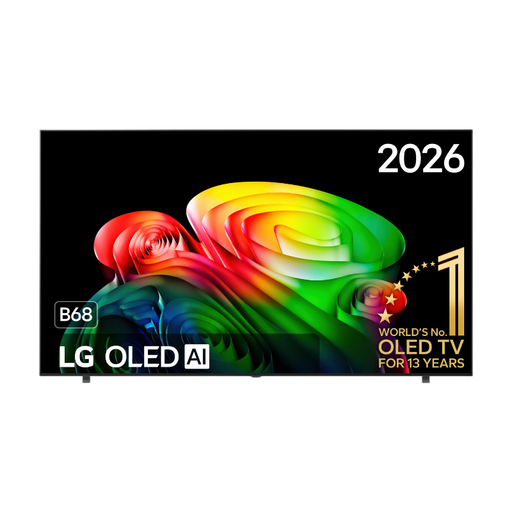
LG OLED77B68LA 77-inch 4K OLED Smart TV
An OLED TV for gaming in a dark room; bear in mind the risk of burn-in if static game elements remain on screen for long periods.
Listed in the product name: 120Hz and VRR 144Hz.
Joybuy
Frequently asked questions
Do you always need a 120Hz TV for a football game?
No, not for every game. On a PS5, 120Hz output is only available if both the TV and the game support it. Check the settings for the console and game you use rather than looking only at the Hz figure on the TV.
How can you check whether your PS5 is using VRR and the right output?
On your PS5, go to Settings, Screen and Video, then Video Output to see information about the connected HDMI device. Sony says that VRR requires support from both the TV and the game; also check that you’re using a compatible HDMI input on the exact model.
What should you look for when static score bars are displayed on an OLED TV?
Follow the care instructions for the exact model and bear in mind the risk of burn-in from static elements displayed for long periods. Mini-LED LCD doesn’t carry this specific OLED risk, but generally doesn’t offer the same black levels in a dark room.
Is there a fixed two-year statutory warranty period for a TV in the Netherlands?
No. According to the Government of the Netherlands, there is no fixed statutory warranty period in the Netherlands. You are entitled to expect a product to be of satisfactory quality, and what is reasonable depends on factors such as the price, information provided and expected lifespan. If there’s a fault, contact the retailer; a manufacturer’s warranty or additional warranty may also apply.
Can you return an old TV, and is there a cooling-off period when you buy online?
When you buy a similar new appliance, the shop must take back your old one, according to the Government of the Netherlands. For distance purchases, a 14-day cooling-off period applies in many cases; check the terms that apply to your specific purchase.


