
Evening viewer with a darkened film room
You dim the lights and want to assess dark scenes and subtitles clearly. RTINGS.com discusses the viewing experience of OLED TVs in dark rooms.


If you mainly watch short films in a darkened room, start by comparing OLED models and how they handle dark scenes. If you often watch during the day, you could also consider mini-LED LCD models, paying attention to reflections and blooming. Measure your viewing distance too, assess the picture from different seats and check that your film source and any soundbar will work with the available connections. The Consumentenbond and RTINGS.com highlight these differences as factors to consider when choosing.
You dim the lights and want to assess dark scenes and subtitles clearly. RTINGS.com discusses the viewing experience of OLED TVs in dark rooms.
You also watch during the day and weigh brightness against reflections from windows or lamps. The Consumentenbond recommends considering both the TV and your viewing conditions.
You want a screen that suits your viewing distance and lets you connect your film player, streaming device or audio system. The Consumentenbond covers both viewing distance and TV connections.
Best for: If black levels and dark scenes are a priority for you.
Bear in mind: Compare brightness and reflections if you also watch during the day. If you often display static images for long periods, consider the potential risk of OLED burn-in.
Best for: If you often watch with ambient light and brightness matters to you.
Bear in mind: Check for reflections and view dark scenes with light subtitles; blooming can vary from model to model.
| What to consider | What should you check? | Who is this important for? |
|---|---|---|
| Dark scenes | Compare dark scenes with light subtitles under the lighting conditions you have at home. | If I mainly watch in a darkened room, I want to assess dark images and subtitles clearly; around 28% of consumers say dark picture performance is their main consideration. |
| Daytime viewing | Assess both brightness and reflections where you plan to put the TV. | I often watch during the day and want to avoid windows or lamps disrupting the picture; around 22% of consumers prioritise visibility in daylight. |
| Screen size and seating | Measure your viewing distance and check the model’s dimensions and viewing angle. The Consumentenbond suggests around 2.4 times the screen diagonal as a comfortable average viewing distance, not a fixed rule. | If we watch as a group, I want the screen size to suit the distance and the picture to remain clear from the side; around 22% of consumers prioritise screen size and shared viewing. |
| Sources and sound | Check the connections for your film player and whether the TV and audio system support HDMI-ARC or eARC. For HDR films, also check support for the HDR format being used. | I want to connect my film sources and know whether a soundbar will work with the TV; around 17% of consumers prioritise playback and sound. |
| Energy and equipment | Check the energy label, including information on HDR use, and find out what equipment you need for your setup. | I want to know in advance what equipment will work with my setup and be able to compare energy consumption; around 11% of consumers look at this first. |
A feature that matters in a dark room may not have the same effect in daylight. Mini-LED screens can also show visible blooming.
Compare specific models in the lighting conditions you usually have at home, and watch both dark and bright film scenes.
The screen size should suit the distance from your seats. The viewing angle can also make a difference when people are sitting in different places.
Measure the distance and available space, then assess the picture from the seats at either end.
HDR formats and connections vary by model. TV sound quality can vary too.
Make a note of the film sources and audio equipment you use, then check that the connections and HDR support are compatible.
The OLED G6 range is worth considering for a film room where you’re comparing OLED models.
The OLED S99H and Neo QLED QN1EH offer different panel technologies to compare, depending on your room and the model.
The 55OLED760/12 combines OLED with integrated Ambilight lighting, for anyone who wants to include this feature in their film setup.
The 55C89L/C8L is a mini-LED model to include in your comparison if your room also gets daylight.
The BRAVIA 8 II is a QD-OLED model to compare for a film-focused setup.
The models below include OLED TVs for watching films in a dark room, as well as mini-LED TVs to compare if you also watch during the day. Consider the screen size and connections in relation to your viewing distance and equipment.
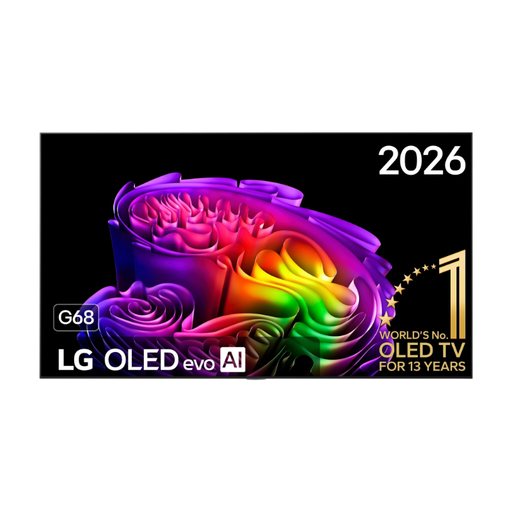 No image available
An OLED model to compare if you mainly watch in a darkened film room.
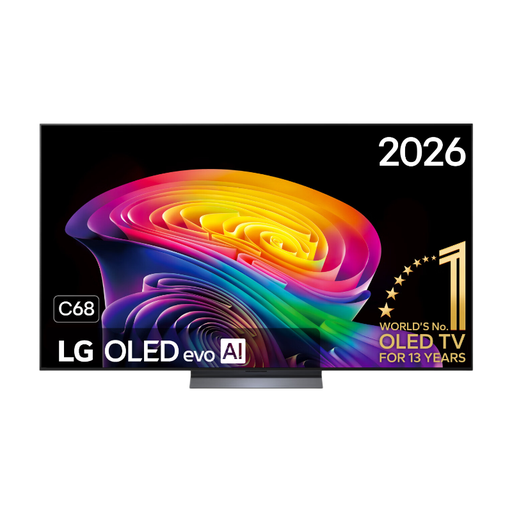 No image available
An OLED TV to compare for watching films in a dark room.
65 inch, 4K, OLED Evo, Dolby Vision and Dolby Atmos.
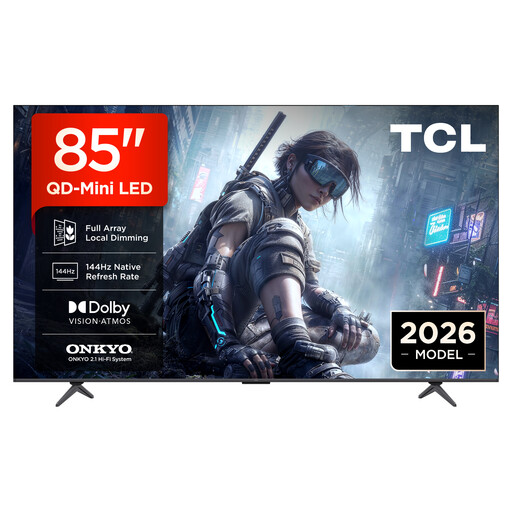 No image available
A mini-LED model to compare if you also watch regularly during the day; check reflections and dark scenes in your own setup.
85 inch, 4K, QD-Mini LED, 144 Hz, HDMI 2.1 and Onkyo 2.1 audio.
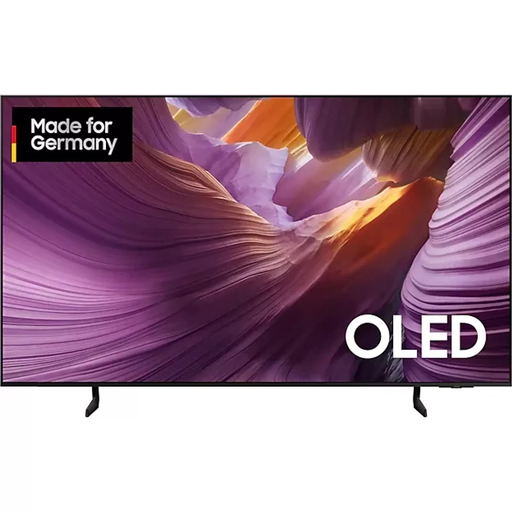 No image available
An OLED model to compare if dark scenes are important in your film room.
55 inch and 4K.
 No image available
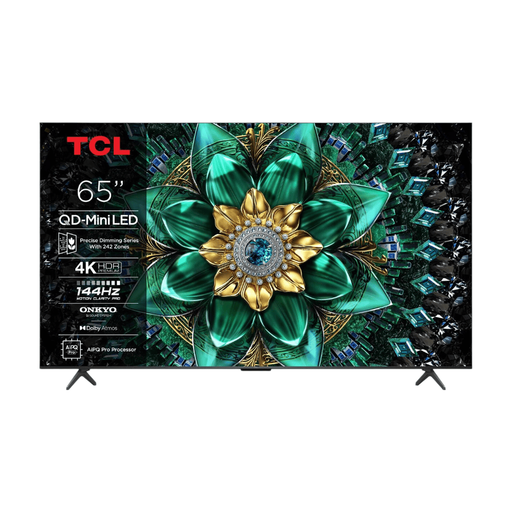
A mini-LED model to compare if you regularly watch during the day; also assess potential reflections where you plan to put the TV.
QD-Mini LED, 4K HDR and 1000 Nits.
First, measure the distance between your seat and the screen. The Consumentenbond suggests around 2.4 times the screen diagonal as a comfortable average viewing distance; also check that the TV will physically fit in the space you’ve chosen.
An external player is usually connected via HDMI. For a compatible soundbar, use HDMI-ARC or eARC; check that both the TV and audio system have the appropriate connection.
Only if Dolby Vision is compatible with the films and playback equipment you use. Not every HDR TV supports this format, so check support on your film source, any player and the exact TV model.
In the Netherlands, your statutory guarantee may still apply after the manufacturer’s warranty has expired, provided the product has been used normally. There is no single fixed statutory guarantee period for all products. If a product is faulty, the seller is your point of contact, according to the Dutch government.
According to ACM ConsuWijzer, online TV purchases generally come with a statutory 14-day cooling-off period from the date of delivery. The energy label for TVs provides information for comparing energy efficiency in SDR and HDR use, according to the European Commission.