
Viewer of dark scenes
You mainly watch in the evening and want to see detail against dark backgrounds, without distracting glow around small bright subjects. RTINGS.com discusses OLED and mini-LED as different options for watching in the dark.


For nature programmes you mainly watch in a dark room, OLED is a natural starting point if deep blacks and shadow detail are your priorities; RTINGS.com describes OLED as suitable for watching in the dark. If you also watch regularly during the day, or leave static images on screen for long periods, compare mini-LED too. Assess local dimming in dark scenes, as well as HDR, screen size and energy use.
You mainly watch in the evening and want to see detail against dark backgrounds, without distracting glow around small bright subjects. RTINGS.com discusses OLED and mini-LED as different options for watching in the dark.
You want to make out bright skies and colourful animals clearly, so you compare HDR performance on each TV and check that your viewing source supports it. Consumentenbond recommends considering picture quality and features when choosing a TV.
You also use the same TV during the day. So you weigh up its performance in a dark room against ambient light, the space available and energy use.
A good fit if: you mainly watch in the dark and value deep blacks and contrast around small bright subjects. RTINGS.com describes OLED as a good option for watching in the dark.
Also consider: compare shadow detail, HDR and motion on each model. It’s also worth considering how often you display static images for long periods.
A good fit if: you also regularly use the TV in a bright room, or want to compare mini-LED with OLED for the way you watch.
Also consider: local dimming can create halos around bright subjects, depending on the model. RTINGS.com notes this possible effect; a stated number of dimming zones doesn’t rule it out.
A good fit if: screen size and placement are major considerations, and you assess the black levels of the specific model separately.
Also consider: LCD backlighting can make it harder to display true black; Consumentenbond describes this as one difference compared with OLED.
| What to consider | What should you look for? | Who will find this most relevant? |
|---|---|---|
| Black levels and shadow detail | Watch dark scenes with bright details or subtitles on the exact model; look for halos and check how visible shadow detail is. | If I mainly watch forests at night, I want to see shadow detail without distracting halos around bright subjects. Around 31% of consumers prioritise black detail above all else. |
| HDR, colour and bright details | Check which HDR formats are supported by both the TV and your viewing source; compare the bright and dark areas of the same image. | I want bright skies and colourful animals to look their best in HDR, with support from my viewing source. Around 25% of consumers prioritise HDR and colour. |
| Motion and picture settings | Watch moving nature footage on the exact model and assess the picture under the lighting conditions you have at home. | If moving animals and camera movement matter most to me, I want to judge how smoothly they appear in a suitable picture mode. Around 19% of consumers prioritise motion above all else. |
| Screen size and placement | Measure your viewing distance and available space; check the external dimensions and stand position of the exact model. | I want a screen size that suits my viewing distance and the space where the TV will go. Around 13% of consumers prioritise finding the right size. |
| Energy use and placement | Compare the SDR and HDR figures on the EU energy label; also check what’s involved in placing the model you’ve chosen. | If energy use and practical placement are most important to me, I want to weigh them up alongside picture quality. Around 12% of consumers put these considerations first. |
On LCD TVs, local dimming can create halos around bright details. The technology name or number of zones alone doesn’t tell you what dark images look like on the exact model.
Look for a review of dark scenes based on the full model number and screen size, with small points of light or subtitles on screen.
In 2017, Consumentenbond tested older OLED models for temporary image retention during prolonged display of mostly static images. That test doesn’t predict the risk for every current model or for normal viewing with changing content.
Consider whether you often display fixed logos or other static images for long periods, and check the information for the model you’re considering.
A similar product name doesn’t guarantee that it’s the same version; differences can depend on the full model number.
Before buying, check the full model number and compare the specifications for that exact version.
The EU energy label provides separate information for SDR and HDR viewing, so one figure doesn’t describe both types of use.
Compare the figures for the type of viewing you do. The European Commission explains the information provided for electronic displays.
The examples below refer to specific versions and features; assess picture performance and suitability for each model.
The OLED evo C6 range is an example of OLED for watching in the dark; the OLED55C68LA is a 55-inch version.
The 55OLED850/12 is a 55-inch OLED example with Ambilight, which may appeal if you also want light behind the TV.
The 55C7K is an example of QD mini-LED as an alternative to OLED.
The QE55S95FATXXN is a 55-inch OLED example with an anti-reflective screen feature that Samsung has named.
The K-55XR80 is a 55-inch BRAVIA 8 OLED example to consider if stand placement or wall mounting matters.
These Joybuy TVs are OLED models for anyone who values deep blacks when watching nature programmes in a dark room. For each version, check that the screen size suits your viewing distance and available space.
 No image available
Could be a good fit if you’re looking for a 65-inch OLED for dark nature scenes and that screen size suits your viewing distance and available space.
4K; 120 Hz; VRR up to 165 Hz; Dolby Vision; HDR10; HLG; Dolby Atmos; webOS 26.
No image available
Could be a good fit if a 55-inch OLED suits your viewing distance and deep blacks matter to you in dark scenes.
4K; 120 Hz; VRR up to 165 Hz; Dolby Vision; HDR10; HLG; Dolby Atmos; webOS 26.
 No image available
Could be a good fit if you’re looking for a 48-inch OLED and that size suits your viewing distance and the space where you want to put the TV.
4K; 120 Hz; VRR 165 Hz; Dolby Vision; HDR10; HLG; Dolby Atmos; webOS 26.
 No image available
Could be a good fit if you want a 55-inch OLED for dark scenes and the screen size suits your viewing distance and set-up.
4K; 120 Hz; VRR up to 165 Hz; Dolby Vision; Dolby Atmos; webOS 26.
 No image available
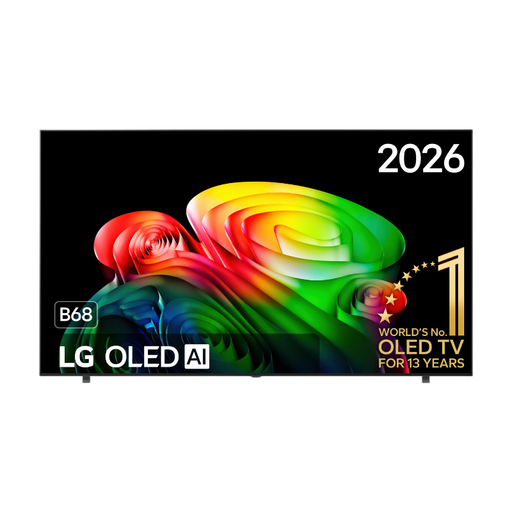
Could be a good fit if you’re deliberately considering a 77-inch OLED and have enough space and viewing distance for that screen size.
4K; 120 Hz; VRR 144 Hz; Dolby Vision; HDR10; HLG; Dolby Atmos; webOS 26.
Start with the home setting rather than a bright shop setting. Use a familiar scene with both dark and bright areas, under the lighting conditions you usually watch in, and adjust the brightness and contrast so you can still see detail in both. This follows Consumentenbond’s advice on picture settings; the exact settings vary by model.
Measure the available space and check the width, depth, stand position and mounting specifications for the exact model. Sony lists different stand widths for the K-55XR80 depending on the stand position, so the screen size alone isn’t enough.
Use the EU energy label or look up the exact model in EPREL, then compare its HDR figures with those for a similar-sized screen. The label also distinguishes between SDR and HDR; the European Commission explains this information for electronic displays.
According to ACM ConsuWijzer, when you buy a new TV online, you generally have up to 14 days from delivery to change your mind. The seller is also responsible for the statutory guarantee if the TV doesn’t meet what you could reasonably expect under normal use; a commercial warranty period doesn’t automatically limit this right.