
Vandaag of morgen in huis

Kwaliteit gegarandeerd

Welkomstaanbiedingen ontgrendelen: GRATIS bezorging | Tot 80% korting | Gratis 30 dagen JoyPlus-proefperiode
Download de app
An oil shampoo can help dry, coarse or frizzy hair feel softer. However, not every formula containing argan oil, coconut oil or other plant oils is suitable for every hair type. If you rely solely on words such as “intensive”, “repairing” or “natural”, you may end up paying for a product that makes your hair feel heavy or leaves your scalp feeling uncomfortable.
With this practical selection guide, you can compare a shampoo with argan oil, a nourishing shampoo, a formula for dry hair and a product for an oilier scalp, based on verifiable product information.
An oil does not automatically appear near the top of the ingredients list. So check which cleansing agents, oils and conditioning ingredients are actually listed. Argan oil, marula oil, avocado oil and shea butter are often used in shampoos for dry or damaged hair, but the effect depends on the complete formula and your hair texture.
Also look out for perfume and fragrance ingredients such as limonene, linalool or geraniol if you are sensitive to them. Always read the current ingredients list on the packaging, as brands may update their formulas.
Fine hair can quickly feel weighed down by a rich oil formula. Thick, curly or very frizzy hair often needs more conditioning. So a shampoo for dry hair is not automatically suitable for an oilier scalp.
Above all, consider the purpose of the shampoo:
Compare the price per 100 ml, rather than just the price of the bottle. A shampoo multipack can be practical for a household with several users, but less suitable if you have not tried the formula before.
Also check the total volume. For example, a pack containing six 440 ml bottles contains 2,640 ml. That is convenient for high-volume use, but it does require enough storage space and secure closures to prevent leaks.
A sulphate-free shampoo uses different cleansing agents from a formula containing, for example, sodium laureth sulphate. Sulphate-free does not automatically mean that a shampoo will feel better for everyone; it is primarily a formulation choice. If you use lots of styling products, you may prefer a more thorough cleansing shampoo. For dry or fragile hair, gentler cleansing may be a better fit.
Check the ingredients list if you are deliberately choosing a sulphate-free shampoo, a fragrance-free formula or a product without silicones. Claims such as “natural” or “mild” should always be considered alongside the complete formulation.
A shampoo with natural oils may contain argan oil, coconut oil, camellia oil, grapeseed oil, almond oil or marula oil, among others. Product descriptions often associate these ingredients with nourishment, softness or shine. A brand’s own research may support additional claims, but such claims do not guarantee the same result for every user.
Pay attention to how they are combined with other ingredients:
A 200 to 300 ml bottle is useful if you want to try a product. For daily use by several people, sizes of 385 to 685 ml or multipacks are often more practical. Check the packaging for the shelf life and the period after opening, such as 12M or 18M.
Apply shampoo to wet hair, massage it mainly into the scalp and rinse thoroughly. If you have an oilier scalp, washing twice may sometimes feel more comfortable, while dry hair may benefit from less frequent washing. Stop using the product if irritation occurs and avoid contact with the eyes.
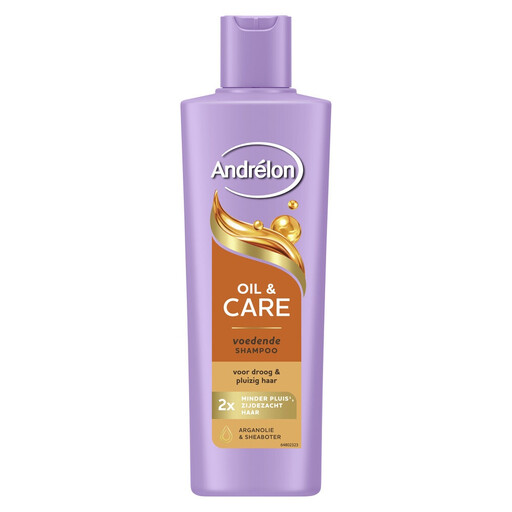
Why it suits this profile: A 250 ml size is easy to manage when you want to try an oil shampoo for dry or frizzy hair first.
The product description mentions argan oil and shea butter and is aimed at dry and frizzy hair. Check the current ingredients list before ordering.
250 ml; the product information lists argan oil, shea butter, coconut oil and almond oil.
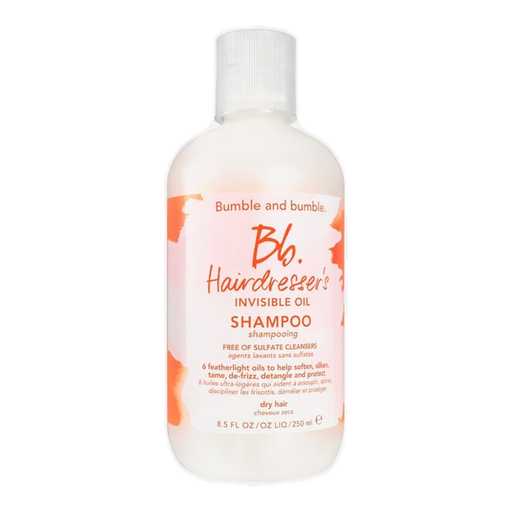
Why it suits this profile: Suitable for anyone looking for a smaller, richer formula for dry, coarse or brittle-feeling hair who does not expect a generous lather.
The description states that the creamy shampoo is not designed to produce a rich lather. This helps prevent unrealistic expectations when washing your hair.
200 ml; according to the ingredients list, contains six oils, including grapeseed, almond, macadamia, coconut and argan oil.
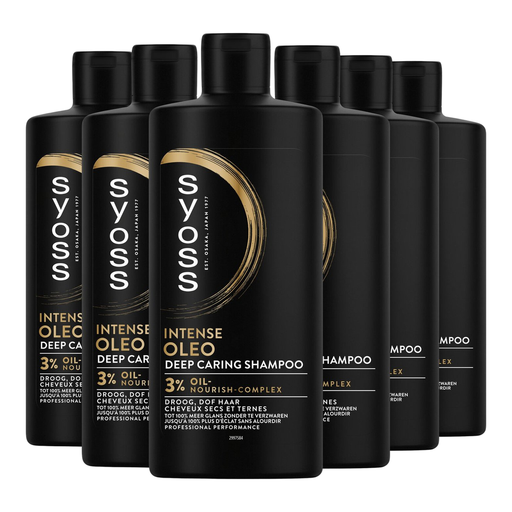
Why it suits this profile: A household with several users or an established washing routine can benefit from six 440 ml bottles.
The total volume is clearly stated as 2,640 ml. This allows you to compare the price per 100 ml rather than looking only at the total price.
Six 440 ml bottles; the product information mentions an oil conditioning complex and a bottle made from recycled plastic.
We have put together a complete, up-to-date list of products that fully meet these strict selection criteria and the applicable European safety regulations.
That depends on the cleansing formula and how you use the product. A rich shampoo for dry hair may feel heavy on an oilier scalp. Ideally, choose a product whose description specifically targets an oilier scalp, such as an oil-control formula. Massage the shampoo into your scalp and rinse thoroughly.
There is no set frequency that works for everyone. Wash your hair according to how quickly your scalp becomes oily and how dry the lengths feel. If you wash your hair daily, a milder formula may feel more comfortable. If your hair is dry or damaged, do not automatically use more shampoo: a small amount, distributed thoroughly, is often enough.
Not automatically. A sulphate-free shampoo may suit someone looking for gentler cleansing, but other cleansing agents also affect how the hair feels. So compare the complete ingredients list, the stated hair type and the volume. After washing, you may wish to apply conditioner to the lengths to make your hair easier to comb through.
