Who is this buying guide for?

Photographer capturing paint details

You want to show brushstrokes, craquelure or small accents clearly, so you’re looking at framing, lens magnification and the space available for lighting. The Canon, Nikon, Sony and Fujifilm macro lenses mentioned offer different magnification ratios.

Seller with glossy paintings

You want to show colour and sheen without reflections obscuring details. A separate shot with the light at a different angle can help bring out the surface texture; National Museums Scotland and the Canadian Conservation Institute describe how the angle of the light affects the visibility of details and texture.

Photographer and detail-video creator

As well as still images for your online shop, you want to make short videos, so you check that the camera and lens suit both types of shooting. Fujifilm and Nikon list specific video features for the X-S20 and Z50II.

What should you look for when buying?

What to consider What should you check? Who is this important for?
Magnifying tiny paint details Check the mount, maximum magnification and minimum focusing distance of the exact lens, and whether it’s included in the kit. If I want to show a tiny brushstroke at a larger scale, I look at both magnification and the space available for the light. Around 36% of consumers choosing equipment for this type of photography give detail magnification top priority.
Colour, sheen and texture Plan for a consistent lighting setup and a colour reference; assess the overview and detail shots separately. With glossy paint, I want to assess colour and reflections without losing sight of the texture. Around 29% of consumers choosing equipment for this type of photography prioritise colour and reflection control.
Photographing a series of paintings Check that you can set up the camera steadily and work with consistent exposure, a colour reference and editable image files. If I want to photograph several works in the same way, consistent settings and a repeatable workflow are important. Around 21% of consumers choosing equipment for this type of photography give this workflow top priority.
Taking photos and videos Check the video controls and lens compatibility of the exact model; assess whether your preferred framing works for both photos and video. If I also need short detail videos, I want the same setup to work for both photography and video. Around 14% of consumers choosing equipment for this type of photography prioritise using it for both photos and video.

Pitfalls to avoid when photographing paintings

  • Assuming a camera body or kit lens gives you a complete macro setup

    The stated magnification applies to the specific lens, not automatically to every lens that fits the same camera body.

    Check exactly what’s included in the kit, and confirm the mount, magnification and focusing distance of the lens you’re actually buying.

    A suitable macro lens and appropriate lighting may need to be bought separately, so check which components you’ll need for your complete setup.

  • Relying on one evenly lit photo to show both colour and relief

    Even lighting can work well for an overview, but it makes surface texture less visible. National Museums Scotland and the Canadian Conservation Institute explain how changing the angle of the light affects the appearance of details and texture.

    If needed, take a detail shot as well as an overview, with light falling across the surface from a different angle, and compare it with the actual painting.

  • Automatically applying consumer rules to a business purchase

    According to ACM ConsuWijzer, the protection available may depend on how the purchase is used and the circumstances in which it was made.

    Before ordering, check whether you’re buying as a private individual or for business, and which service and warranty terms apply to your purchase.

Brands to compare

Canon

The EOS R50 is a camera body with an RF mount; the RF 35mm F1.8 Macro IS STM is a separate lens.

  • Canon lists the EOS R50 as having an APS-C sensor with 24.2 effective megapixels.
  • Canon specifies a maximum magnification of 1:2 for the RF macro lens mentioned. This is not a feature of the body or of any kit lens.

Nikon

The Z50II is a camera for photos and video; the NIKKOR Z MC 50mm f/2.8 is a separate macro lens.

  • Nikon specifies 1:1 magnification for the lens mentioned and lists a product review mode for the Z50II.
  • According to Nikon, the front of the lens is approximately 5 cm from the subject at the closest focusing distance. Bear the position of your light in mind when setting up the shot.

Sony

The α6700 has an E mount; the E 30mm F3.5 Macro SEL30M35 is a separate macro option.

  • Sony lists a maximum magnification of 1.0× for the SEL30M35.
  • Sony gives a minimum focusing distance of 0.095 m. This is not necessarily the working space in front of the lens.

Fujifilm

The X-S20 is designed for photos and video; the XF30mmF2.8 R LM WR Macro is the separate macro lens.

  • Fujifilm lists 1:1 magnification for the lens mentioned and, among other features, 6.2K/30p video and a product-priority mode for the X-S20.
  • These specifications describe the capabilities of the individual products, not their independently measured suitability for reproducing paintings.

Cameras and bundles at Joybuy

The cameras and bundles below mention photography, video or product lighting in their product names. For painting details, check separately that the camera and lens can capture the close-up you want in sharp focus.
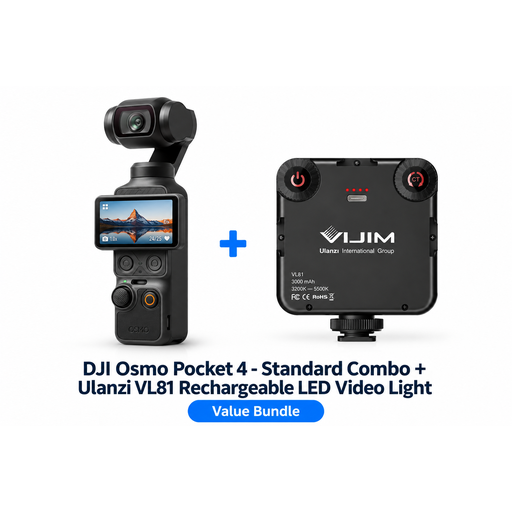
DJI Osmo Pocket 4 Standard Combo with Ulanzi VL81 Rechargeable LED Video Light

DJI Osmo Pocket 4 Standard Combo + Ulanzi VL81 Rechargeable LED Video Light

The bundle includes a Ulanzi VL81 rechargeable LED video light. Check that the camera can capture the painting close-up you want in sharp focus and that you can position the light effectively.

View at Joybuy
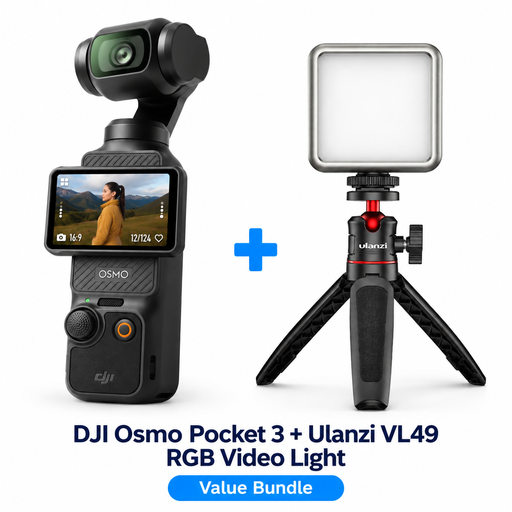
DJI Osmo Pocket 3 Creator Combo with Ulanzi VL49 RGB LED Video Light

DJI Osmo Pocket 3 Creator Combo + Ulanzi VL49 RGB LED Video Light

The bundle includes a Ulanzi VL49 RGB LED light. For tiny paint details, check that the camera can capture the framing you want in sharp focus.

View at Joybuy
Sony ZV-E10 with 16-50mm zoom lens, black

Sony ZV-E10 + 16-50mm Zoom, Black

The product name lists a 16-50mm zoom lens. For tiny painting details, check the lens’s magnification and focusing distance.

View at Joybuy
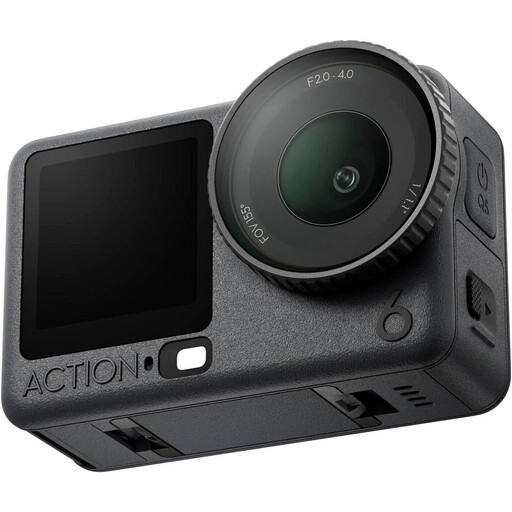
DJI Osmo Action 6 Adventure Combo

DJI Osmo Action 6 Adventure Combo

This is an action camera bundle. Check that the camera can capture the painting close-up you want in sharp focus.

View at Joybuy
Sony Alpha A6100 with 16-50mm f/3.5-5.6 OSS II zoom lens

Sony Alpha A6100 + 16-50mm f/3.5-5.6 OSS II

The product name lists a 16-50mm f/3.5-5.6 OSS II zoom lens. Check that the lens can capture the framing you want for tiny paint details in sharp focus.

View at Joybuy

Frequently asked questions

How do you photograph both the colour and texture of thick oil paint?

Take an evenly lit overview shot with a colour reference, and, if needed, a detail shot with light falling across the surface from a different angle. National Museums Scotland and the Canadian Conservation Institute explain how the angle of the light affects the way colour and texture appear; compare the detail shot with the actual painting.

Do you always need a 1:1 macro lens for a painting detail?

No. The magnification you need depends on how small the detail is and how large you want it to appear in the frame. Canon specifies a maximum of 1:2 for the RF 35mm F1.8 Macro IS STM; the Nikon, Sony and Fujifilm macro lenses mentioned are specified by their manufacturers as 1:1.

How can you keep colours consistent when photographing several paintings?

Keep your lighting setup as consistent as possible, avoid mixing light sources where you can, and use a grey card or colour reference. National Museums Scotland describes using colour references and keeping and editing RAW images as part of a workflow for photographing collections.

What should you check when buying a camera for your online shop?

Check whether the offer includes only the camera body or also the lens you want, and consider what lighting you’ll need. ACM ConsuWijzer notes that the protection available may depend on how the purchase is used and the circumstances in which it was made, so don’t automatically assume consumer rules apply to a business purchase.

Can you publish a detail photo of someone else’s painting in your online shop in the Netherlands?

It depends on the rights to the painting and your circumstances. Auteursrecht.nl explains that, as a general rule, you usually need permission from the rights holder to publish photos of protected works of art. An exception may apply to the owner, possessor or holder where the image is necessary for a public sale or exhibition and no other agreement has been made; check which circumstances apply to the work in question.
