An oil-filled radiator is best suited to working in the same small room for extended periods when you want to warm the room gradually. Check that its size, the available floor space and its controls suit your needs. For short periods in one fixed spot, an infrared panel may be a better option: Milieu Centraal explains that it provides quick, targeted warmth, but the warmth stops when you move away from the area being heated. Milieu Centraal does not recommend using a standard electric heater as a general replacement for your existing heating.
Who is this choice relevant to?
Someone working from home who sits still for long periods
Wants adjustable warmth during longer work sessions and is weighing up whether an oil-filled radiator would work alongside the existing room heating. Mill and Eurom model information describes radiators with multiple heat settings and temperature controls.
Someone with limited floor space
Needs to find a spot where the radiator can stand clear, without a desk, chair, cables or other belongings getting in the way. Measure the available space and check the model’s placement instructions.
Someone who works at their desk for short periods
Mainly wants to warm their seat for a short time, so may also want to compare infrared heating. Milieu Centraal describes infrared panels as an option for targeted supplementary heating in a particular spot.
What should you consider when choosing?
| What to consider |
What to look for |
Who is it mainly for? |
| Warmth during long work sessions |
Check the thermostat, available heat settings and dimensions; make sure the radiator can stand clear in the intended spot. |
If I spend hours at my desk, I want to warm the room gradually rather than relying on heat directed at just one spot. Around 33% of consumers prioritise lasting warmth and comfort. |
| Safe placement in a small space |
Measure the available space and follow the instructions for the exact model. Brandweer Nederland advises plugging electric heaters directly into a wall socket, not into a multi-socket adaptor or cable reel. |
With limited space around my desk, I want to know in advance whether the radiator can be placed clear of obstacles and in line with the instructions. Around 25% of consumers prioritise safe placement. |
| Electricity use with repeated use |
Compare the rated power in kilowatts with the number of hours the radiator actually heats. Power in kW × heating hours gives electricity use in kWh. |
If I switch the heating on for lots of work sessions, I want to know how much electricity the setting I choose may use. Around 25% of consumers focus mainly on electricity use. |
| Quick warmth in one spot |
Decide whether you mainly want to heat your seat or the room. According to Milieu Centraal, infrared warmth is targeted and the effect stops when you move away from the area being heated. |
For a short work session in one fixed spot, I’d prefer instant warmth rather than gradually heating the whole room. Around 17% of consumers mainly want warmth in one place where they work. |
Common purchasing mistakes
-
Assuming the heat retained by the oil means lower electricity use
The fact that a radiator continues to give off heat after being switched off does not prove that it meets the same heating demand using less electricity.
Compare the heat settings with how long you expect to use the radiator. Assess energy-saving claims only in the circumstances to which they apply.
-
Squeezing the radiator between your desk and other belongings
An electric heater needs room to release heat. Curtains, paper and furniture nearby make it harder to find a clear, safe place for it.
Measure the space beforehand and follow the clearance instructions for the exact model. If there isn’t enough room, choose another spot or type of heating.
-
Confusing targeted infrared warmth with room heating
An infrared panel mainly heats the areas reached by its radiation, while an oil-filled radiator gradually gives off heat into the room.
First decide whether you want to warm only your usual seat or the room as well, and how long you’ll be working there.
-
Thinking the manufacturer’s warranty is your only right
When you buy as a consumer, you have statutory rights against the seller. The Dutch government states that the Netherlands does not have a general fixed statutory warranty period of two years.
Check what any additional warranty covers and how it relates to your statutory rights.
Brands to consider
Mill
The AB-H1000DN is an oil-filled model to consider if you’re comparing electronic temperature control and day/night settings.
- Mill lists three heat settings for this model: 400, 600 and 1000 W.
- Mill’s claims about energy savings and heating speed do not prove what the results will be in your flat.
Eurom
The RAD 1500 is a radiator with manual controls, three heat settings and wheels.
- Eurom lists settings of 600, 900 and 1500 W, a thermostat and dimensions of 33 × 24 × 55 cm.
- The stated maximum room volume is a manufacturer’s specification, not a guarantee for a poorly insulated flat.
De’Longhi
The Radia S TRRS0715 is an oil-filled model with manual controls and wheels.
- The Dutch manufacturer’s page lists a maximum output of 1500 W, three settings and a room thermostat.
- The stated capacity of 45 m³ is a manufacturer’s figure; also consider how much floor space you’ll need next to your desk.
Tristar
The KA-5377 is an oil-filled radiator with manual controls and three settings.
- Tristar lists an adjustable thermostat and tip-over and overheat protection.
- According to the product specifications, this model is not suitable for damp rooms; only consider it for a dry living or working space.
Joybuy products for targeted warmth
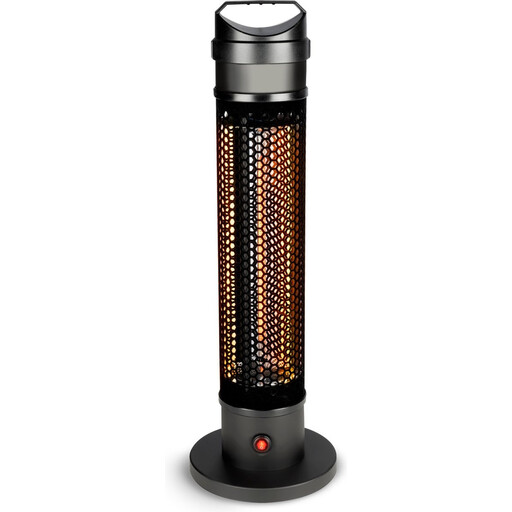
This Joybuy selection is aimed at short work sessions when you mainly want to warm the area around your desk. The model shown uses infrared heating; it is not an oil-filled radiator.
 No image available
Alpina Heater infrared 800W carbon
The product information describes instant infrared warmth for a small work area, making it a good fit if you mainly want warmth near your desk for short periods.
Power: 800 W. The product information lists a heating area of 2–3 m², 360° heat distribution and dimensions of 20 cm in diameter by 61.5 cm high.
Before use, check that the placement and markings on the exact appliance comply with the applicable requirements.
View at Joybuy
Frequently asked questions
How do you calculate the electricity use of an oil-filled radiator?
Multiply the power in kW by the number of hours that setting is actually heating; the result is the electricity use in kWh. With a thermostat, the time the appliance is switched on does not necessarily equal the number of hours it heats at full power.
Can I plug a radiator next to my desk into a multi-socket adaptor?
Brandweer Nederland advises plugging high-power appliances such as electric heaters directly into a wall socket, not into a multi-socket adaptor or cable reel. Also follow the connection instructions for the model you choose.
Do you need to top up the oil in an oil-filled radiator?
Don’t top up a sealed radiator yourself or open it without authorisation. Follow the instructions for the exact appliance when placing and maintaining it.
Which Dutch product regulations apply to an electric radiator?
According to the Netherlands Food and Consumer Product Safety Authority, electrical appliances within the scope of the Commodities Act Decree on Electrical Equipment must carry a CE marking. Check the exact appliance; a general product description cannot confirm whether a specific item meets this requirement.
Is an oil-filled radiator suitable as the flat’s only source of heating?
Milieu Centraal does not recommend using a standard electric heater as a general replacement for your existing heating. So consider an oil-filled radiator as supplementary heating; using it as your main heating for extended periods requires a separate assessment of heat loss and electricity use.


