
Traveller without reliable hotel Wi-Fi
You want to be able to download maps in your hotel room, even if the hotel connection isn’t usable. Your own hotspot will only help if you have mobile coverage and a suitable data allowance.


If the hotel Wi-Fi works on your phone and you only want to download maps, you can use the connection directly; there’s no need for a hotspot. A phone hotspot is useful for occasionally sharing mobile data, a MiFi lets you share your own mobile connection with several devices, and a travel router shares existing hotel Wi-Fi or Ethernet. For mobile use, you’ll need suitable coverage and a data allowance for your destination; a travel router doesn’t provide a mobile connection by itself.
You want to be able to download maps in your hotel room, even if the hotel connection isn’t usable. Your own hotspot will only help if you have mobile coverage and a suitable data allowance.
You want to save maps on your phone in advance using the hotel connection and avoid mobile data while the Wi-Fi works. Google Maps Help explains how to download areas for offline use.
You want to connect, for example, a phone and a tablet. First, decide whether the shared internet source will be mobile data or the existing hotel Wi-Fi.
Choose this if: the Wi-Fi works on your phone and you only want to download maps.
Bear in mind: you’ll depend on the hotel connection and may need to use a sign-in page.
Choose this if: you occasionally want to share mobile data with another device.
Bear in mind: your device and network provider must support it, and it will use your mobile data allowance. According to Apple Support, an iPhone hotspot shares mobile data, not the hotel Wi-Fi the phone is connected to.
Choose this if: you don’t want to rely on hotel Wi-Fi and want to share mobile data with several devices.
Bear in mind: you’ll need a suitable SIM card and data allowance, as well as mobile coverage at your destination.
Choose this if: you want to use a working hotel Wi-Fi or Ethernet connection through your own Wi-Fi network.
Bear in mind: a travel router isn’t automatically a MiFi; a hotel sign-in page may mean you need to take extra steps to set it up.
| What to consider | What should you check? | Who is this important for? |
|---|---|---|
| Your own mobile connection | Check the SIM card requirements, network compatibility of the specific version, and coverage and data allowance terms at your destination. | If I can’t rely on hotel Wi-Fi, I want to be able to download maps using my own mobile internet. Around 40% of consumers prioritise having an independent mobile connection. |
| Existing hotel Wi-Fi | Test the connection and any sign-in page on the device you’ll use to download the maps; if you’re using a travel router, check its connection mode. | If the hotel Wi-Fi works, I want to use it to save maps and avoid mobile data. Around 30% of consumers prioritise using the hotel connection. |
| No extra device | Check whether your phone and network provider support a personal hotspot, and whether your data allowance is suitable for your destination. | I’d rather not take a separate device for the occasional extra connection. Around 20% of consumers prioritise sharing through their phone. |
| Several devices | Check how many devices the exact model supports, which internet source it uses and how it’s powered. | I want to connect, for example, a phone and a tablet, and first find out whether the source is hotel Wi-Fi or mobile internet. Around 10% of consumers say sharing with several devices is their main priority. |
According to TP-Link, the TP-Link TL-WR902AC uses Ethernet or WISP, among other options, as its internet source. That doesn’t automatically mean the router can provide mobile internet independently via a SIM card.
First decide whether you want to share existing hotel Wi-Fi or need your own mobile connection. For the latter, check that the specific version supports a suitable modem and SIM card.
If there’s no suitable mobile source, you may also need a separate device or another connection.
According to Google Maps Help, public transport, cycling and walking routes aren’t available offline. When driving offline, you won’t get traffic information or alternative routes.
Download the area you need in advance and check that your preferred type of route is available offline.
ACM ConsuWijzer notes that roaming charges outside the EU can quickly add up. Within the EU, you’ll generally pay your home rate, although providers may charge a surcharge under certain conditions.
Check your provider’s terms for your destination before downloading maps using mobile data.
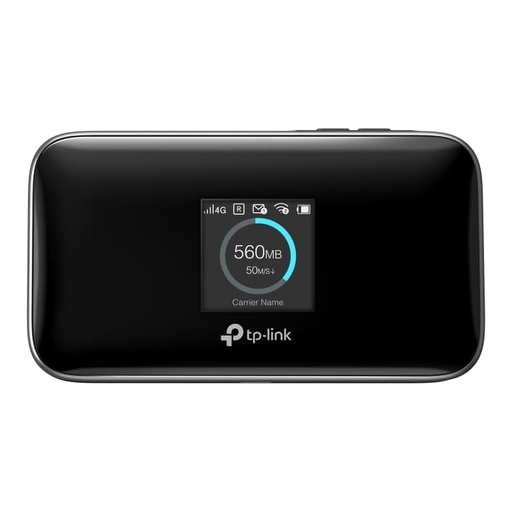
The M7000 EU V2 is a mobile 4G hotspot with a SIM card; the TL-WR902AC is a travel router that supports Ethernet or WISP, among other options.
According to D-Link Netherlands, the DWR-932 is a mobile 4G LTE hotspot for sharing a mobile connection.
The Beryl AX (GL-MT3000) is a travel router that supports existing Wi-Fi, Ethernet and tethering, among other options.
Explore related mobile routers and travel routers for use on the go.
 No image available
A good fit if you’re looking for a router for mobile networks; the product name identifies this model as a mobile gateway and modem router.
 No image available
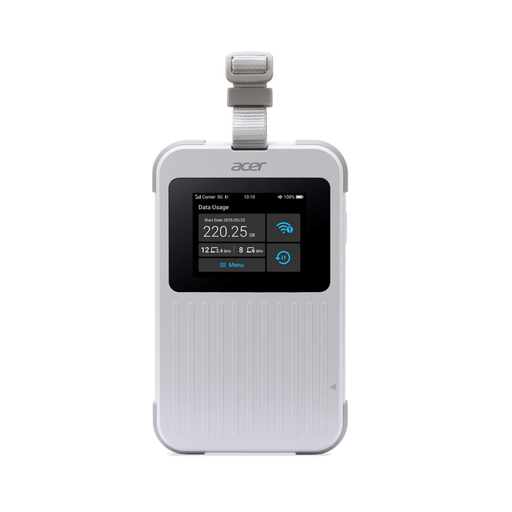
A good fit if you want to share mobile data with several devices while you’re on the go.
5G hotspot with WiFi 6E, dual-band and Nano-SIM; supports up to 32 devices. Includes 1 GB of SIMO data.
 No image available
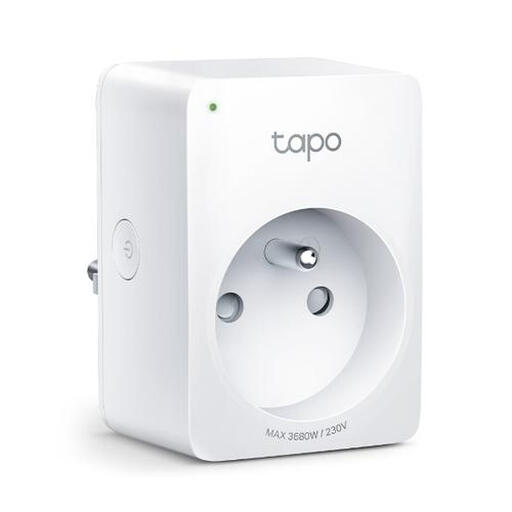
A good fit if you’re looking for a travel router; check in advance that its connection mode works with your hotel’s internet source.
1500 Mbps, dual-band (2.4GHz / 5GHz).
 No image available
A good fit if you want to share a mobile 4G connection via a SIM card with several devices.
150 Mbps, 2000 mAh battery with a stated use time of 8 hours, and support for up to 10 devices. Check your destination: the product information states that this model isn’t intended for use in the Americas.
Download the area you need to Google Maps on your phone in advance. Check that the whole route falls within the offline map and update the map before it expires. According to Google Maps Help, public transport, cycling and walking routes aren’t available offline; when driving offline, you won’t get traffic information or alternative routes.
Don’t assume it can: a travel router may share an existing connection without providing mobile internet itself. According to TP-Link, the TP-Link TL-WR902AC uses Ethernet or WISP, among other options; the GL.iNet GL-MT3000 documentation also describes tethering via a connected phone or dongle. If you need an independent mobile connection, check explicitly that the specific version supports a suitable modem and SIM card.
First, test that the internet connection actually works. Hotel Wi-Fi may require a sign-in page, which can mean extra steps when using a travel router. TP-Link describes the M7000 EU V2 as using a SIM card; check your data allowance terms and make sure the downloaded map is available on your phone.
Within the EU, Dutch mobile users generally pay their home rate for roaming, but ACM ConsuWijzer notes that surcharges may apply. Costs can quickly add up outside the EU. The cost and suitability of a data allowance depend on your provider, plan and destination; check the terms before using mobile data.