
Vandaag of morgen in huis

Kwaliteit gegarandeerd

Welkomstaanbiedingen ontgrendelen: GRATIS bezorging | Tot 80% korting | Gratis 30 dagen JoyPlus-proefperiode
Download de app
An office whiteboard may seem simple: a white surface, a few markers and you are ready to go. In practice, its dimensions, material and maintenance determine how pleasant it is to use every day. A board that is too small quickly becomes cluttered during a meeting. An unsuitable eraser leaves streaks behind, while stubborn ink can mark the surface.
This buying guide helps office employees, managers, teachers, students and remote workers choose the right magnetic whiteboard or dry-erase whiteboard. The recommendations are based on verifiable product details, such as dimensions, materials and included components.
A low-cost board may seem appealing, but its dimensions are not always suitable for the intended use. A compact model is sufficient for a short to-do list. Team meetings, planning sessions and brainstorming require more writing space. Measure the available wall first and determine how many people need to be able to read the board at the same time.
An office meeting-room whiteboard is often used for agendas, action items, diagrams and ideas. A 90 × 150 cm surface provides more room than a small board, while 100 × 200 cm is better suited to larger teams or detailed presentations. Also check that there is enough clearance around the board for writing and movement.
A board without a suitable whiteboard eraser, magnetic dots or markers is less practical from day one. According to Deli’s product information, the erasers are designed for dry-erase boards and are suitable for use in offices, schools, homes and meeting rooms. Do not use an eraser with permanent markers, as this type of ink can leave stains behind.
Use these guidelines as a starting point:
The choice depends on more than the wall dimensions. Consider viewing distance as well. Text and diagrams should remain legible from the meeting table.
A magnetic whiteboard offers added flexibility. For example, magnetic dots can be used to highlight priorities, deadlines or team members visually. A non-magnetic board may be sufficient if you only need to write and erase.
Pay close attention to the product description: not every board has the same construction or accessories. Check that magnetic attachment is explicitly mentioned. Do not add magnetic accessories if the surface is not designed for them.
A dry-erase board is designed for use with whiteboard markers. Erase regularly and avoid leaving marker ink on the surface for extended periods. According to the product description, the Deli Whiteboard Eraser, measuring 125 × 50 × 26 mm, features a felt erasing surface and an ABS handle. The smaller 110 × 56 × 40 mm version is easier to store in a drawer or pen holder.
The product information recommends tapping out dust or cleaning the eraser with a dry cloth. For a more thorough clean, the felt section can be hand-washed with mild soap and water. Allow it to air-dry completely and do not use abrasive cleaners.
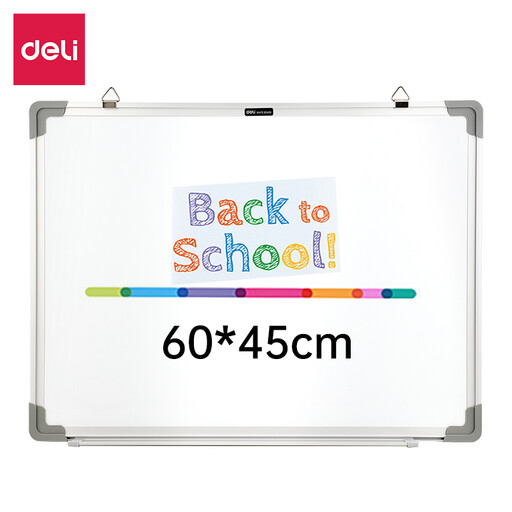
Why This Fits Their Persona: A compact dry-erase board for a home office, student room or small office with limited wall space.
At approximately 61 × 46 cm, its footprint is clear from the outset. This helps you avoid buying a large meeting-room board for personal use.
Dry-erase design; suitable for planning and everyday notes.
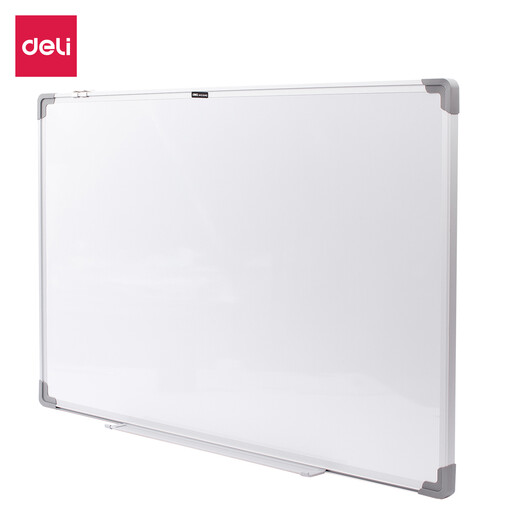
Why This Fits Their Persona: A spacious choice for anyone looking to create a dedicated planning board, brainstorming wall or presentation wall at home or in the office.
The 1200 × 1800 mm dimensions are easy to verify in advance. This allows you to assess whether the available wall and desired viewing distance are suitable.
Magnetic design; silver-coloured frame; generous writing surface.

Why This Fits Their Persona: Suitable for teams that need to keep a large amount of information visible at once during meetings, workshops and project discussions.
The generous dimensions reduce the risk of agendas, diagrams and action points being written over one another. Still, check the wall width and mounting requirements beforehand.
2000 × 1000 mm dimensions; designed for conference rooms and offices.
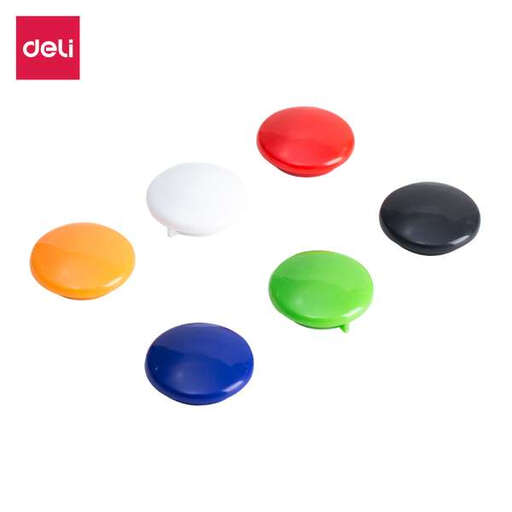
Why This Fits Their Persona: A practical addition for teams that want to organise tasks, priorities or notices by colour on a magnetic board.
The 30 mm diameter and assorted colours are clearly specified. This makes it easier to judge whether the dots will fit your columns, cards or planning system.
Magnetic dots in multiple colours; supplied by the tube.
A simple accessory set can improve organisation:
A second eraser option is the Deli Whiteboard Eraser, 110 × 56 × 40 mm, available in several colour variants. A larger erasing surface can save time on large boards, while a compact model may be perfectly adequate for short notes.
Browse a current selection of presentation boards and accessories based on size, intended use and product features.
Measure the available wall width and leave clearance at the sides. For a small team, 1500 × 900 mm may be sufficient. Larger meetings or detailed project planning benefit from the additional space offered by 2000 × 1000 mm. Also consider the distance between the board and the meeting table.
Use only suitable whiteboard markers and erase notes regularly. Clean the eraser according to the product instructions and avoid abrasive products. Permanent markers are not intended for this type of board and may cause staining.
No. Magnetic dots are designed for magnetic surfaces. Check the board’s product description before buying them. Deli dots are available in 20 and 30 mm diameters, allowing you to choose the size that best suits your planning system or presentation materials.
