
Mixing alongside colleagues
You mix vocal layers at a shared desk and want to disturb your colleagues as little as possible, without turning up the volume to drown out office noise.


If you work alongside colleagues or record vocals in the office, start with a well-fitting, wired closed-back model: it limits sound leakage compared with an open-back design. An open-back model may suit you if you mainly assess recorded vocals in a quiet, separate room. Either way, check the connection and comfort, and listen to your mix on another playback system.
You mix vocal layers at a shared desk and want to disturb your colleagues as little as possible, without turning up the volume to drown out office noise.
You assess the balance and placement of recorded vocals, and can move somewhere quiet to listen back with greater precision.
As well as mixing, you record vocals and want a suitable wired monitoring setup so you can hear your voice alongside the existing vocal layers.
Best suited to: colleagues sitting nearby, distracting office noise or recording vocals.
Keep in mind: a closed-back design doesn’t guarantee neutral sound. Assess fit and tonal balance separately.
Best suited to: assessing recorded vocals in a quiet, separate room where sound leakage isn’t an issue.
Keep in mind: ambient noise can get in, and your colleagues may hear what you’re listening to.
Start with the conditions at your desk, then compare fit, sound and connectivity.
| What to consider | What should you check? | Who might find this important? |
|---|---|---|
| Isolation and sound leakage | Check whether the model is closed-back or open-back, and how the earcups fit around your head. | If I work near colleagues, I want fewer distractions and as little audible sound leakage as possible. Around 36% of consumers put isolation first. |
| Vocal balance and spatial assessment | Compare familiar vocal passages at the same comfortable volume, and listen to the mix on another playback system too. | When assessing harmonies, I want to be able to follow the balance and placement of the vocal layers clearly. Around 29% of consumers prioritise assessing vocal balance. |
| Comfort and maintenance | Try the model during a longer listening session, and check whether the ear pads and cable can be replaced on the exact version you’re considering. | For regular mixing sessions, I want my headphones to stay comfortable and to know which parts I can replace. Around 21% of consumers put comfort and maintenance first when choosing. |
| Connection and monitoring | Check the headphone output, the plug or adapter supplied, and the cable length. If you’re recording vocals, separately check whether your interface supports direct monitoring. | When recording and listening back at the same time, I want a connection and monitoring setup that works with my equipment. Around 14% of consumers prioritise connectivity or monitoring. |
An open-back design lets office noise in and can be audible to colleagues. This may make it less suitable for working at a shared desk or recording with a microphone.
First, consider how much isolation you need at your workstation. You could save open-back listening for a quiet room.
The 80-ohm specification and the plug mentioned apply to the DT 770 PRO 80 Ohm and don’t automatically apply to every version.
Before buying, compare the full model name, impedance, cable and the output on your equipment.
Monitoring runs through your audio interface and software; changing your headphones won’t automatically add direct monitoring.
When recording vocals, check your interface’s monitoring features and settings.
The DT 770 PRO 80 Ohm is a closed-back model worth comparing for a shared workspace.
The closed-back ATH-M50x is another option to consider if detachable cables are important to you.
The closed-back K371 offers a different fit and cable selection to compare.
The open-back HD 490 PRO and closed-back HD 280 PRO are separate models for different working conditions.
The closed-back MDR-7506 is another option to compare for connectivity, fit and sound.
Below are Joybuy headphones to compare for wired listening, connectivity and the listed features. Check whether each model suits your mixing and recording setup.
 Image unavailable
Worth comparing if you’re looking for wireless headphones that also offer wired listening.
The product description lists a 42 mm transducer system, app EQ and up to 60 hours of playback. It says you can listen through a 3.5 mm cable, including passively without a battery.
 Image unavailable
Worth comparing if you want to check whether the wired connection options work with your equipment.
The product description lists a detachable cable with USB-C and 3.5 mm connections.
 Image unavailable
Worth comparing if you’re considering a closed-back model with a wired listening option.
The product information lists a closed-back design, active noise cancellation and an audio cable included in the box.
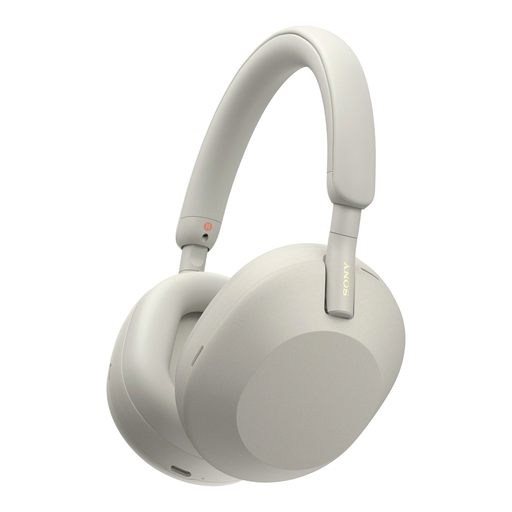 Image unavailable
Worth comparing if you want to weigh the listed wireless features against the needs of your mixing setup.
The product information lists LDAC audio, simultaneous connection to two devices and up to 30 hours of battery life with noise cancellation switched on.
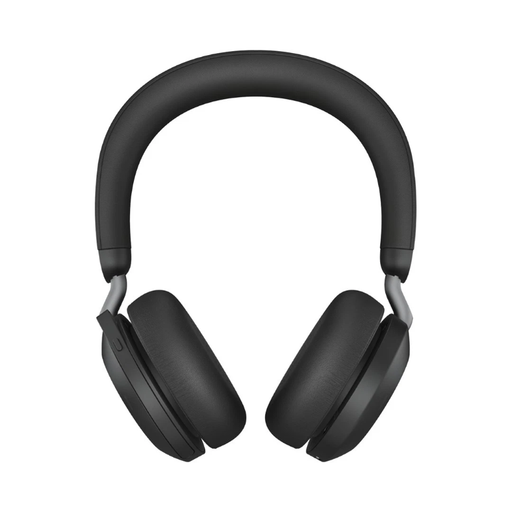 Image unavailable
Worth comparing if a wired USB-C option is important for your workspace.
The product description lists Bluetooth, eight microphones, noise cancellation and up to 36 hours of battery life. For wired use, it mentions a USB-C cable included in the box.
They’re best suited to a quiet space where sound leakage isn’t a problem. In a shared office, a well-fitting closed-back model is a more sensible starting point. Then check that your mix also sounds right on another playback system.
First, check that the plug and any adapter match the headphone output on your audio interface. An interface that supports direct monitoring can send the input signal straight to the headphone output. Check the monitoring setting separately from your mix playback.
Check the parts for the exact model. beyerdynamic lists replaceable ear pads for the DT 770 PRO 80 Ohm; Audio-Technica lists a detachable cable for the ATH-M50x, and AKG does the same for the K371.
For a consumer buying at a distance, the Dutch government says a 14-day cooling-off period applies in many cases; conditions and exceptions may apply. Consumers are also entitled to a product that is fit for purpose and can contact the seller if there’s a problem. These consumer rules don’t necessarily apply when an office makes a business purchase.
No. Try adjusting the fit or your working environment first, rather than turning up the volume. The World Health Organization points out that risk depends on both sound level and listening time.