
Vandaag of morgen in huis

Kwaliteit gegarandeerd

Welkomstaanbiedingen ontgrendelen: GRATIS bezorging | Tot 80% korting | Gratis 30 dagen JoyPlus-proefperiode
Download de app
A drawer full of half-empty pens, a notebook that is uncomfortable to write in and documents that keep piling up: office supplies may seem straightforward, but you often only notice a poor choice during everyday use. For home workers, school pupils, students, teachers and office staff, size, material, pack size and intended use are particularly important.
Also pay attention to marketing claims. Words such as “professional”, “extra durable” or “smooth writing” mean little without specific product details. A brand’s own research may suggest, for example, that a pen smudges less or lasts longer, but this is not a universal guarantee for every user or type of paper.
A set containing lots of writing instruments may look appealing, but first check which colours and designs you will actually use. Eight ballpoint pens with mostly black ink are useful for administration, while students may get more use from gel pens in several colours. When comparing products, look at the price per item, not just the price of the pack.
An A7 notebook is compact, but less suitable for extensive notes. An A4 document holder offers more space, but also takes up more room. Compatibility is especially important with label paper: the 15 × 40 mm size mentioned in the product description is intended for a Larkie D110 label printer. Always check the printer model, paper size and number of labels per roll.
A metal desk organiser may be stable, but it must be assembled correctly and should not be overloaded. A foam PP document folder is lightweight and semi-rigid, but it is not the same as a hard ring binder. With double-sided tape, the surface, temperature, moisture and load all affect how well the attachment holds.
With ballpoint pens, the nib size determines how much ink reaches the paper. A 1.0 mm nib generally writes clearly and is suitable for forms, diaries and everyday office work. A finer nib may be more practical for small writing or technical notes.
Gel pens often feel different from ballpoint pens because of the ink formulation. Look out for:
A brand may state, based on its own research, that its gel ink dries quickly or smudges less. Treat this as the brand’s product information and bear in mind that results vary depending on the paper, writing speed and whether you are left-handed.
With mechanical pencils, the main choices are lead size and the refill system. A 0.5 mm mechanical pencil is suitable for fine lines and detailed notes. A 0.7 mm mechanical pencil offers a little more forgiveness when writing and sketching. Also check whether the correct HB refills and replacement erasers are available.
Notebooks are often chosen for their appearance, but their practical features are more important. Check the following:
An A7 notebook fits easily into a coat pocket or bag and is suitable for quick reminders, to-do lists and ideas. A larger size is usually more convenient for lectures or meetings.
For document folders, A4 document holders and wall-mounted file holders, check both the external dimensions and the paper size. A wall-mounted holder for A4 documents can save space, but requires secure fixing. When mounting on plasterboard, stone or wood, use suitable wall plugs and screws.
For desk organisers, adjustability, compartment layout and load capacity are all relevant. Measure the available desk space beforehand. An organiser measuring 34.5 × 15.5 × 35.5 cm will not fit on every narrow desk. Also check whether assembly is required and whether the components stand securely.
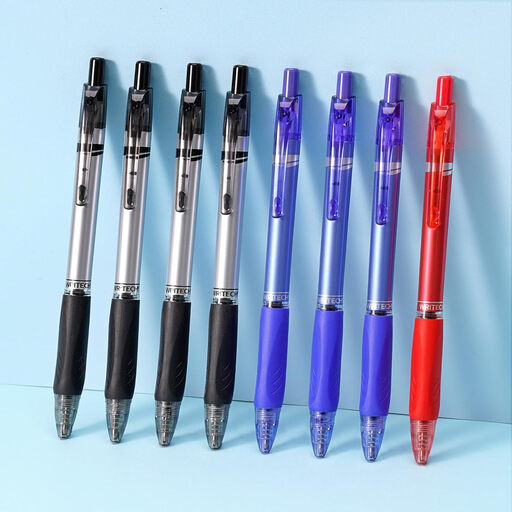
Why it suits this profile: The set contains four black, three blue and one red ballpoint pen for everyday writing, highlighting and correcting at school or in the office.
The pack size and ink distribution are clearly stated. This makes it easier to compare the set with individual pens and avoid unused colours.
1.0 mm nib, retractable design and three ink colours in one set.
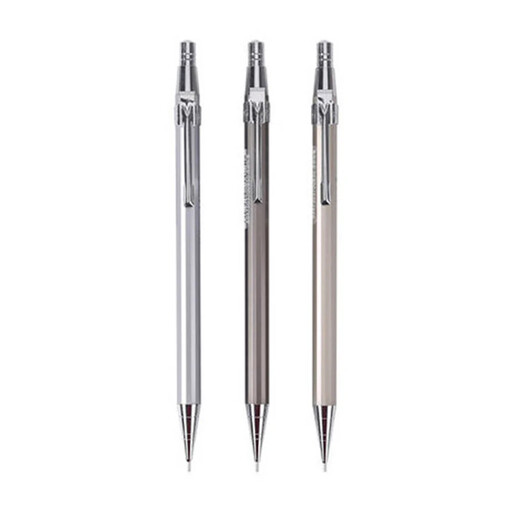
Why it suits this profile: The metal barrel and 0.5 mm black lead are ideal for precise writing, drawing and technical work.
The lead size and material are clearly specified. That way, you will not buy a heavy pencil without knowing whether the lead is suitable for your work.
Metal barrel, push-button mechanism and three colours: black, white and gold.
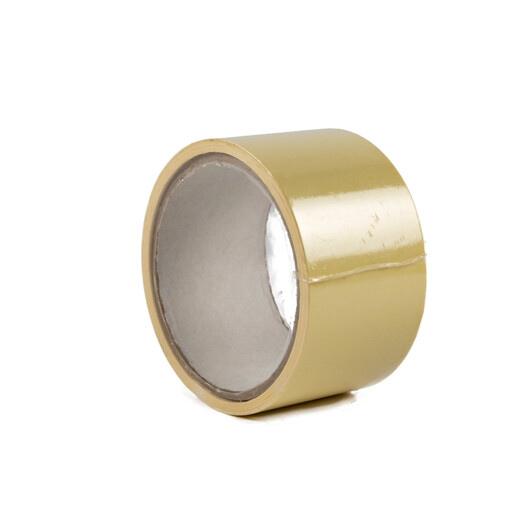
Why it suits this profile: Useful for crafts, presentations and mounting applications where a wide adhesive strip is required.
The length and width are stated in advance. Clean the surface and check the load before using the tape for permanent fixing.
10-metre roll with a wide 50 mm design; total product weight is 56 grams.
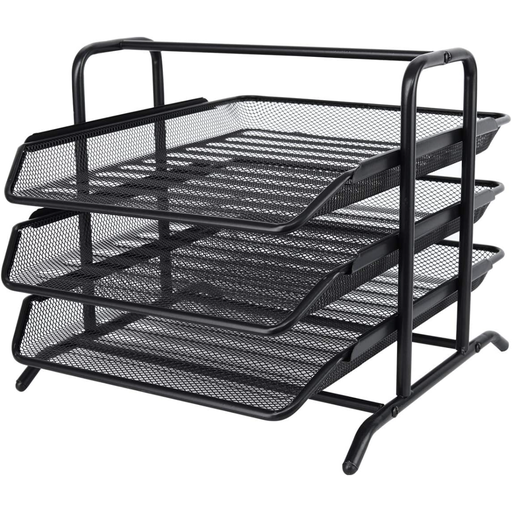
Why it suits this profile: Three pull-out tiers provide space for A4 documents, folders, letters and magazines without requiring additional wall mounting.
The dimensions of 35.5 × 29.5 × 26 cm and the requirement for simple assembly are known in advance. This helps you assess the available space and stability properly.
Suitable for A4 materials, three tiers, metal construction and rubber feet.
We have put together a complete, up-to-date list of products that fully meet these strict selection criteria and the applicable European safety regulations.
Alongside the choices above, other writing instruments and school supplies can complement your workspace:
Start with a reliable pen, pencil or mechanical pencil, a notebook, document folders and an organiser. If you work with lots of paper, add A4 document holders or a wall-mounted file holder. Label paper is useful when you want to keep stock, paperwork or cables organised.
The usable life varies from product to product. Pens can dry out if they are left uncapped. Store gel pens according to the product instructions and retract the nib whenever possible. Paper stays in good condition for longer when kept somewhere dry and out of direct sunlight. For tape, follow the storage and usage instructions on the packaging.
That depends on the number of users and the type of products you require. A basic set with ballpoint pens, a notebook and a pencil sharpener will generally cost less than a complete office organisation system with metal trays, wall holders and label paper. Compare the price per item, capacity and expected frequency of use before making your decision.
