
Vandaag of morgen in huis

Kwaliteit gegarandeerd

Welkomstaanbiedingen ontgrendelen: GRATIS bezorging | Tot 80% korting | Gratis 30 dagen JoyPlus-proefperiode
Download de app
A desk covered in loose papers, a filing cabinet that doesn’t fit and boxes of office supplies with no labels: clutter can build up quickly without a plan. The right office storage system helps you keep documents, tools and supplies organised, but not every model suits every space.
When comparing options, look out for these three common pitfalls:
The wrong size for A4 documents
Not every document organiser has enough internal space for folders, ring binders or documents with dividers. Check the internal width, not just the external dimensions.
A high load capacity with unclear conditions
The stated maximum load often applies only when the weight is evenly distributed, the unit is assembled correctly and it’s placed on a stable surface. For example, a shelving unit loaded with heavy boxes needs to be loaded differently from a desk organiser holding paper.
Not paying enough attention to assembly and stability
A wall-mounted file holder needs to be fixed securely to the right type of wall. A tall filing cabinet or storage rack may also need to be anchored to the wall. If you don’t check this, the practical storage space may be less than you expect.
First, measure the space where you plan to put your office storage system. Allow for:
An A4 document holder, wall-mounted file holder or document organiser is especially practical when the compartments are clearly separated. Label holders or transparent compartments make it easier to keep invoices, post, current projects and completed files apart.
Metal, steel, MDF and plastic are all common choices for everyday use. Each material has its own uses:
Always check whether the manufacturer states the load capacity per shelf, drawer or compartment. For example, a rack rated at 175 kg per shelf needs to be loaded evenly and secured according to the assembly instructions. Treat these figures as product specifications that apply under the stated conditions, not as a reason to load the rack heavily without care.
A mobile cabinet is useful in a flexible workspace, studio or shared office. Check:
For a wall organiser, it’s important to use plugs and screws that are suitable for your type of wall. For a storage rack or tall cabinet, follow the guidance on wall fixing, maximum load and even weight distribution.
The following selection is based on verifiable details in the product descriptions, such as dimensions, materials, number of compartments and stated uses.
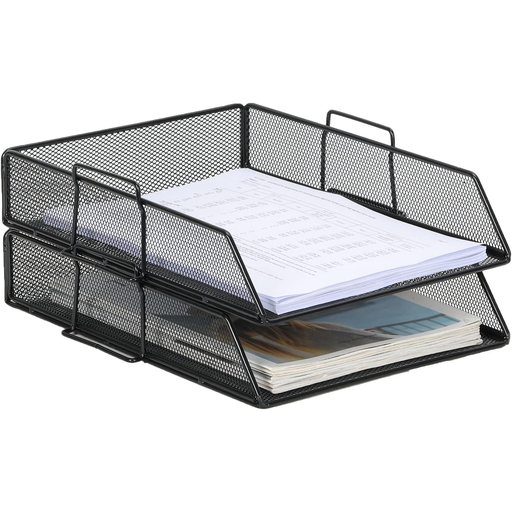
Why it suits this profile: This compact desk organiser is designed for A4 files, magazines and loose documents. It measures 25 x 33,5 x 13,5 cm and the tray has a handle.
The A4 suitability and dimensions are clearly stated. Stack several trays to make use of vertical space without buying a large cabinet straight away.
Metal frame, two tiers, stackable design and carry handle; according to the product information, no assembly is needed.
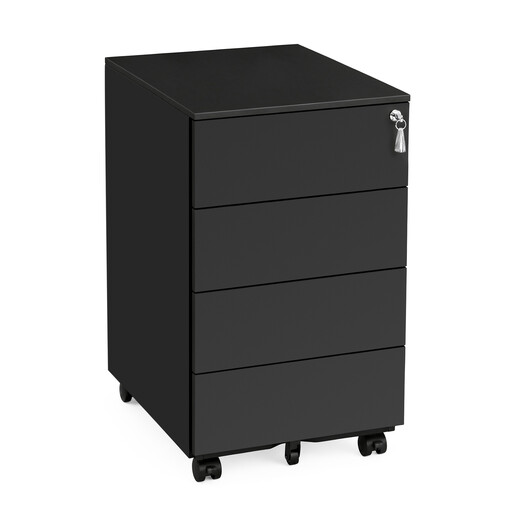
Why it suits this profile: If you use documents and office supplies every day, the four drawers give you a practical, fixed layout. The cabinet measures 39 x 45 x 69,3 cm and, according to the product description, arrives pre-assembled.
The stated maximum load of 15 kg per drawer makes it easier to compare options. A lock helps keep files from being left out in the open at the office.
Steel construction, four drawers, a lock and included castors; suitable for documents and stationery in an office or home office.
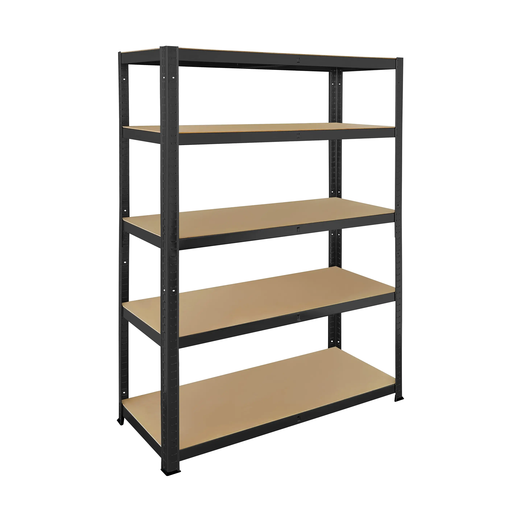
Why it suits this profile: For a studio, workshop, warehouse or stockroom, this storage rack offers five MDF shelves and plenty of vertical storage space.
The product information states a load capacity of 175 kg per shelf when the weight is evenly distributed and the rack is fixed to the wall. This makes the conditions for use clear from the outset.
Five shelves, a metal frame, MDF boards and a boltless system; designed for dry indoor spaces.
We’ve put together a complete, up-to-date list of products that meet these strict selection criteria and current European safety regulations.
Choose an organiser, filing cabinet or wall-mounted file holder that explicitly states A4 compatibility. Check the internal width too. A ring binder or folder with dividers needs more space than a loose sheet of paper.
Place a desk organiser on a flat surface and distribute its contents evenly. Fit wall-mounted compartments using fixings that are suitable for your wall. A tall storage rack or bookcase should be secured to the wall according to the instructions if required.
Running costs are usually limited to cleaning and replacing fixings if needed. You can wipe a metal document organiser with a dry or slightly damp cloth. MDF shelves should be kept dry. With a mobile filing cabinet, the castors and drawer runners may need extra attention after heavy use.
