
Vandaag of morgen in huis

Kwaliteit gegarandeerd

Welkomstaanbiedingen ontgrendelen: GRATIS bezorging | Tot 80% korting | Gratis 30 dagen JoyPlus-proefperiode
Download de app
A tidy office starts not with as many boxes, bins and cabinets as possible, but with the right office storage solutions that suit your documents, available space and daily routine. A home worker, for example, has different needs to a studio owner with drawings, materials and equipment.
The biggest mistakes often come from three recurring pitfalls:
So don't just use appearance as your only criterion. Look at the material, sizing, access, assembly and the type of items you want to store.
First, measure the spot where the storage unit will go. Note the width, depth and height, but also consider skirting boards, cables, desktops and the clearance needed for drawers to open.
For A4 documents, the internal measurement is more important than the external one. An A4 document holder or document organiser must offer enough room for paper, folders and possibly dividers. With wall-mounted models, also check that the slots are tall enough to remove documents easily.
A desk organiser measuring 22 × 13 × 14 cm takes up relatively little space, while a 10-tier wall-mounted model measures roughly 32.5 × 10.5 × 81.5 cm. The latter saves floor space, but does require a suitable and sturdy wall.
Pay attention to the difference between total weight capacity and the capacity per drawer or compartment. A storage rack with bins may have a total load limit, while each individual bin has a lower limit.
Practical rules of thumb:
According to the product information, the HaluPeit cabinet has a maximum total load capacity of 50 kg. That is a product specification, not a general guarantee for every use. Distribute heavy items evenly and check that the floor is level.
A filing cabinet on wheels or mobile drawer unit is practical when you regularly rearrange your workspace. However, wheels are only useful if they turn smoothly and can be safely locked. So check whether brakes are fitted and whether the cabinet remains stable when a drawer is open.
For daily use, pull-out A4 trays are handy. A wall-mounted file holder works well for incoming post, ongoing projects and documents you need to grab quickly. For archive items you need less often, closed drawers or a filing cabinet make more sense.
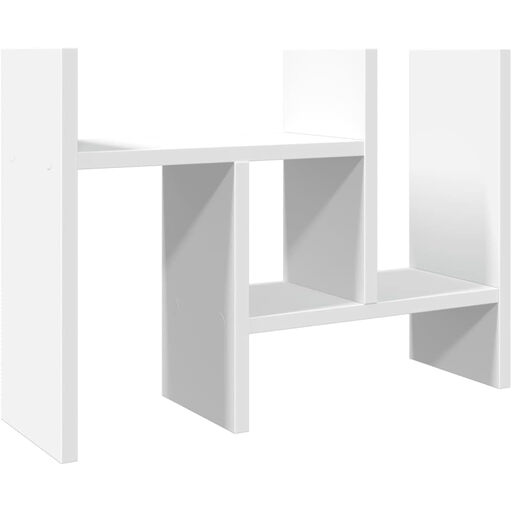
Why this suits the profile: This desk organiser combines document space with compartments for pens, calculators, staplers and other small items. Its adjustable design can be used as a corner shelf or a compact two-tier shelf.
The dimensions of 34.5 × 15.5 × 35.5 cm are clearly stated. This means you can check beforehand whether the organiser fits on or next to your desk.
Adjustable design, white finish and a stated total load capacity of 20 kg. Assembly is required.
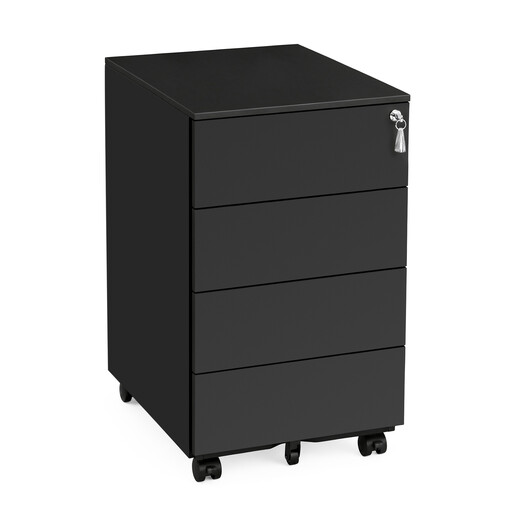
Why this suits the profile: This steel filing cabinet is designed for those who want to keep documents and office supplies separate and value lockable storage.
The cabinet comes pre-assembled and has a lock. This reduces assembly work and prevents documents from being left out on a shelf.
Four drawers, steel construction and castors for mobility. According to the product description, each drawer supports a maximum of 15 kg.
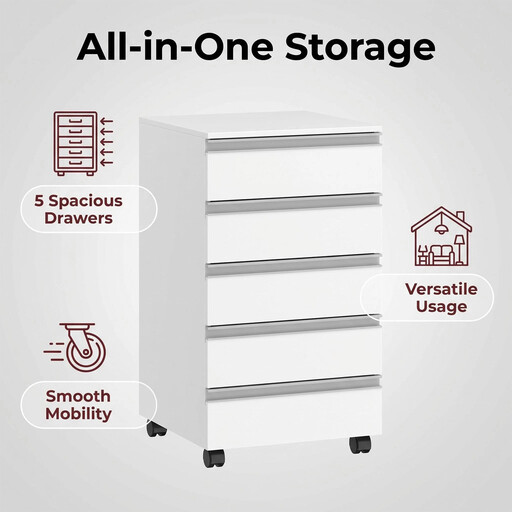
Why this suits the profile: This mobile drawer unit is ideal for studios, workshops and offices where many documents, drawings, tools or materials are regularly moved around.
The five deep drawers and industrial swivel castors are designed for frequent storage and movement. The front castors can be locked.
Dimensions roughly 40 × 40 × 66 cm, a flat top surface and a stated total load capacity of 50 kg. Check the floor surface is suitable before placing it.
We've put together a full, up-to-date list of products that fully meet these strict selection criteria and comply with current European safety regulations.
Choose vertical storage, such as a wall-mounted file holder or A4 document organiser. This uses the wall rather than extra floor space. For items you need often, a compact desk organiser is more practical than a deep cabinet.
The lifespan depends on the material, load, assembly and frequency of use. Steel models can be suitable for heavy use, while board materials need to be well maintained and not exposed to moisture for long periods. Never exceed the stated weight capacity, and regularly check screws, castors and wall fixings.
Yes, when you regularly change the layout of your workspace or use a cabinet next to different desks. Pay attention to lockable castors, drawer runners, stability and the space a drawer takes up when open. For a fixed archive spot, a standard filing cabinet or wall-mounted storage unit may be simpler.
