
Vandaag of morgen in huis

Kwaliteit gegarandeerd

Welkomstaanbiedingen ontgrendelen: GRATIS bezorging | Tot 80% korting | Gratis 30 dagen JoyPlus-proefperiode
Download de app
A desk covered in loose papers, cables and stationery takes up space and makes everyday work harder than it needs to be. But not every office storage organiser is right for your needs. A wall-mounted holder, for example, can hold plenty of A4 documents, but you’ll need a suitable wall. A mobile drawer unit offers more privacy, but takes up space and is heavier to move.
This practical guide will help you identify the features that matter and find the right storage solution for your workspace, home office or study area.
A large number of compartments may sound appealing, but be sure to check the internal dimensions too. An A4 document measures approximately 21 × 29.7 cm. So, for a wall-mounted document holder, the internal width needs to be generous enough for loose papers, folders or ring binders. A compartment that’s too narrow can quickly lead to bent corners or documents getting stuck.
A metal file holder or wall-mounted folder holder often comes with screws, but that doesn’t mean it’s suitable for every wall. Concrete, brick, plasterboard and wood require different wall plugs or fixings. Check the weight of the organiser plus the documents, too. A full metal holder can weigh considerably more than the product itself.
A lockable filing cabinet is practical for invoices, customer details or personal paperwork. But a lock alone doesn’t make a cabinet convenient to use. Check the number of drawers, drawer height, maximum load and how the cabinet opens. A shallow cabinet may suit stationery, but be less suitable for suspension files or larger documents.
There are three common layouts for document storage:
As well as the size, check the compartment height. For example, the compartments in the metal holders mentioned here range from approximately 5.5 to 7.5 cm high. That difference affects how much paper will fit comfortably in each compartment.
A powder-coated metal office organiser is generally easy to clean with a dry cloth. According to the relevant brands’ product descriptions, the coating is designed to help prevent oxidation and rust. This is a product claim, not a guarantee for every environment. So, avoid keeping metal organisers in a damp room for long periods and check the finish regularly.
Wooden or engineered-wood desk organisers often work well in a home office. They have a softer look, but usually need to be assembled. A plastic cable management box is suitable for power strips and cables, but it won’t store documents.
Start by measuring the available space. A filing cabinet on wheels needs to fit under or beside your desk without blocking legroom or a walkway. For a mobile drawer unit, also check:
For wall mounting, wall anchors are just as important as the screws supplied. Use fixings that are suitable for the type of wall and the expected load.
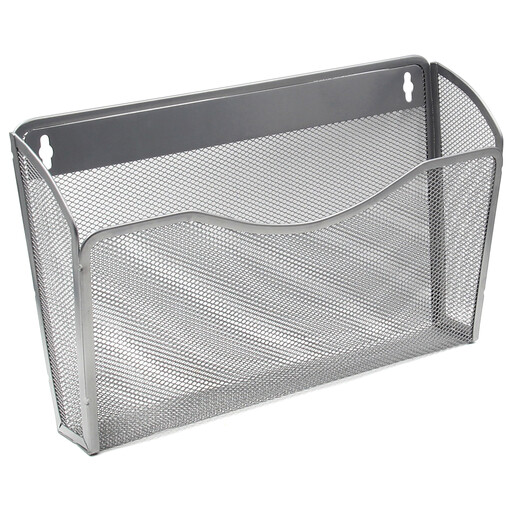
Why it suits this need: A simple first step for anyone who wants to keep post, forms or current documents beside their desk without adding a large cabinet.
It has one clearly defined A4 compartment, so you don’t pay for compartments you won’t use. Just check that your wall and wall plugs are suitable before fitting it.
Metal construction, measures approximately 35 × 9 × 21.5 cm and comes with mounting screws.
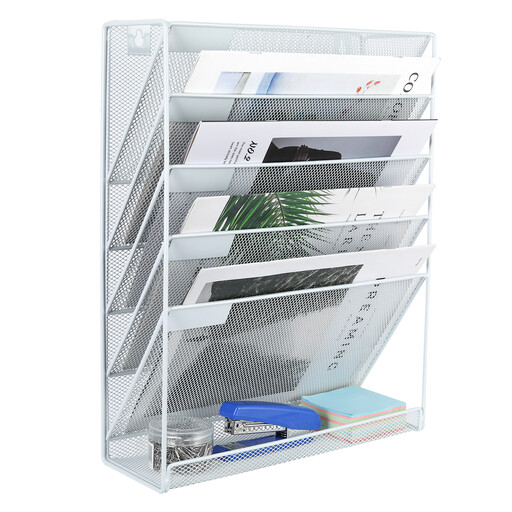
Why it suits this need: A good fit for a home office or paperwork area where different types of documents need their own place.
The six compartments and label plates make it easier to keep categories visible. The organiser can be wall-mounted or used freestanding.
Six A4 compartments, a bottom tray for small items and dimensions of 32.5 × 10.5 × 40.5 cm.
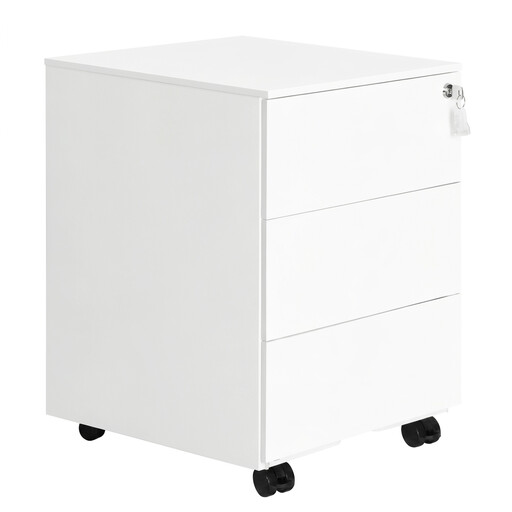
Why it suits this need: A practical choice if you want to keep documents and office supplies beside your desk and move the cabinet from time to time.
The three drawers provide a set layout, while the lock helps keep documents out of sight. Check that you have enough room and that the floor can support the cabinet.
Steel cabinet, three drawers, lock, four wheels (two with brakes) and a stated load capacity of 15 kg per drawer.
Not all clutter is made up of paper. A cable management box can help keep a power strip out of sight beneath or beside your desk. The 5five Cable Management Box measures 32 × 13.5 × 12.7 cm and, according to the product description, is designed for indoor use with a six-socket power strip. Check in advance that your power strip will actually fit inside the box.
For a desk organiser, compartments for pens, staplers, notes and small accessories matter more than a large overall capacity. If you have limited floor space, vertical storage is often a more practical choice: a wall-mounted document holder or folder holder makes use of the wall and keeps your work surface clear.
We’ve put together a complete, up-to-date list of products that meet these strict selection criteria and the applicable European safety regulations.
For a small home office, a single A4 document holder, a narrow wall-mounted folder holder or a compact desk organiser are all practical options. Wall mounting keeps the floor and desk clear. First, measure the available wall width and check whether you’re allowed to drill into the wall in your home.
Use wall plugs and screws that are suitable for the wall, whether it’s plasterboard, brick or concrete. Mount the holder level, spread heavy documents across several compartments and don’t exceed the recommended load. After fitting, check that the holder doesn’t move.
A mobile drawer unit with a lock can offer privacy for paperwork and personal documents. The lock isn’t a substitute for access controls or secure archiving. Place the cabinet on a stable surface, use the brakes when needed and store highly sensitive information in line with your organisation’s internal policies.
