
Buyer for a busy office snack tin
You top up a shared snack tin regularly and want to assess larger packs based on their contents, comparable ingredients and practical storage. Dutch retailers Albert Heijn and PLUS have 500 g packs in their ranges.


For a shared office snack tin, a large bag of unsalted mixed nuts is a good fit when it’s used regularly; if usage varies, a smaller pack may be more suitable. A larger bag isn’t automatically better value: compare the price per kilo of products with similar contents, and keep the main supply tightly sealed with the label to hand.
You top up a shared snack tin regularly and want to assess larger packs based on their contents, comparable ingredients and practical storage. Dutch retailers Albert Heijn and PLUS have 500 g packs in their ranges.
You don’t want to open more stock than necessary and are looking for a practical combination of smaller packs and airtight storage. The Netherlands Nutrition Centre advises keeping nuts tightly sealed, dry and preferably cool.
You want to choose carefully between nuts, peanuts and a mix with fruit, and keep the product information available for colleagues. The Netherlands Food and Consumer Product Safety Authority lists peanuts and nuts separately among allergens.
First, decide what pack size and quantity suit how the snacks are used in your office. Then compare the price per kilo of similar products and consider how you’ll store opened packs.
For a shared office snack tin in the Netherlands, the main buying priority comes first; the percentages are shown alongside the relevant consideration.
| Consideration | What to look for | Who should pay extra attention? |
|---|---|---|
| Value for expected usage | Compare the price per kilo, net weight and products with similar ingredients. | If I top up the snack tin often, I want enough stock without buying more than I need. Around 25% of consumers prioritise value for money when stocking up. |
| Stock and storage | Match the pack size to usage; check whether the packaging is resealable and the snack tin closes tightly. | If usage varies, I want to match the amount in stock to what gets opened and shared. Around 25% of consumers prioritise suitable storage. |
| Contents you want | First choose between mixed nuts, peanuts or a nut and fruit mix; then check the product name and packaging. | If colleagues prefer a particular type or fruit in the mix, I want to know exactly what’s in the pack. Around 25% of consumers prioritise the contents they want. |
| Allergen information | Check the current ingredients and allergen information on the packaging, and keep it available after decanting. | When I share snacks, I want to be able to check the label rather than rely on the product name. Around 25% of consumers prioritise allergen information. |
Once the snacks have been decanted, the tin won’t show which ingredients and allergens the product contains. The Netherlands Food and Consumer Product Safety Authority states that allergen information for prepacked products must appear on the label.
Keep the packaging or make sure the current product information remains available to colleagues. Don’t assume that a shared snack tin is suitable for someone with an allergy.
A larger pack doesn’t in itself mean a lower price per kilo, and it may leave you with more stock than you need in the short term.
Before choosing a larger pack, compare the price per kilo, contents and expected usage on a like-for-like basis.
These products have different contents. Comparing only the weight of the bags may therefore miss the point of your purchase.
First choose between mixed nuts, peanuts or a combination with fruit. Then compare products with similar contents.
The name ‘biscuit tin’ doesn’t tell you whether it closes tightly. The Netherlands Nutrition Centre advises keeping nuts tightly sealed and dry, preferably in a cool place.
Check the seal and store the main supply carefully. Fill the serving tin with an amount that suits how it’s used.
An option if you’re looking for a single type: Duyvis describes unsalted almonds, while PLUS also lists Duyvis unsalted peanuts in a 235 g stand-up pouch.
AH Unsalted Mixed Nuts is an own-brand option listed in a 500 g pack in the retailer’s range.
Jumbo offers a 500 g pack of Unsalted Cranberry Nut Mix, for those looking for a combination with fruit.
Lidl lists a 200 g bag of unroasted, unsalted mixed nuts.
Under its TRADER JOE'S product brand, ALDI describes an unsalted mix of almonds, hazelnuts, walnuts and Brazil nuts. It also offers 200 g nut and fruit mixes.
PLUS lists unroasted, unsalted mixed nuts in 200 g and 500 g stand-up pouches.
These products offer different options for a shared supply of office snacks: peanuts, chestnuts and nut and fruit mixes, in bags or individual portions. Choose based on the contents and packaging format you’re looking for.
 No image available
An option if you want to offer peanuts rather than a mix of nuts.
According to the product description, the product is 99% peanuts and contains sunflower oil. The pack should be kept tightly closed after opening.
Contains peanuts and may contain cashew nuts.
 No image available
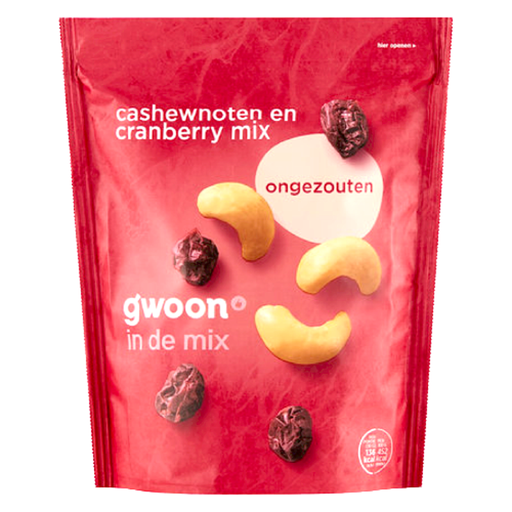
An option if you want to offer cashew nuts with dried cranberries in a smaller pack.
The product description lists 50% cashew nuts and 50% sweetened dried cranberries. The pack should be kept tightly closed after opening.
Contains cashew nuts and may contain peanuts and other nuts.
 No image available
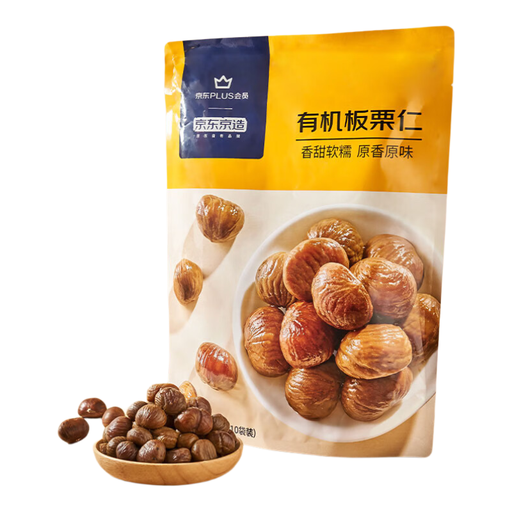
An option if you want to hand out individual portions of chestnuts without opening the whole pack at once.
The product title lists 1 kg split into 10 sachets of 100 g, with peeled chestnuts ready to eat. The product description names chestnut kernels as an ingredient.
 No image available
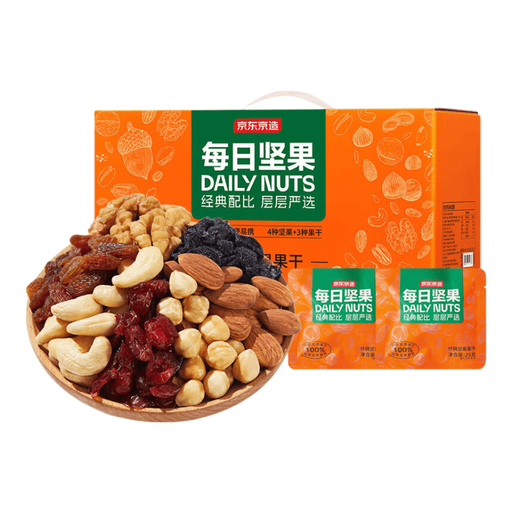
An option if you want to hand out individual portions of nuts and dried fruit at the office.
The product description lists 750 g split into 30 sachets of 25 g. Ingredients include walnuts, almonds, cashew nuts, hazelnuts and dried fruit.
Contains tree nuts, including walnuts, almonds, cashew nuts and hazelnuts.
 No image available
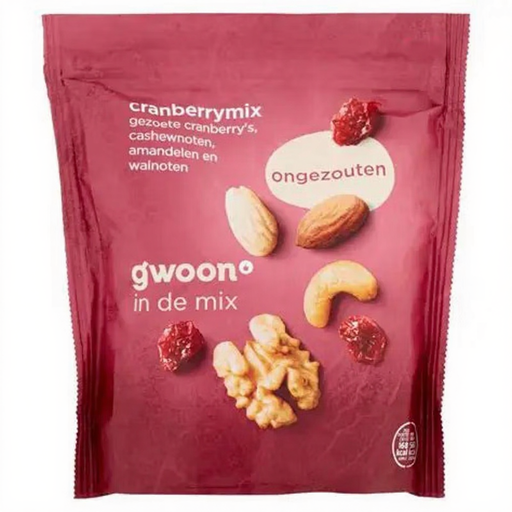
An option if you want to offer a smaller mix of nuts and cranberries.
The product description lists 30% cranberries, 25% cashew nuts, 25% almonds and 20% walnuts. The pack should be kept closed after opening.
Contains cashew nuts, almonds and walnuts; may contain peanuts and other nuts.
Divide the price you pay by the net weight in kilos, then compare products with similar contents. Assess any minimum extra order quantities and delivery charges separately; a larger pack alone doesn’t make for a meaningful price comparison.
Yes, if the tin closes tightly and can be kept dry. The Netherlands Nutrition Centre advises keeping nuts tightly sealed, dry and preferably cool. Keep the main supply sealed and refill the serving tin as needed.
The Netherlands Food and Consumer Product Safety Authority states that allergen information for prepacked products must appear on the label. Peanuts and nuts are listed separately among the 14 allergens. Check the current packaging and keep the information available after decanting.
New precautionary allergen labelling (PAL) rules for food businesses have applied in the Netherlands since 1 January 2026. According to the Netherlands Food and Consumer Product Safety Authority, a warning must be based on a risk assessment; the permitted wording is “May contain X” or “Not suitable for people with an X allergy”. Check the current packaging.
Follow the storage instructions on the packaging. For opened unsalted cashew nuts, the Netherlands Nutrition Centre gives a shelf life of six months in a kitchen cupboard and one year in the freezer. These periods don’t automatically apply to every nut mix or a frequently opened office snack tin; stale, chewy or mouldy nuts are warning signs.