Choose based on how many soup bowls need filling in quick succession at lunchtime, the space available and who will look after the appliance. A standalone dispenser serves water by the portion without needing a mains water connection, but it needs refilling; a plumbed-in tap can reduce this, but requires installation and uses energy on standby. If demand at lunchtime is low, a kettle may be enough, provided you only heat the amount of water you need.
Who is this choice relevant to?
Teams with a lunchtime rush
You fill several soup bowls in quick succession and want to know whether the dispensing rate can keep up, not just how large the reservoir is. Product information from Nedis, CASO Design and Culligan can help you compare models and connections.
People responsible for a shared kitchen
You’re looking for a set-up that makes operation, placement and daily cleaning manageable for several users. Also bear in mind your workplace guidelines for using hot water safely.
Offices without a mains water connection
You’re comparing a portable reservoir model with the kettle you already have. Available space and the work involved in refilling and maintenance are also important.
What should you look for when buying?
Standalone hot water dispenser
A good fit if: you want to dispense water by the bowl without a mains water connection and set the portion size or temperature.
Bear in mind: it needs refilling and cleaning; the reservoir capacity doesn’t tell you how many bowls can be filled one after another.
Kettle
A good fit if: soup is only made occasionally or you already have a suitable kettle.
Bear in mind: users share the kettle and have to wait for it to boil; don’t heat more water than you need.
Plumbed-in commercial dispenser
A good fit if: lots of employees use hot water throughout the day and the kitchen has a water connection.
Bear in mind: installation, maintenance and service terms; suppliers’ user-number recommendations don’t measure capacity during the lunchtime rush.
Boiling water tap with reservoir
A good fit if: you have the space and connections and users want instant hot water from a fixed tap.
Bear in mind: installation and standby energy use. Quooker states that its PRO3 reservoir holds 3 litres of boiling water.
| What to consider |
What to check before buying |
Who should give this more weight |
| Filling several bowls one after another |
Compare portion settings and the reservoir or connection with your lunchtime routine. Ask about dispensing performance during consecutive use; the reservoir capacity alone won’t answer this. |
If several colleagues make soup at lunchtime, I want to know whether the dispenser can serve portions one after another. Around 33% of consumers prioritise having enough capacity during the lunchtime rush. |
| Safe use by several colleagues |
Check the controls, any lock and the boil-dry protection. Nedis states that the KAWD310FBK can accommodate a bowl up to 16 cm high; check that your own bowls will fit. |
When lots of colleagues dispense hot water themselves, I want controls everyone can understand and a suitable place for the bowl. Around 27% of consumers prioritise safe shared use. |
| Refilling and maintenance |
Check whether the tank and drip tray are removable, how limescale maintenance is indicated and what any service agreement covers. Culligan describes commercial models with periodic maintenance; check the terms for the model you choose. |
If I share the appliance with colleagues, I want to agree in advance who will refill and clean it. Around 20% of consumers prioritise maintenance that’s easy to organise. |
| Placement and running costs |
Check the worktop space, power socket and any water connection. Milieu Centraal points out that energy comparisons depend on insulation and the amount of water actually heated. |
If the kitchen has limited space, I want to know what connections and maintenance clearance a solution requires. Around 20% of consumers prioritise placement and running costs. |
Common buying mistakes
-
Confusing reservoir capacity with lunchtime capacity
A large reservoir doesn’t tell you how many bowls of hot soup you can fill without interruption. During a busy lunch, you may still need to refill it or wait.
Ask about the dispensing performance of the exact model during consecutive use, then compare it with your lunchtime routine.
-
Assuming instant hot water always saves energy
How it compares with a kettle depends, among other things, on insulation and the amount of water you heat. Milieu Centraal’s main advice is not to heat more water than you need.
Compare solutions for the same usage pattern. If you use a kettle, heat only the amount you need.
-
Choosing an appliance without agreeing who will look after it
A standalone tank needs filling and its parts need cleaning. A commercial tap may come with maintenance terms from the supplier.
Agree who will refill and clean it and report faults, and check the maintenance or service terms before buying.
Brands to consider
Nedis
Nedis describes the standalone KAWD310FBK dispenser as having adjustable temperature and portion settings and a 2.7-litre reservoir.
- According to Nedis, this model has a child lock, boil-dry protection, a limescale alert and space for a bowl up to 16 cm high.
- These features alone don’t tell you how well it can dispense during a continuous lunchtime rush.
CASO Design
CASO Design describes the standalone HW 660 Turbo as having a removable 2.7-litre tank, seven temperature settings from 40 to 100 °C and adjustable portions.
- The manufacturer states that the HW 660 has a descaling reminder.
- The CE marking mentioned is information from the manufacturer; also check that the portion sizes and filter maintenance suit your intended use.
Quooker
Quooker offers fixed boiling water taps with a reservoir under the worktop; the brand states that the PRO3 reservoir holds 3 litres of boiling water.
- Quooker describes the Flex as having a control that you press twice and then turn.
- Installation requires suitable connections and accessible space; the reservoir uses energy on standby.
Culligan
Culligan describes commercial hot water dispensers that connect to the mains or use bottled water, with installation and maintenance services.
- The supplier gives its own recommended user numbers for each model.
- These figures aren’t an independent measure of consecutive soup portions; check the dispensing temperature, capacity and service terms for the model you choose.
Inventum
The Inventum HWD722 is an example of a compact standalone dispenser with adjustable temperature and a removable anti-scale filter.
- Inventum states that this model has a capacity of 2.2 litres and a temperature range of 20 to 100 °C.
- Inventum says the HWD722 is no longer available; don’t treat it as a current buying option or as evidence of a successor’s specifications.
Joybuy products
These products are suited to preparing hot water in a shared kitchen; check whether each model’s features suit your preferred soup portions and lunchtime use. The Netherlands Food and Consumer Product Safety Authority states that CE marking is mandatory for electrical products and that food contact rules apply to materials that come into contact with drinking water. Check the documentation for the exact model.
 No image available
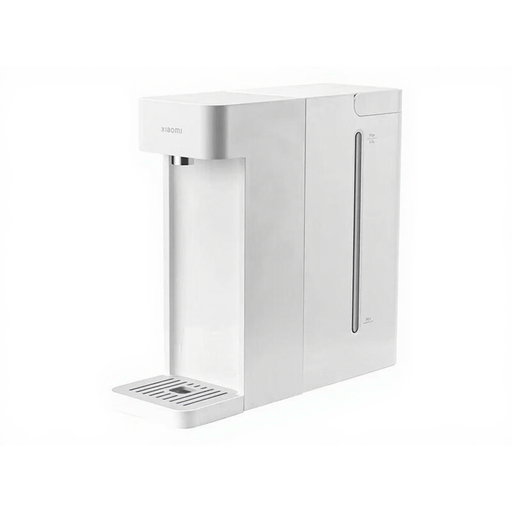
Xiaomi Instant Hot Water Dispenser S1
The adjustable water volumes may be useful if colleagues fill their soup bowls one portion at a time.
Four temperature settings; 3-litre reservoir and three selectable water volumes.
Joybuy
 No image available
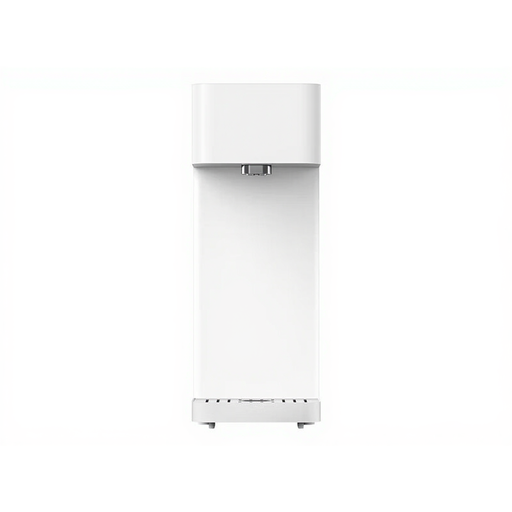
Xiaomi Smart Hot and Cold Water Dispenser
The temperature and volume settings may come in handy if the kitchen serves a variety of hot drinks.
3-litre capacity, two modes and five temperature settings.
Joybuy
 No image available
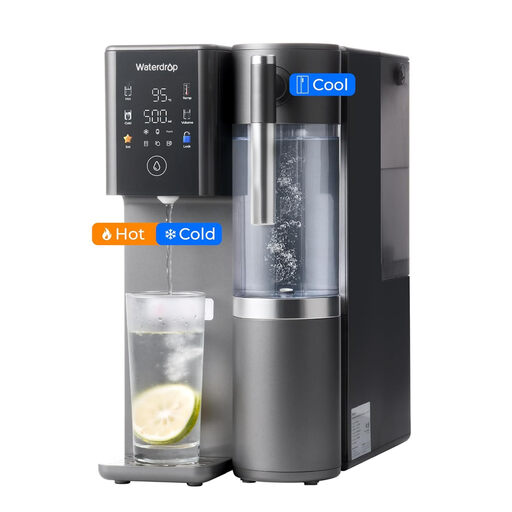
Waterdrop WD-A2 countertop reverse osmosis system
The product information mentions hot water dispensing for uses including offices; before buying, check whether this model suits the way you want to prepare soup.
The description states that it has a 5-litre capacity, six temperature settings and a child lock.
Joybuy
 No image available
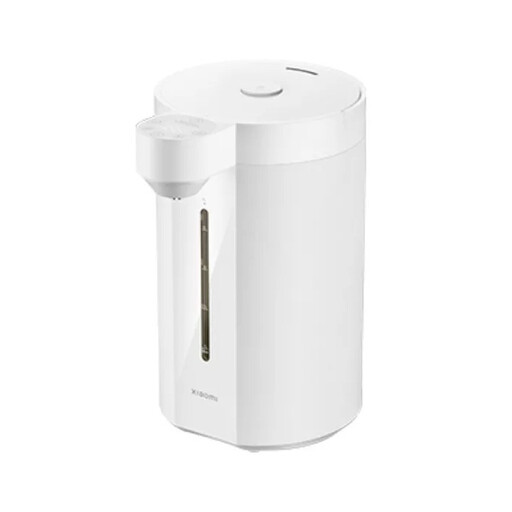
Xiaomi Smart Electric Hot Water Dispenser 5L
The portion options described may suit filling individual soup bowls.
The product information lists portions of 200 ml or up to 500 ml per use, with an adjustable spout. Check that these portions suit the bowls used at your office.
Joybuy
Frequently asked questions
What temperature should I choose for instant soup?
Follow the preparation instructions on the soup packaging. The temperature set on the appliance isn’t necessarily the temperature in the filled bowl; Nedis and CASO Design describe temperature selection on the dispensers mentioned above.
Can I put soup directly into a dispenser’s reservoir?
Only put soup in the reservoir if the manual for your chosen model explicitly allows it. The Inventum HWD722 manual specifies water only for this model; put soup in the bowl and check the manual for the appliance you buy.
What’s involved in installing a boiling water tap?
A tap with a reservoir needs space and suitable connections by the worktop. Quooker’s installation information specifies accessible space under the worktop and nearby services; check the requirements for the tap and reservoir combination you choose.
How can we reduce maintenance in a shared kitchen?
Agree who will refill and clean the appliance, and check the filter and limescale maintenance and any service terms for each model. Nedis lists a removable drip tray and limescale alert for the KAWD310FBK; Culligan describes commercial models with periodic maintenance.
Which Dutch requirements apply to a hot water dispenser in the office?
The Netherlands Food and Consumer Product Safety Authority states that CE marking is mandatory for electrical products and that food contact rules apply to materials that come into contact with drinking water. Check the documentation for the exact model; a brand name appearing on its own doesn’t prove that all applicable requirements have been met.


