Choose based on how many cups your colleagues need one after another during the busiest break, rather than looking only at the tank capacity. A freestanding dispenser is a good fit if you want to dispense water by the cup without a mains water connection. For frequent back-to-back use, a plumbed-in commercial tap may be more suitable, while a kettle could be enough for occasional use. Also consider where it will go, cleaning, filters and the connections available.
Which solution is right for you?
Managing a busy coffee station
You’re choosing for colleagues who want hot water around the same break time. Focus on how it performs when used repeatedly: Bravilor Bonamat lists automatic refilling and a stated hourly capacity for the HWA 14, but this is not a measure of performance during a short peak.
Fitting out a kitchenette without a water connection
You want to dispense individual cups without altering the kitchenette, and can organise refilling the tank. Inventum and Nedis describe models with removable tanks.
Managing a shared water point
You’ll need to consider suitable positioning, clear cleaning and maintenance arrangements, and controls that work for multiple users. Inventum’s HWD725B manual specifies a sturdy, level, heat-resistant surface.
What should you look for when buying?
Freestanding hot water dispenser
A good fit if: you want to dispense individual cups without a water connection and someone can refill the tank.
Bear in mind: the counter space available, manual refilling and how quickly it dispenses during busy periods.
Plumbed-in commercial hot water tap
A good fit if: lots of colleagues will use it in quick succession and suitable water and electrical connections are available.
Bear in mind: installation, maintenance and safety at the point of use; a stated hourly capacity does not guarantee supply during a short peak.
Boiling water tap with tank
A good fit if: the kitchenette is being fitted out or refurbished and there’s room for a tank beneath the worktop.
Bear in mind: installation requirements and standby power use. Quooker states that the PRO3 holds 3 litres of water at 100 °C.
Kettle
A good fit if: you only occasionally need one or two cups and you don’t mind waiting.
Bear in mind: for several rounds in a row, you’ll need to refill and wait again; only boil the amount of water you need.
| Consideration |
What to look for |
Especially relevant for |
| Capacity during the coffee break rush |
Count the cups needed during the busiest quarter of an hour and ask about dispensing in quick succession. Distinguish tank capacity from stated hourly capacity. |
If colleagues take a break at the same time, I want to know whether cups can be filled one after another without a long wait. Around 36% of consumers prioritise this peak capacity. |
| Positioning and portion sizes |
Check the water and electrical connections, the space beneath the spout and the portion settings for the mugs you use. |
For an existing kitchenette, I want to dispense cups without renovating. That’s why around 29% of consumers prioritise easy installation and portions for each cup. |
| Safe shared use |
Check the model-specific safety features and manual, agree where cups should be kept, and check the CE marking and relevant product documentation. The NVWA explains the CE marking requirement for electrical products covered by the applicable rules. |
For a water point used by different colleagues, I want a stable set-up and clear instructions for use. Around 21% of consumers prioritise safe shared use. |
| Maintenance and ongoing costs |
Check whether a filter is compulsory or optional, what replacement instructions apply, and who will clean the tank and drip tray. |
If several colleagues use the appliance, I want to know in advance who will clean it and how filters will be monitored. Around 14% of consumers focus mainly on maintenance and ongoing costs. |
Common buying mistakes
-
Assuming tank capacity guarantees peak performance
A freestanding dispenser often lists its tank capacity, while a plumbed-in model may also state its capacity per hour. These are different figures, and neither on its own tells you how many cups can be dispensed one after another during a short break.
Count the cups you expect to need during the busiest quarter of an hour and ask how the appliance performs when used repeatedly.
With a freestanding dispenser, manual refilling during a shared break can mean extra waiting.
-
Assuming instant boiling water is always the most energy-efficient option
A tank that keeps water hot also uses electricity on standby. Milieu Centraal notes that energy use depends in part on how the appliance is used and how well it is insulated.
Compare the options with your office’s usage pattern. If you use a kettle, don’t boil more water than you need.
A boiling water tank uses electricity on standby.
-
Overlooking filters and cleaning between colleagues
Filter options and replacement instructions vary by model. Without clear arrangements, refilling, cleaning or descaling can also be forgotten.
Agree who will maintain the appliance before you buy, and check whether a filter is compulsory or optional for each model.
Models that use filters may involve ongoing costs for replacement filters.
Brands to consider
Nedis
The KAWD310FBK is a freestanding dispenser for individual cups in a kitchenette without a fixed water connection.
- Nedis lists a removable 2.7-litre tank, five portion settings and seven temperature settings for this model.
- The tank needs to be refilled manually; its capacity alone doesn’t tell you how many cups can be dispensed one after another during a short peak.
Inventum
The HWD725B is designed for a coffee station where preset temperatures and portion sizes are useful.
- Inventum lists a removable 2-litre tank and temperature settings of 45, 65, 85 and 100 °C.
- Inventum says the filter is replaceable and recommends replacing it around three times a year; this applies to this model.
Bravilor Bonamat
The HWA 14 is a commercial hot water tap with a water connection, for an office where repeated use is expected.
- Bravilor Bonamat lists automatic refilling and a capacity of 30 litres per hour for the HWA 14.
- The kitchenette needs to be suitable for installation. The stated hourly capacity does not indicate how much hot water is immediately available during a short peak.
Quooker
An integrated boiling water tap is an option for an office kitchenette with room and the necessary fittings for a tank beneath the worktop.
- Quooker specifies a supply of 3 litres of water at 100 °C for the PRO3.
- You’ll need the right installation fittings and accessible space beneath the worktop. Milieu Centraal notes that energy use depends in part on how the appliance is used and how well it is insulated.
CASO Design
The HW 660 is a freestanding dispenser with separate settings for temperature and portion size.
- CASO Design lists seven temperature settings from 40 to 100 °C, portions from 100 to 400 ml and a 2.7-litre tank.
- These model specifications are not an independent measure of speed, safety or energy savings.
Joybuy product picks
These product picks are freestanding models for use on a worktop, including hot water dispensers and a worktop model with a hot water function. Before buying, check that the set-up, controls and relevant product documentation are suitable for your office.
 No image available
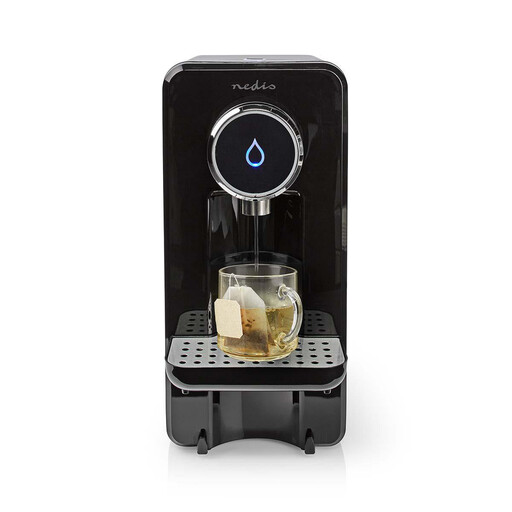
Nedis hot water dispenser, 2600 W, 2.5 l, black
The portion setting and adjustable spout could be useful when colleagues are filling individual mugs.
The description lists a portion of approximately 200 ml, water at around 98–100 °C and a 2.5-litre tank.
Continuous dispensing is limited to a maximum of 500 ml per use. The description also mentions a removable drip tray and a descaling alert.
View at Joybuy
 No image available
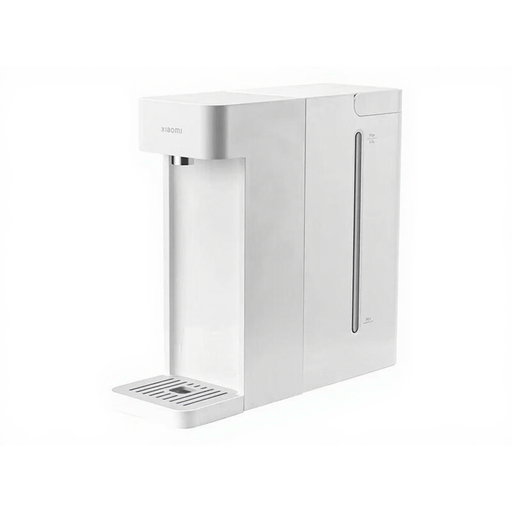
Xiaomi Instant Hot Water Dispenser S1
The different temperature and portion settings could be handy if colleagues use mugs of different sizes.
The product description lists a 3-litre tank, four preset temperatures and adjustable temperatures from 45 to 90 °C.
The stated portion sizes are 250, 500 and 750 ml.
View at Joybuy
 No image available
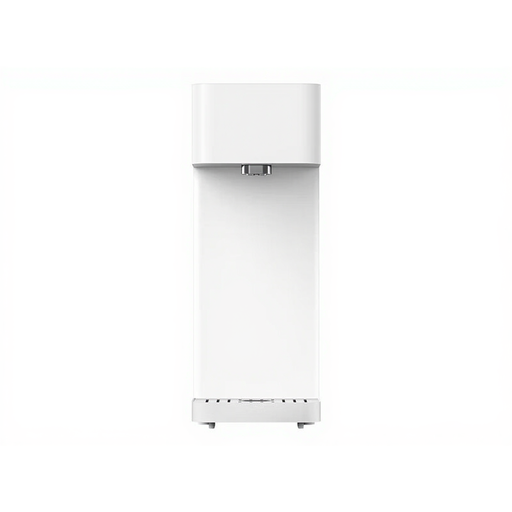
Xiaomi Smart Hot & Cold Water Dispenser, 3 l
This model could suit a coffee station where cold water as well as hot water is useful.
The title lists a capacity of 3 litres. The product description mentions hot and cold water settings, adjustable temperatures up to 95 °C and app control.
View at Joybuy
 No image available
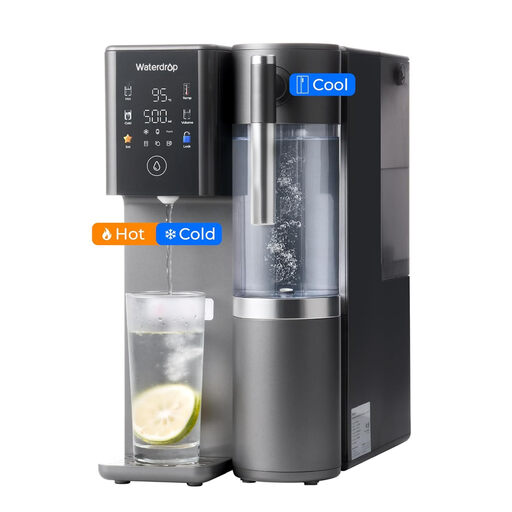
Waterdrop WD-A2 worktop model
The adjustable temperature and portion sizes could be useful if you want to make instant coffee by the mug.
The description lists six temperature settings up to 95 °C and five volume settings.
According to the description, the purified water jug has a capacity of 1.1 litres; bear in mind that it will need refilling when shared.
View at Joybuy
 No image available
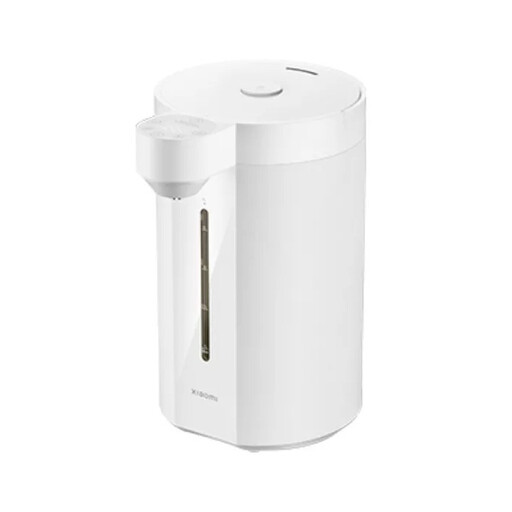
Xiaomi Smart Electric Hot Water Dispenser, 5 l
The stated capacity could be useful for a shared water point; also consider expected peak use and where it will be positioned.
The product description lists a 5-litre tank, adjustable temperature, touch controls, a child lock and automatic shut-off.
View at Joybuy
Frequently asked questions
How can you tell if a dispenser can handle the coffee break rush?
Count the cups needed during the busiest quarter of an hour and ask about dispensing in quick succession. Tank capacity and stated litres per hour don’t, on their own, answer how well it will cope during that 15-minute period.
What should you check before installation and positioning?
A freestanding dispenser needs a suitable spot and an electrical connection that meets the model-specific instructions. An integrated Quooker needs the right fittings and accessible space beneath the worktop; ask your office manager to assess the actual set-up.
What maintenance tasks and ongoing costs should you consider?
Allow for electricity, cleaning and descaling, as well as filters if your chosen model uses them. Inventum recommends replacing the filter in the HWD725B around three times a year; according to Nedis, the filter for the KAWD310FBK is optional. For a business purchase, ask about the service and warranty terms that apply.
Which Dutch regulations are relevant for an office?
The NVWA states that CE marking is compulsory for electrical products covered by the applicable rules; check the marking and product documentation for your chosen model. In addition, according to Arboportaal, businesses with at least one employee must have a RI&E (risk inventory and evaluation). Use it to assess risks in the specific workplace; this is not a separate permit requirement for dispensing coffee.


