
Vandaag of morgen in huis

Kwaliteit gegarandeerd

Welkomstaanbiedingen ontgrendelen: GRATIS bezorging | Tot 80% korting | Gratis 30 dagen JoyPlus-proefperiode
Download de app
An office filing cabinet may seem like a straightforward purchase, until folders do not fit, drawers get stuck or the cabinet turns out to be too large for the workspace. Home workers, self-employed professionals and small businesses often have limited space, but still want to keep documents organised and, in some cases, locked away.
So do not focus only on colour and price. The following pitfalls are common:
First measure the available space, including skirting boards, door swing and room for an office chair. Pay attention to width, depth and height, and compare these with the internal space.
For documents, a layout with adjustable shelves offers flexibility. A filing cabinet with drawers is more practical if you use lots of individual files, stationery or smaller office supplies. An office cabinet with drawers often takes up less floor space than a wide cabinet with doors, but each drawer has a limited capacity.
Also check the maximum load. A cabinet may have a sturdy top, while a drawer or shelf has a lower load capacity. It is best to place heavy items at the bottom.
Steel is a practical choice for a metal filing cabinet in an office or workspace where the cabinet is used every day. A steel frame may also be suitable for heavier documents, but the product is often heavier as a result. Therefore, check that the floor can support the load and that moving the cabinet will be manageable.
Wood or engineered wood works well in a home office and can make a compact office organiser more affordable. With these options, pay attention to the maximum total load, the quality of the fixing points and the care instructions. A smooth surface is generally easy to clean with a damp cloth.
A lockable filing cabinet can be useful for invoices, personnel files or personal documents. Check whether keys are included and which part of the cabinet is locked. A lock is not a substitute for careful access management, but it can provide an additional layer of protection.
Swivel castors are practical on a mobile filing cabinet for flexible workspaces. Brakes on at least some of the castors help keep the cabinet in place. An anti-tip feature is also important for tall or wide cabinets. Always follow the assembly instructions and use the supplied fixings when the manufacturer specifies wall anchoring.
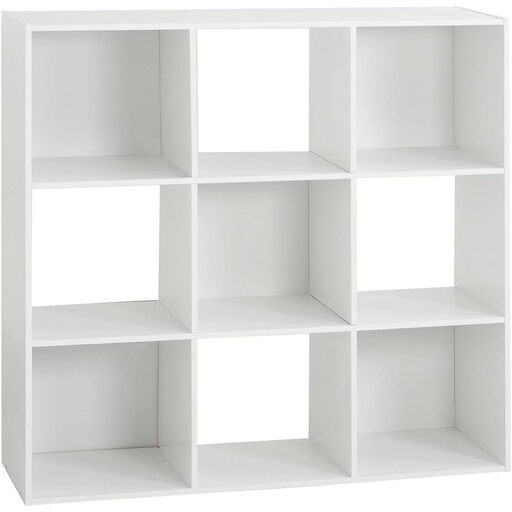
Why it suits this profile: The nine open compartments offer an organised starting point for students, home workers and small workspaces that want to keep files, books and office supplies visibly arranged.
The dimensions and maximum load of 65 kg are specified, making it easier to match the cabinet to the available space and its contents. However, it is an open cabinet with no locking mechanism.
Nine compartments, wall mounting or floor placement, FSC certification and a statutory EU guarantee of at least two years according to the product information.
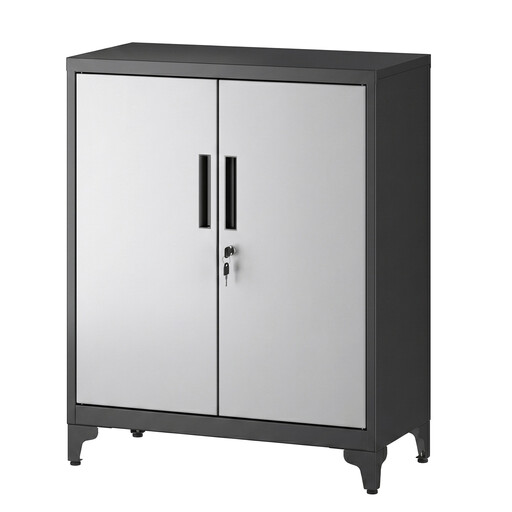
Why it suits this profile: This steel filing cabinet with two doors is ideal for offices that want to store documents and other items out of sight on fixed shelves.
The two shelves are height-adjustable. The product information also specifies a steel lock with two keys and an anti-tip kit supplied for wall mounting.
Steel construction, dimensions of 40 × 80 × 90 cm, a maximum of 25 kg per adjustable shelf and 30 kg on the top.
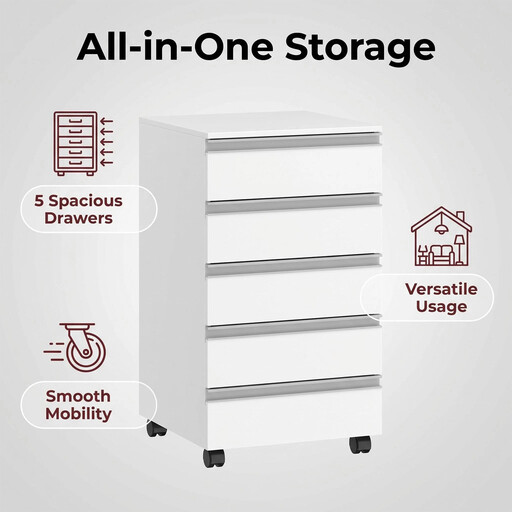
Why it suits this profile: For studios, workshops and offices where drawings, materials, tools or large quantities of documents are moved regularly, this drawer cabinet offers office-friendly flexibility.
The cabinet has five drawers, swivel castors and two lockable front castors. This means that both mobility and stability when stationary are covered in the specifications.
Dimensions of approximately 40.5 × 40.5 × 65.5 cm, a stated total load capacity of 50 kg and drawers with reinforced runners according to the product description.
We have put together a complete, up-to-date list of products that fully meet these strict selection criteria and the applicable European safety regulations.
A home office filing cabinet does not need to be large. A mobile cabinet with three drawers may be enough for invoices, paperwork and everyday office supplies. The JOYFURNOS mobile models have three drawers, a steel frame, a lock and four castors, two of which have brakes. According to the product information, they are supplied largely pre-assembled; only the castors still need to be attached.
For a larger volume of paperwork, a filing cabinet with four or five drawers makes more sense. Check that the drawers are suitable for your file format and that the maximum load per drawer is sufficient. A small office organiser or under-desk drawer is mainly intended for pens, calculators and smaller accessories, not full ring binders.
If assembling the cabinet yourself, allow plenty of time and lay out all the parts beforehand. A cabinet with wall mounting must be secured to a suitable surface. For a cabinet on castors, check after assembly that all the brakes lock properly.
Care is usually straightforward: remove dust and stains with a soft, slightly damp cloth and follow the manufacturer’s instructions. Do not use aggressive cleaning products on painted metal or wooden surfaces. Keep drawers and shelves within their specified load capacity to prevent warping, sticking or instability.
No, there is no general requirement for every workplace situation. However, locking a cabinet can be sensible when you store personal data, contracts or financial records. Consider who has access and choose a cabinet with a lock suited to your needs.
Its lifespan depends on the material, load, assembly and frequency of use. A steel cabinet may be suitable for intensive everyday use, while a compact wooden document drawer is mainly intended for lighter storage. Place heavy items at the bottom and do not force the drawers.
Apart from the purchase price, there are generally no fixed running costs. Do bear assembly, possible wall mounting and floor protection in mind. Castors with brakes can be useful if you move the cabinet frequently, but keep the cabinet in a stable position while it is in use.
