
Vandaag of morgen in huis

Kwaliteit gegarandeerd

Welkomstaanbiedingen ontgrendelen: GRATIS bezorging | Tot 80% korting | Gratis 30 dagen JoyPlus-proefperiode
Download de app
Loose invoices, post, files and notes pile up quickly. An office document organiser can solve that problem, but only if its layout suits your workspace. A compartment that’s too shallow, the wrong dimensions or an unstable construction will mean documents still end up on your desk.
This buying guide helps homeworkers, office staff, students, teachers and households make a more informed choice. We focus particularly on A4 compatibility, mounting, compartment layout, material and everyday use.
Not every document holder is designed for standard A4 paper. So check not just the external dimensions, but also the internal width and compartment height. An A4 document measures 21 by 29.7 cm. Ring binders, plastic sleeves or documents with dividers need extra room.
A narrow document tray might work for letters, but it’s awkward for a full folder. So think about whether you want to store loose sheets, magazines, ring binders or planners.
A metal file holder is sturdy, but weighs more than a plastic alternative. For wall mounting, the type of wall, wall plugs and fixing screws all matter. A wall-mounted document holder must be fitted flat and securely. Plasterboard walls may need different plugs to brick.
If you’re mounting it on a door, also check that the door still opens and closes properly. Bear in mind the weight of the contents too; the maximum load capacity isn’t always stated in product descriptions.
Six compartments might look appealing, but without fixed categories you soon end up with a “miscellaneous” pile. Decide in advance which sections you need, such as:
For a small desk, a two-tier A4 document holder can be more practical than a large wall-mounted solution.
An organiser for landscape A4 documents usually has a wide, low shape. According to the product description, the Senhoglb wall holders are designed for standard A4 size and measure approximately 35 cm wide, 9 cm deep and 21.5 cm high per compartment. That gives room for loose documents, letters, magazines and certain folders.
With a vertical organiser, check that the compartment height is suitable for your documents. A magazine holder can work well for landscape papers, but is less good for thick ring binders.
A desktop organiser is handy if you can’t drill holes or want documents within easy reach. Look out for:
A wall-mounted document holder saves desk space and makes use of the height of a wall or door. When fitting, it’s important to check the screws supplied and, if necessary, use suitable wall plugs for your wall.
Metal organisers with a powder coating have a professional look. According to the product descriptions, the Senhoglb models mentioned feature a coated metal finish intended to prevent oxidation and rust. This is a manufacturer claim; nevertheless, keep the organiser dry and clean it with a soft cloth.
A metal construction can be suitable for daily use, but look out for rounded or carefully finished edges. For small accessories, a drawer organiser with multiple compartments is often clearer than an A4 holder.
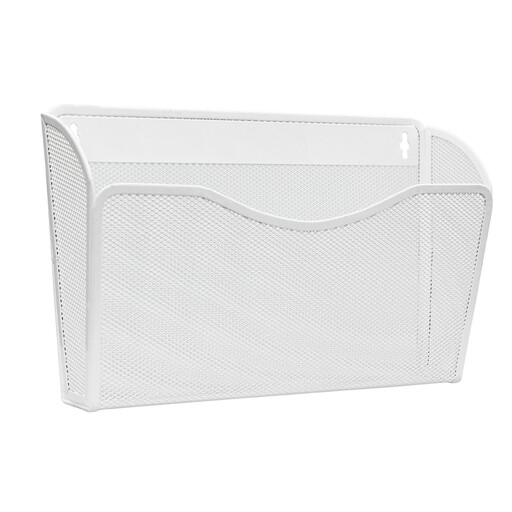
Why this fits the profile: A single compartment is ideal for anyone who wants to keep incoming post, daily documents or a current file in one fixed place.
The product description states A4 compatibility and a label holder. This makes the contents quicker to identify than in an unsorted document tray.
A4 size, wall mounting with screws supplied and a compact size of approximately 35 x 9 x 21.5 cm.
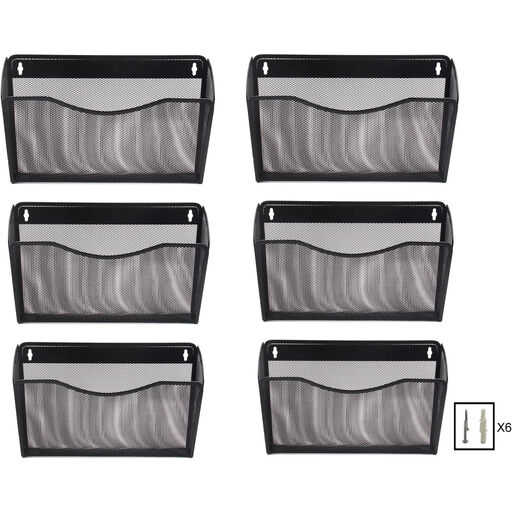
Why this fits the profile: This model suits an office, classroom or home workspace with several regular document flows and limited desk space.
Six separate compartments help you sort incoming post, files and forms straight away. Wall mounting prevents all documents from becoming one pile.
Set of six compartments, metal construction, powder coating according to the product description and mounting individually or combined.
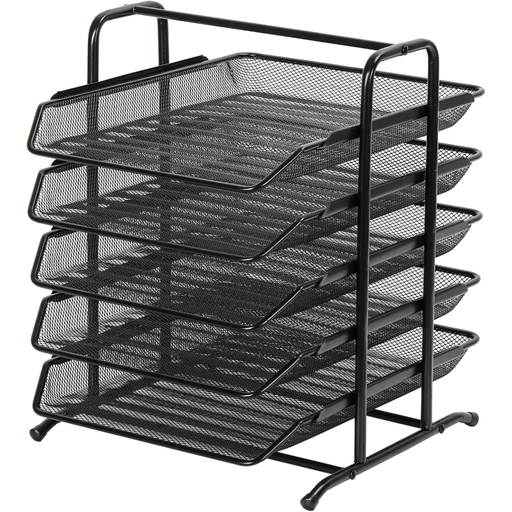
Why this fits the profile: The five pull-out levels are designed for users who handle lots of files, books, magazines or folders every day.
The compartments are accessible individually. This means you don’t have to move a whole stack first to get a document from a lower level.
Five levels, pull-out trays, A4-compatible design and dimensions of approximately 35.5 x 29.5 x 37.5 cm.
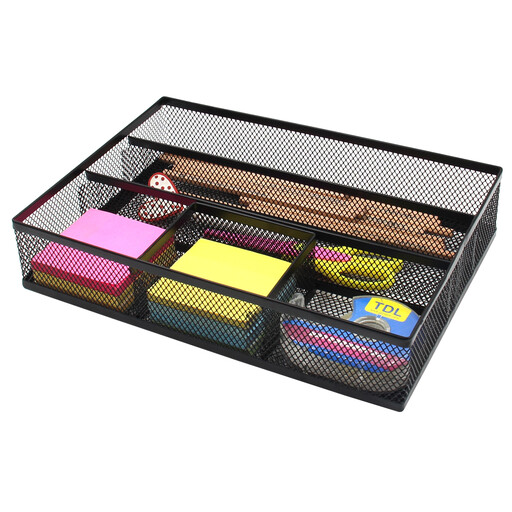
Why this fits the profile: This compact model is aimed at pens, paperclips, sticky notes and other small stationery items that often wander around a drawer.
The five separate compartments stop small items from clumping together in one large document tray or a deep desk drawer.
Five compartments, compact size of 30 x 21.5 x 7 cm and non-slip feet according to the product description.
We’ve put together a full, up-to-date list of products that fully meet these strict selection criteria and current European safety regulations.
An organiser works better when each compartment has one clear purpose. For example, use a letter organiser for incoming and outgoing post, an A4 holder for current files and a separate drawer organiser for writing materials.
It’s best to store notebooks and planners separately from loose invoices. An A5 planner like the Jubiluu 18-month planner is compact enough for a desk and, according to the product description, has 112 sheets, a hardcover, bookmark and elastic closure. Check out the Jubiluu A5 planner if you want to organise planning and document management side by side.
Choose a flat spot and use fixing materials that suit your wall. Check that the holder is firmly attached before you add documents. Plasterboard may need special wall plugs. Recheck the screws after a while.
Its lifespan depends on the load, how it’s mounted and moisture. A metal model with a coating can be suitable for daily office work, but avoid prolonged contact with water. Clean with a soft cloth and place a desktop model on a stable surface.
That depends on how you use it. An organiser can be handy for documents you refer to often, while archive folders are more suitable for long-term storage. So don’t just compare the purchase price, but also the number of compartments, the mounting and the space you have available.
