
The colleague making a single smoothie
Wants to take their own portion straight from the blending cup and use as little shared worktop space as possible.


For a single smoothie, a compact blender with a removable drinking cup is a practical choice. For several portions, a jug blender may be more suitable, while a rechargeable model can come in handy if there isn’t a suitable socket nearby. Compare the capacity, cleaning requirements and independently assessed noise levels of each exact model: wattage or a claim that a blender is ‘quiet’ doesn’t prove it will disturb colleagues less. Wash fresh apricots and remove the stone before blending, as advised by the Netherlands Nutrition Centre.
Wants to take their own portion straight from the blending cup and use as little shared worktop space as possible.
Wants to leave the cup, blade and worktop clean and ready for the next person.
Needs to consider disruption from blending noise, so looks for verifiable noise information rather than just a claim that the blender is quiet.
A good fit if: you usually make one smoothie and want to take the same cup with you.
Check: the filling capacity, how easy the blade and seal are to clean, and the noise level of the exact model.
A good fit if: colleagues want to make more than one portion together or prefer to pour from a jug.
Check: a jug and lid need space, and you’ll need to agree on who cleans them.
A good fit if: there isn’t a suitable socket where you want to blend and a small portion is enough.
Check: you’ll need to charge the battery, and the cup may be too small for your recipe.
For an apricot smoothie in a shared office, noise, cleaning, portion size and blending results are the main factors to consider.
| What to consider | What should you check? | Who is this important for? |
|---|---|---|
| Noise near workstations | Where possible, look for an independent noise assessment of the exact model and agree on a suitable place and time for blending. | If colleagues work nearby, I want to know how loud the appliance is in comparable conditions; around 29% of consumers prioritise noise. |
| Cleaning | Check the cleaning instructions for each part and whether there’s a suitable place to rinse it. | If you want to leave the pantry clean for the next person, check how easy the cup and blade are to clean; around 29% of consumers prioritise this. |
| Portion size and portability | Compare the capacity, lid and number of cups included with the portion you want to make, checking the exact model variant. | If I want to make one portion and take it with me, I look at the cup and lid; around 24% of consumers share this priority. |
| Blending results | Where available, compare independent smoothie tests of the exact model; separately check whether it’s suitable for any frozen ingredients. | If you’re mainly looking for the right texture for your chosen ingredients, look beyond the wattage; around 18% of consumers prioritise blending results. |
The Netherlands Nutrition Centre warns that ground apricot stones in a smoothie can be dangerous.
Wash the fruit, remove the stone and cut the flesh into pieces before blending.
A description such as ‘quiet’ doesn’t provide an independent, comparable assessment of noise in a shared workspace.
Where possible, look for an assessment of the exact model and agree with colleagues on where and when to use it.
Cleaning instructions may differ for the cup and the blade assembly. For example, Nutribullet gives separate instructions for these parts on the NB603DG.
Follow the instructions for each part and keep the motor base out of the washing-up water.
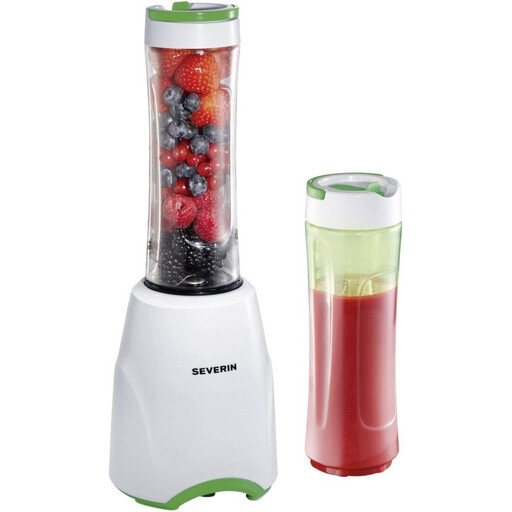
The SM 3735 is a compact Mix & Go blender supplied with two removable drinking cups.
The VitaPower Serie 2 MMB2111S combines a compact blender with a blending cup.
The rechargeable Lightmix BL1C0430 is designed for a small portion in places without a socket next to the blender.
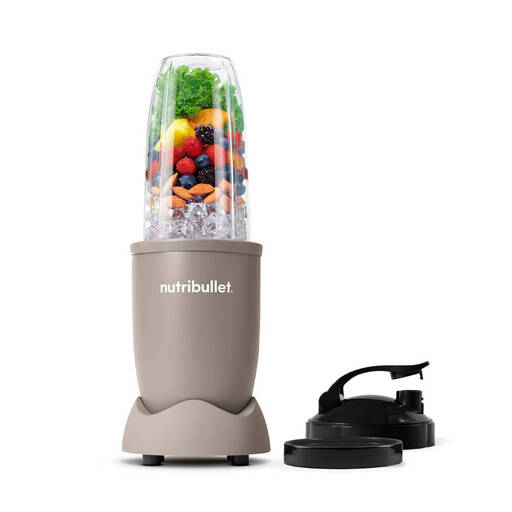
The Original 600 NB603DG is a personal blender for a single portion.
According to Philips, the Blend & Go HR2670/00 has a compact blending cup with a lid. The Mini HR2510/90 is a different model.
These Joybuy product picks include compact blenders with a portable cup, as well as a rechargeable blender for a small portion.
 No image available
An option if you want to make a smoothie and take the cup with you.
250 W; 500 ml cup; glass jug; drinking spout lid.
The product information lists stainless steel blades and removable dishwasher-safe parts.
 No image available
This version may suit you if you’re looking for a personal blender with a to-go lid.
900 W; 700 ml cup capacity; to-go lid and accessories.
The product information lists a BPA-free cup and dishwasher-safe parts.
 No image available
A rechargeable option if there’s no socket where you want to blend and you’d like to take your own portion with you.
475 ml cup capacity; rechargeable battery; USB-C charging; stated run time of 20 minutes.
The product information lists a leak-proof drinking lid and removable parts that can be rinsed under the tap.
 No image available
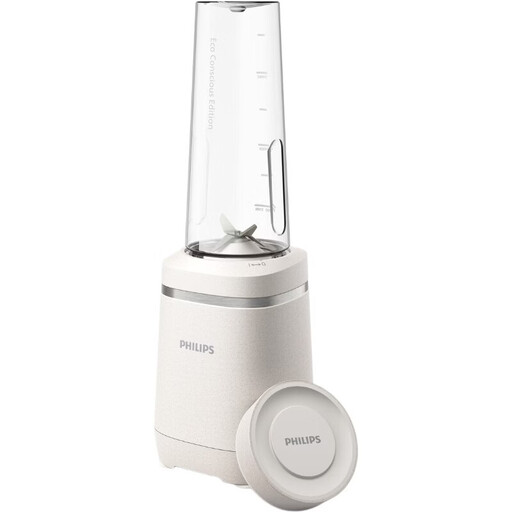
A compact personal blender to consider if you want to clean the removable parts after use.
0.6-litre tumbler; 350 W; ProBlend technology; White.
The product information lists removable dishwasher-safe parts.
 No image available
An option if you want to make a smoothie in a drinking cup and share the cups.
Severin lists two removable cups, a capacity of 0.6 litres, 300 W and dishwasher-safe cups.
The capacity and power alone don’t tell you how quiet the appliance is or how your apricot smoothie will turn out.
Yes. Remove the stone and cut the apricot into pieces. The Netherlands Nutrition Centre specifically warns against grinding apricot stones in a smoothie.
Wash fresh apricots under running water, use clean utensils and clean the blender parts you’ve used according to the instructions. Check whether each part is dishwasher-safe.
Not without checking the instructions for the exact model. For the NB603DG, Nutribullet says to rinse the blade assembly with soap and water and place the cups on the top rack of the dishwasher; Severin lists the removable cups of the SM 3735 as dishwasher-safe.
No. Your statutory rights are separate from any manufacturer’s warranty. According to ACM ConsuWijzer, the retailer must resolve free of charge any issue with a product that breaks sooner than could reasonably be expected under normal use; what is reasonable depends on the circumstances.
No. Such a description isn’t an independent, comparable assessment of noise. Where possible, look for an assessment of the exact model and agree with colleagues on when to use it.