What should you look for?
Centrifugal juicer
A good fit if: you want to juice firm apples for several colleagues during a short break.
The trade-off: the Consumers’ Association highlights quick preparation and often a wide feed chute; a centrifugal juicer can also be noisier.
Slow juicer
A good fit if: minimising noise for colleagues is important and you have time for a slower juicing session.
The trade-off: according to the Consumers’ Association, slow juicers generally work more slowly and often require more chopping and cleaning.
Blender
A good fit if: you’d rather make a smoothie containing more of the whole apple than clear, pressed juice.
The trade-off: a smoothie has a different texture from juice. The Consumers’ Association explains that blending leaves more fibre in the drink than juicing.
| What to consider |
What to look for |
Who should pay extra attention? |
| Juicing apples quickly |
Check the feed chute and look at the juice and pulp containers separately; a large hopper doesn’t necessarily mean a large juice jug. |
If you want to make juice for colleagues during a short break, minimal chopping and enough capacity for juice and pulp are important. Around 36% of consumers put speed first. |
| Cleaning between users |
Check how the blade, sieve and pulp container should be cleaned, and look up the dishwasher instructions for each part. |
If several colleagues use the appliance in succession, you’ll want to know who empties the pulp and cleans the parts. Around 29% of consumers put ease of cleaning first. |
| Noise near workspaces |
Compare noise measurements for specific models if they’re available; a manufacturer’s claim isn’t an independent measurement. |
If the kitchen is close to your workspace, you’ll want to limit noise and may want to choose a quieter time to use the appliance. Around 21% of consumers put noise first. |
| Juice texture and fibre |
Decide whether you want clear juice or a smoothie; don’t treat an appliance’s nutritional claims as proven benefits. |
If you want to retain more of the whole apple in your drink, a smoothie may suit your preferences better than pressed juice. Around 14% of consumers put texture or fibre retention first. |
The Consumers’ Association explains the differences between centrifugal juicers, slow juicers and blenders. In a busy shared kitchen, it’s also sensible to agree in advance who will clean the appliance after use. The Netherlands Nutrition Centre (Voedingscentrum) recommends eating fruit rather than drinking it.
Joybuy products
These are manual fruit presses for apples, not electric centrifugal juicers. Consider them only if manual pressing suits the way your shared kitchen is used.
 No image available
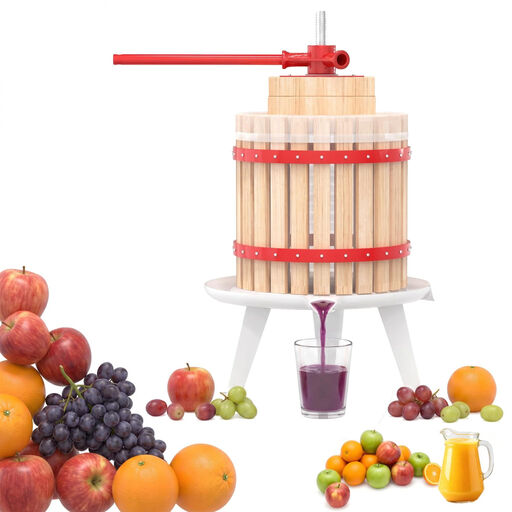
12L mechanical fruit press with pressing cloth
A manual press for turning apples into juice; choose it only if manual pressing fits the way your shared kitchen operates.
The product name specifies a 12L capacity and a pressing cloth.
View at Joybuy
 No image available
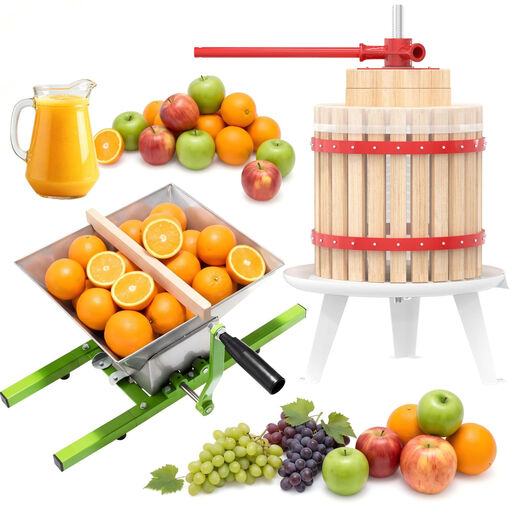
12L manual fruit press with 7L fruit grinder and pressing mesh
This manual press may suit you if you want to process apples and a fruit grinder is part of your process; check that the extra step works for your shared kitchen.
The product name specifies a 12L fruit press, a 7L fruit grinder and pressing mesh.
View at Joybuy
Frequently asked questions
Can I put whole apples in a juicer?
It depends on the size of the apples and the model’s feed chute. Bosch lists a feed tube for whole pieces of fruit for the MES4000; Kenwood lists an opening for whole apples for the JE850. Wash apples under running water before juicing.
What should you clean after a shared juicing session?
Empty the pulp and clean the parts that have come into contact with fruit and juice, following the model’s instructions. Philips notes that a full integrated pulp container can slow down certain centrifugal juicers. The Netherlands Nutrition Centre recommends washing fruit and cleaning kitchen utensils thoroughly.
Is juice from a slow juicer proven to be healthier than juice from a centrifugal juicer?
Don’t choose a slow juicer solely for an assumed nutritional benefit. The Consumers’ Association reports that research by Australian colleagues found no higher levels of the nutrients mentioned in juice from slow juicers. The Netherlands Nutrition Centre recommends eating fruit rather than drinking it.
Which warranty applies if the office buys the appliance?
This partly depends on who makes the purchase and whether the appliance is used mainly for business. ACM ConsuWijzer says consumer protection generally doesn’t apply when a contract is used mainly or exclusively for business. Ask the seller about warranty and repair terms in advance; statutory warranty applies to a consumer purchase, alongside any manufacturer’s warranty.
What product rules must an electric juicer meet in the Netherlands?
The Netherlands Food and Consumer Product Safety Authority (NVWA) states that CE marking is compulsory for electrical products. Parts intended to come into contact with food must also meet the applicable Dutch and European requirements for food contact materials. Check this for the specific product; a general product listing doesn’t prove that a particular item complies with the rules.


