
Vandaag of morgen in huis

Kwaliteit gegarandeerd

Welkomstaanbiedingen ontgrendelen: GRATIS bezorging | Tot 80% korting | Gratis 30 dagen JoyPlus-proefperiode
Download de app
An unexpected light on your dashboard? Your heart sinks at the thought of a steep garage bill. An OBD2 scanner is the solution: a compact diagnostic tool that lets you read your car's data yourself. But the market is flooded with models that overpromise and underdeliver. As a Joybuy Product Recommendation Officer, I'll help you make the right choice and avoid the pitfalls, so you don't pay for features you don't need or, worse, end up with a device that doesn't work on your car.
Before you purchase a car diagnostic tool, it's crucial to know what to look for. Many buyers fall into the same traps.
To avoid a bad purchase, focus on the specifications that truly matter. These are the three most important factors.
Diagnostic Depth (System Coverage & Reset Functions): Check if the scanner offers "full system diagnostics." This means the device can read not only the engine (ECM) but also other modules like ABS, SRS, and the transmission (TCM). Also, look at the number and type of reset functions. A good service reset tool, for example, can reset the oil interval, brake pads (EPB), and steering angle sensor (SAS), which directly saves you money on standard maintenance.
Connectivity and Future-Proofing (Protocols & Updates): A modern car communicates via advanced protocols. Ensure the scanner supports CAN FD and ideally DoIP if you have a recent car or plan to buy one. A model with lifetime free updates is a smart investment. This guarantees that your scanner will remain compatible with new car models and software in the future. Whether you choose a wired model or a wireless version for car diagnostics with an app depends on your personal preference.
Advanced Features (Bi-Directional Control): For the serious DIYer or semi-professional, a bi-directional scanner is worth considering. It allows you to not only receive data but also send commands to the car to test components (active tests). Think of activating the fuel pump, opening and closing an EGR valve, or testing the windshield wipers. This significantly speeds up the process of finding the cause of a malfunction.
Below is a selection of OBD2 scanners tailored to different user profiles, based on objective specifications.
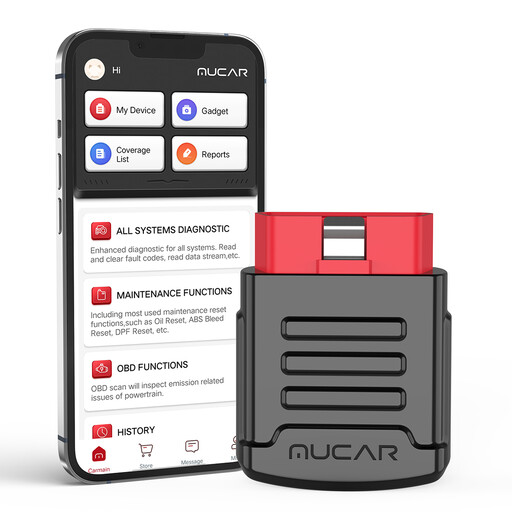
Why This Fits Their Persona: Ideal for those who want to start with DIY diagnostics without a large investment. This compact Bluetooth dongle works via an app on your smartphone and is perfect for reading fault codes and performing basic maintenance.
Full system diagnostics are free for life, so there are no hidden subscription costs for core functions. It offers much more than a simple fault code reader.
Full system diagnostics (lifetime free) and 15 reset functions (1 year free). Supports over 128 car brands.
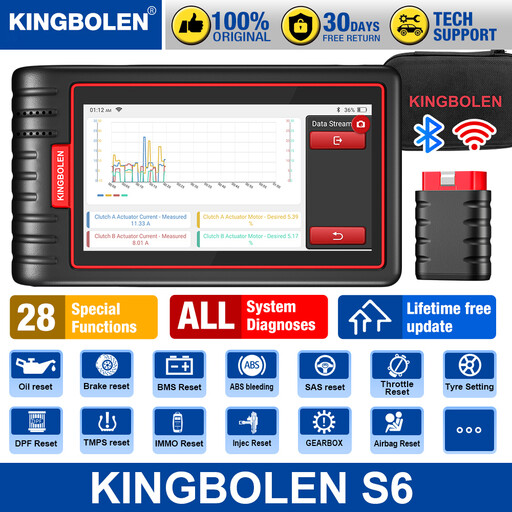
Why This Fits Their Persona: For the car enthusiast who regularly performs maintenance and wants in-depth diagnostics. This all-in-one device with a touchscreen offers extensive features without relying on a phone.
Offers lifetime free updates for all basic functions and diagnostic software. Support for the CAN FD protocol makes it future-proof and prevents compatibility issues.
28 maintenance functions and full system diagnostics. The Auto-VIN and clear 5.99-inch screen make it user-friendly.
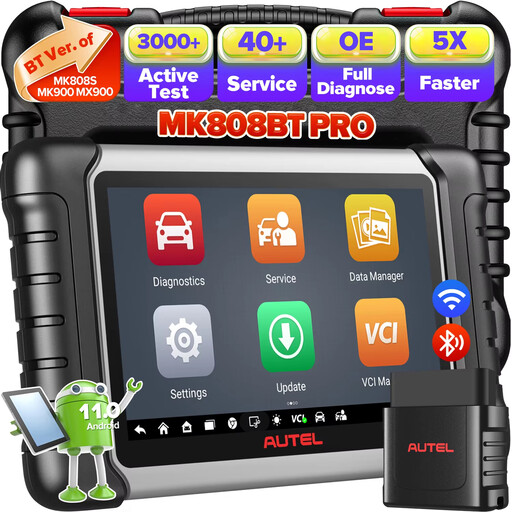
Why This Fits Their Persona: A powerful tool for those who work with car diagnostics daily. Its advanced features enable complex troubleshooting, which is essential in a professional or semi-professional setting.
This is a full-featured bi-directional scanner capable of performing active tests. Support for FCA Auto Auth guarantees access to the secured systems of modern cars, thus bypassing the compatibility trap.
Bi-directional control (active tests), over 38 service functions, and OE-level full system diagnostics. The wireless Bluetooth connection offers flexibility in the workshop.
We have compiled a complete, up-to-date list of products that fully meet these strict selection criteria and local regulations.
Can I reset the service light with any OBD2 scanner? No, this is a common misconception. A standard fault code reader is usually only focused on the engine management system (the 'check engine' light). To reset the service interval, oil interval, or brake pad indicators, you need a scanner that explicitly supports a service reset tool function for your specific car make and model.
What is the difference between a Bluetooth OBD2 scanner and a model with its own screen? A Bluetooth scanner, which you use for car diagnostics with an app, is compact, affordable, and utilizes the processing power and screen of your smartphone. The downside is that you are dependent on your phone and the quality of the app. A model with its own screen is an all-in-one automotive diagnostic tool, often more robust and reliable in a workshop environment, but typically more expensive and less compact.
How can I be sure an OBD2 scanner will work on my car? Always check the scanner's specifications. Pay attention to the supported vehicle brands, manufacturing years, and protocols. For cars made after 2020, support for CAN FD is important. For recent models from Fiat, Chrysler, Jeep, or Alfa Romeo, FCA AutoAuth is a requirement. The product pages usually list a detailed list of compatible brands. When in doubt, you can consult the seller with the make, model, and year of your car.
