
Vandaag of morgen in huis

Kwaliteit gegarandeerd

Welkomstaanbiedingen ontgrendelen: GRATIS bezorging | Tot 80% korting | Gratis 30 dagen JoyPlus-proefperiode
Download de app
As a Joybuy Product Recommendation Officer, I see every day how people get overwhelmed by the sheer number of options. A warning light on your dashboard is frustrating enough. The search for the right OBD2 scanner often just adds to the stress. The market is flooded with devices that promise the world but frequently disappoint in practice. Before you invest, it's crucial to recognise the most common pitfalls.
A simple car diagnostic tool only reads generic engine fault codes (P-codes). For serious maintenance, you need more. A good device offers all-system diagnostics, meaning it can communicate with all Electronic Control Units (ECUs) in your car: from the engine and transmission to the ABS, airbags (SRS), air conditioning, and body control modules.
Furthermore, a capable service reset tool is indispensable. This includes functions such as:
These functions not only save you a trip to the garage but also empower you to perform maintenance completely and correctly on your own.
For the advanced DIYer or professional mechanic, two features make all the difference:
Modern cars (from around 2020 onwards) use new communication protocols. Without support for these, a scanner quickly becomes obsolete. Therefore, look for the following specifications:
A device with support for CAN FD and DoIP is a future-proof investment. Combine this with a transparent update policy that genuinely adds new features and protocols, and you'll have a tool you can rely on for years to come.
We have selected a number of devices that suit different user profiles, based on their specifications and functionality.
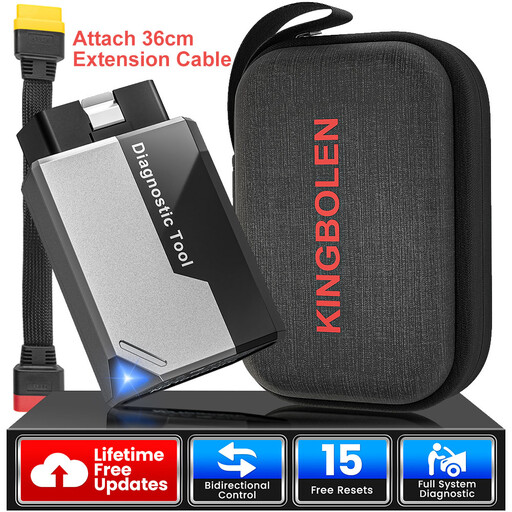
Why This Fits Their Persona: Ideal for the DIYer who wants to do more than just read fault codes. This compact Bluetooth adapter turns your smartphone into a powerful diagnostic tool, without the cost of a professional tablet.
This device offers lifetime free updates for all systems, 15 service functions, and bi-directional tests. No hidden subscription fees for the most important advanced features.
Offers bi-directional control and support for the CAN FD protocol, which is exceptional for a dongle in this price range. Works on both Android and iOS.
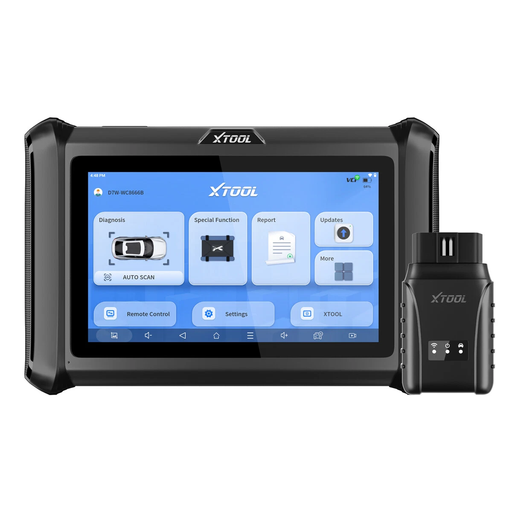
Why This Fits Their Persona: For the home mechanic who regularly performs complex repairs and maintenance. This wireless tablet offers the freedom and features to handle almost any job.
The D7W comes with 3 years of free updates, with clear terms on what's included. The extensive list of 39+ service functions and ECU coding are available out of the box, with no hidden costs.
Fully wireless diagnostics via a stable Wi-Fi connection. Supports modern protocols like CAN FD and DoIP and offers advanced features such as PMI (Programmable Module Installation).
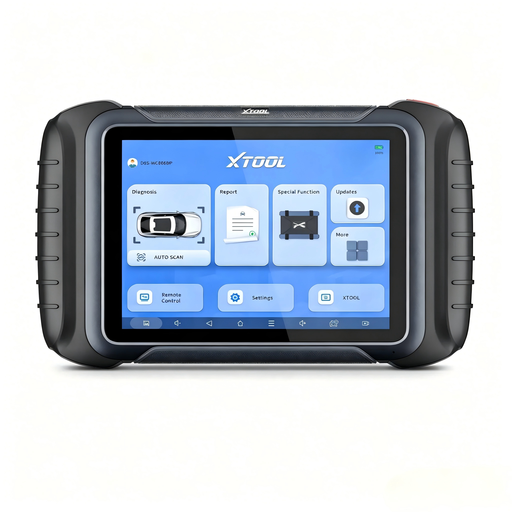
Why This Fits Their Persona: Designed for the efficiency a small to medium-sized garage needs. The topology mapping provides an instant visual overview of all module statuses, significantly reducing diagnosis time.
This professional diagnostic tool offers features normally found only in much more expensive systems. The 3 years of free updates cover all advanced functions, including topology and PMI.
The intelligent topology mapping is its key asset. It also offers VAG guided functions and PMI for Ford/Lincoln/Mazda, which is essential for efficient module replacement.
We have compiled a complete, up-to-date list of products that fully meet these strict selection criteria and current regulations.
A simple OBD2 reader, often called a fault code reader, can only read and clear generic fault codes from the engine control unit (ECU). A professional diagnostic tool can communicate with all systems in the car (ABS, airbags, transmission, etc.), perform service functions, display live data, and in many cases, activate components (bi-directional control).
If you primarily work on cars made before 2020, these protocols are less critical. However, if you also work on newer models, especially from brands like General Motors, Ford, BMW, Jaguar, and Land Rover, support for CAN FD and DoIP is essential for performing an accurate and fast diagnosis. Without this support, the device will either not function or have limited functionality on these newer vehicles.
The most reliable method is to check the manufacturer's compatibility list. Most product pages provide detailed lists of supported brands, models, and functions. For specific, advanced functions like ECU coding, it is advisable to contact the seller before purchasing and provide your car's VIN (Vehicle Identification Number). This will give you certainty that the desired function is supported for your specific model.
