
Vandaag of morgen in huis

Kwaliteit gegarandeerd

Welkomstaanbiedingen ontgrendelen: GRATIS bezorging | Tot 80% korting | Gratis 30 dagen JoyPlus-proefperiode
Download de app
A warning light on your dashboard is often the start of an uncertain and costly journey. Is it a minor issue, or are you facing a hefty garage bill? With a good OBD2 scanner, you take control. You can immediately see what's wrong, fix simple problems yourself, and be better prepared when talking to your mechanic.
However, the market for these devices is vast and overwhelming. From simple dongles to advanced tablets, the choices are endless. This article is intended as a practical guide. We'll help you understand the specifications and find a car diagnostic tool that fits your needs and budget, without the marketing jargon.
Before we get to the recommendations, here are a few key points to help you make an informed decision.
Not every scanner is the same. A simple fault code reader only reads and clears engine fault codes. A more advanced model offers diagnostics for all car makes and systems, such as the ABS, airbags, transmission, and air conditioning. For serious maintenance, a service reset tool is indispensable, allowing you to reset the oil service, brake pads, or battery. The most advanced models function as a bi-directional scanner, enabling you to actively control components to test their operation.
Always check if the device supports your specific car make and model. Modern cars, especially those made after 2020, use newer protocols like CAN FD. A CAN FD tool is therefore a smart investment for the future. Also, pay attention to the update policy. Some brands charge annual subscription fees, while others offer lifetime free updates. This can make a significant difference in long-term costs.
Do you want to work quickly and flexibly? A bluetooth obd2 scanner that connects to your smartphone or tablet offers great freedom of movement. These are often more compact and easier to use. For more intensive or professional use, a device with its own screen and a rugged housing may be more comfortable.
Based on specifications, features, and user needs, we've selected some popular choices for different types of users.
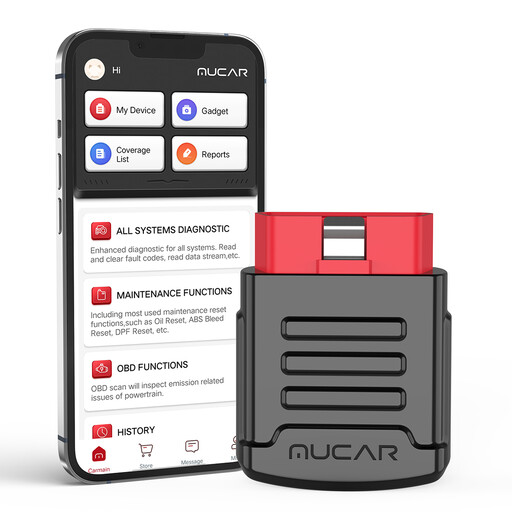
Why it stands out: The BT200 Pro offers exceptional value by combining lifetime free full-system diagnostics in a compact Bluetooth dongle. It's an ideal entry point for those who want to do more than just read engine codes.
Pros:
Who is it for? This is an excellent choice for the DIYer who wants to perform their own maintenance and run in-depth diagnostics without immediately investing in an expensive professional automotive diagnostic tool.
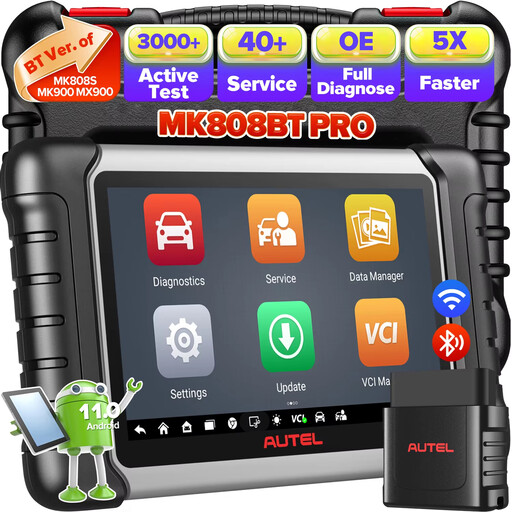
Why it stands out: The MK808BT PRO is a fully-featured diagnostic tablet that offers functions normally reserved for much more expensive devices, such as bi-directional control.
Pros:
Who is it for? The serious car enthusiast or small workshop owner looking for a powerful, all-in-one tool for complex diagnostics and repairs.
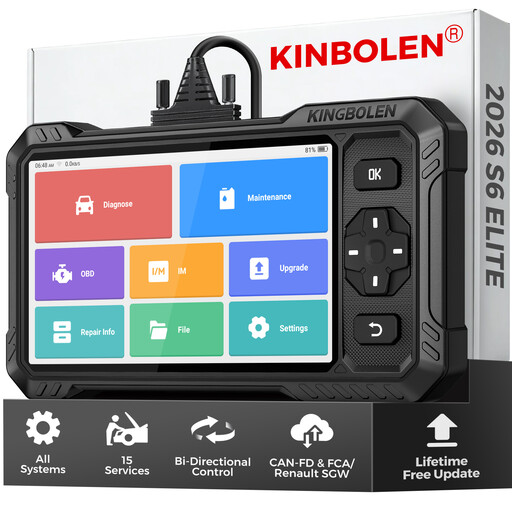
Why it stands out: The S6 Elite combines professional features like bi-directional control and support for new protocols with lifetime free updates, making it a very future-proof and cost-effective choice.
Pros:
Who is it for? The budget-conscious professional or advanced DIYer looking for a bi-directional scanner with broad vehicle coverage and no recurring costs.
The world of diagnostic tools is broad and diverse. Are you looking for a model with specific functions, or do you want to compare more options?
Check out our full collection of the best vehicle diagnostic scanner to find the perfect device for your garage.
1. Can I clear fault codes myself with an OBD2 scanner? Yes, almost every OBD2 scanner allows you to clear car fault codes. Keep in mind that this does not fix the underlying cause. If the problem has not been repaired, the warning light will eventually come back on. Clearing codes is mainly useful for verifying if a repair was successful.
2. Does an OBD2 scanner work on every car? OBD2 is a standardized protocol for most petrol cars built after 2001 and diesel cars after 2004 in the EU. This guarantees access to engine and emissions data. Access to other systems (ABS, airbags, etc.) is determined by the scanner's software. Therefore, always check the specific vehicle coverage of the device you are considering.
3. What is the difference between a basic fault code reader and a professional diagnostic tool? A basic fault code reader is limited to reading and clearing generic engine fault codes (the 'P' codes). In contrast, a professional automotive diagnostic tool provides access to all systems in the car, displays live data from sensors, can reset service intervals, and in some cases, even offers bi-directional control to test components. The investment is higher, but the capabilities are significantly greater.
