
Vandaag of morgen in huis

Kwaliteit gegarandeerd

Welkomstaanbiedingen ontgrendelen: GRATIS bezorging | Tot 80% korting | Gratis 30 dagen JoyPlus-proefperiode
Download de app
An OBD2 car scanner can be useful when the engine warning light comes on, when checking a second-hand car or when carrying out your own servicing. However, not every car scanner is suitable for every vehicle. Many buyers focus mainly on the number of functions listed in the product title, while compatibility, software costs and system access are just as important.
An inexpensive OBD2 diagnostic tool can be perfectly adequate for reading an engine fault code. If you also want to check the ABS, airbags, transmission or service functions, you will often need a more advanced device.
A scanner may be described as suitable for many car brands, but that does not automatically mean every function works on every model. Reset functions, active tests and ECU coding vary by brand, model, year of manufacture, engine variant and vehicle configuration.
Check the following in advance:
A product advertised with “26 resets” or “31 functions” may sound comprehensive, but check which functions are actually available for your vehicle. An EPB reset, TPMS reset, DPF regeneration or injector coding procedure may vary from one car to another. Some vehicles may also require an external account or an additional cable.
Only use a reset function after checking the cause of the fault. Clearing a warning light without carrying out a repair does not resolve the underlying problem.
According to the product description, some models offer lifetime free software updates. Other scanners have a limited update period and can still be used for basic functions afterwards, while advanced software may need to be reactivated. According to the product information, FCA AutoAuth may involve separate charges from the vehicle manufacturer or service provider.
Before buying, check:
A basic OBD2 scanner usually reads emissions-related fault codes from the engine computer. This is sufficient if you only want to check the engine warning light. A full-system diagnostic tool goes further and, depending on the vehicle, can also access systems such as the transmission, ABS, SRS, BCM, air conditioning and TPMS.
For everyday use by a car owner, reading and clearing codes, live data and freeze-frame data are often the most important functions. For a small garage or mobile mechanic, reporting, broad vehicle coverage and active tests are more relevant.
With bidirectional control, also known as an active test, the scanner sends a command to a vehicle component. For example, it may activate a cooling fan, fuel pump, windscreen wiper, injector or air-conditioning compressor. According to the product descriptions, this can help you assess whether a component responds.
The tests available are vehicle-specific, however. An active test is not a substitute for electrical measurements or mechanical checks. For complex work, also ensure that the battery voltage remains stable.
Newer vehicles use modern communication protocols. CAN-FD may be relevant for certain recent models, while DoIP enables diagnostics over Ethernet on specific vehicles. Always check the actual vehicle list; the presence of a protocol does not mean that all functions are automatically available.
A wireless OBD2 scanner connects to a smartphone or tablet via Bluetooth. This is compact and convenient in the garage. A tablet with built-in software usually offers a larger screen, reporting and more extensive navigation. A wired connection may be more stable during diagnostics, particularly in longer sessions.
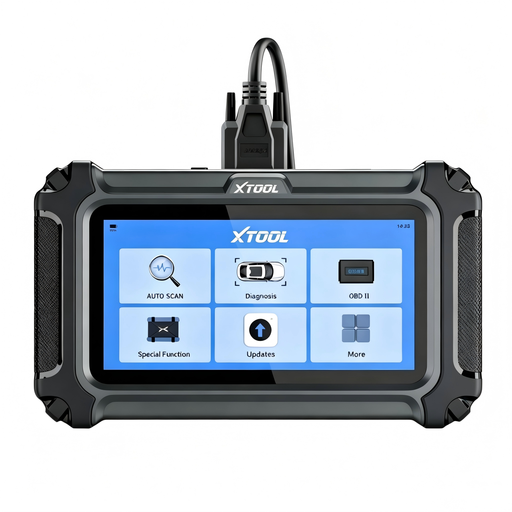
Why it suits this profile: A practical choice for DIY users who want to read the engine, transmission, ABS and SRS without immediately investing in a large workshop tablet.
The product description explicitly states that functions may vary by brand, model and year. This makes checking compatibility in advance more important than simply counting the resets.
16 service functions, CAN-FD support, AutoVIN, live data and, according to the product description, lifetime free updates.
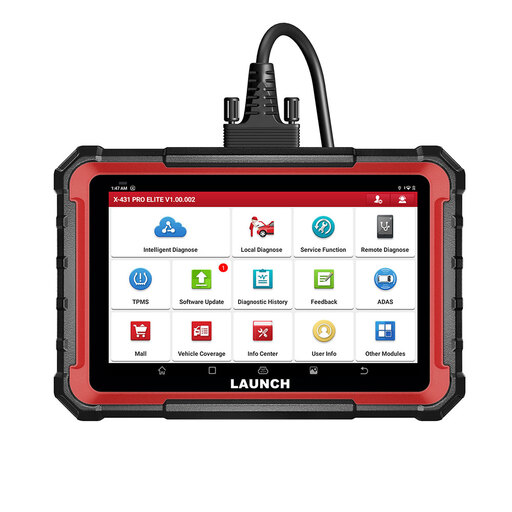
Why it suits this profile: Designed for advanced hobby mechanics, small garages and users who need ECU coding, active tests and reporting.
The product information states that ECU coding and active tests vary by vehicle. Checking compatibility using the VIN is therefore essential before purchase.
8-inch touchscreen, full-system diagnostics, CAN-FD and DoIP, active tests, ECU coding and, according to the product description, two years of free updates.
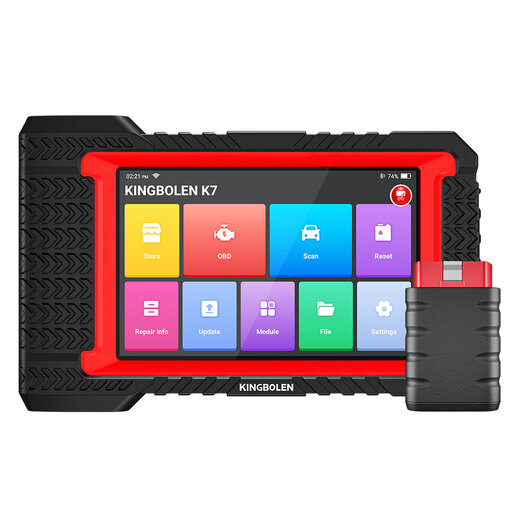
Why it suits this profile: An appealing option for mobile mechanics and intensive users who want to combine wireless diagnostics, reports, active tests and ECU coding.
The product information distinguishes between vehicle-dependent functions and AutoAuth access. This helps you account for additional registration requirements and compatibility in advance.
28 listed reset functions, wireless connection, full-system diagnostics, active tests and, according to the product description, lifetime free updates.
We have put together a complete, up-to-date list of products that fully meet these strict selection criteria and the applicable European safety regulations.
Extra care is required when working with brakes, airbags, steering systems, high-voltage systems and fuel systems. A diagnostic tool provides information, but it does not determine independently which components need to be replaced.
On OBD2- and EOBD-compatible vehicles, it is often possible to read emissions-related engine codes. Access to the ABS, SRS, transmission and other modules depends on both the scanner and the vehicle. Always check vehicle coverage before buying.
It varies by model. According to the product description, some devices come with lifetime free updates, while others have a limited update period. Separate AutoAuth registration may also be required for certain secured vehicle systems.
A basic OBD2 diagnostic tool mainly focuses on engine codes and emissions tests. More professional equipment often offers full-system diagnostics, live data, active tests, ECU coding and service functions such as ABS reset, EPB reset and battery registration. The right choice depends on the vehicles and tasks you actually work with.
